
Memory Card Manufacturer — TF / MicroSD Cards for B2B & OEM
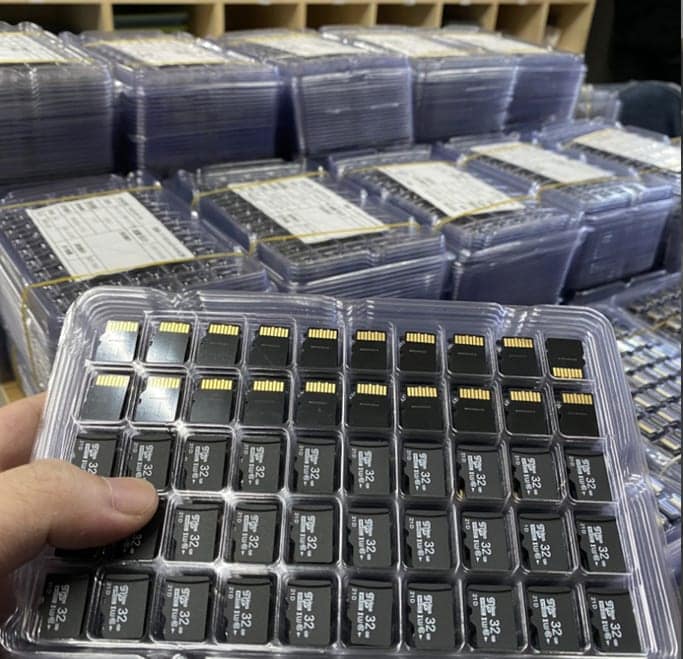
WINTEL manufactures TF cards in the MicroSD form factor — 15 × 11 × 1 mm, 0.25 g — from 4GB to 256GB, for buyers who need volume cards at a known silicon grade rather than retail-packaged brand cards. Read and write speed is specified per project, and the card surface carries your own print or logo. Flash die is sourced from SanDisk, Toshiba, Micron, SK Hynix, Intel, Samsung in TSOP, BGA, LGA, COB and eMMC formats at A+ grade. The cards go into dashcams, IP cameras, embedded devices and branded distribution. Two things decide whether a card is right for your application: the sustained write rate, not the headline read speed, and what happens after months of continuous overwrite. Both are specified before we quote, and both are things you can verify yourself.
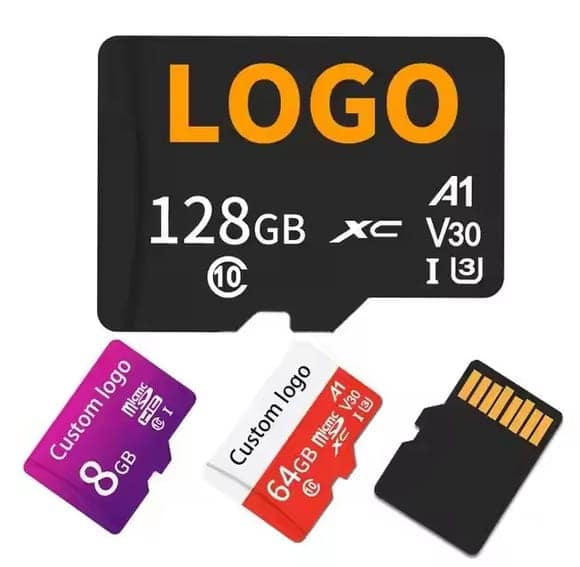
Specification
- Form factorTF card (MicroSD class)
- Dimensions15 mm × 11 mm × 1 mm
- Weight0.25 g
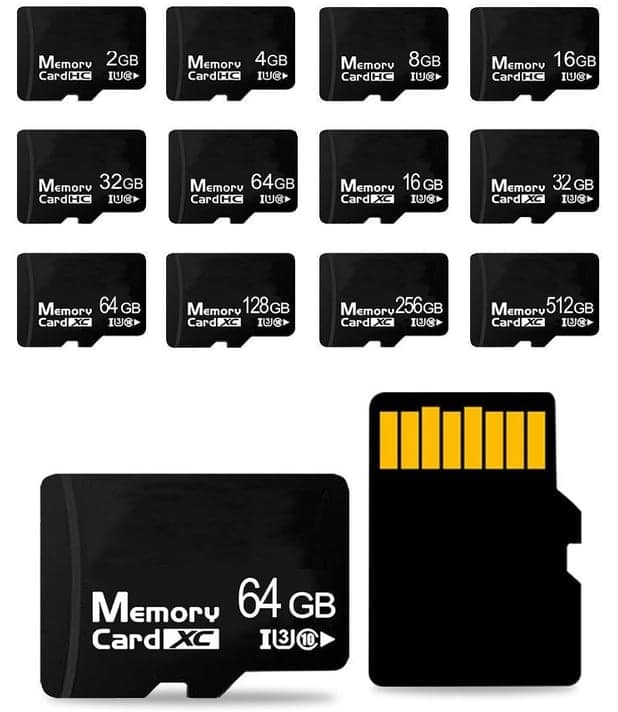
- Capacities4GB / 8GB / 16GB / 32GB / 64GB / 128GB / 256GB
- Flash gradeA+ grade
- Die sourcesSanDisk, Toshiba, Micron, SK Hynix, Intel, Samsung
- Die formatsTSOP, BGA, LGA, COB, eMMC
- Read / write speedSpecified per project against your workload
- Card printingCustom print or logo to your artwork
- PackagingBulk, retail or presentation packaging
Where a figure is per-project rather than fixed — read/write speed in particular — it is confirmed in writing before we quote. We do not publish a single speed figure that pretends to cover every configuration.
Choosing a card by application
| Application | What the device needs | What to watch |
|---|---|---|
| Dashcam / vehicle DVR | Sustained write under continuous overwrite, wide temperature range | Endurance matters more than peak speed here. |
| Security / IP camera | 24/7 overwrite cycles without dropped frames | Test on the actual device, not on a card reader. |
| IoT / embedded device | Reliable enumeration on the host, stable boot storage | Controller compatibility is the usual failure point. |
| Branded distribution | Your artwork on the card, packaging to match | Approve a printed sample before the run. |
What we do and do not do as a card manufacturer
Do
- Sort and grade incoming die before it is bonded
- State the die source and grade on your quotation
- Specify read/write speed against your workload
- Print the card to your artwork
- Verify capacity before packing, and tell you how to verify it yourself
Do not
- Fabricate NAND wafers — no card factory does
- Act as an authorised agent for any NAND brand
- Sell retail-packaged consumer cards under someone else’s warranty
- Quote an endurance figure we have not measured
Get a quote for your card
Send the capacity, quantity, application and speed requirement. We reply to business enquiries within 1 business day.
Request a quoteFrequently asked questions
What is the difference between a TF card and a MicroSD card?
In practice they refer to the same physical format. TF (TransFlash) was the original name; MicroSD is the name adopted by the SD Association after the format was standardised. We use "TF card" because that is the term most of our B2B buyers search with, and "MicroSD class" where the SD naming matters.
What capacity should I choose for a dashcam?
It depends on bitrate, resolution and how long footage needs to be retained before it is overwritten. Loop recording means the card is continuously overwritten, so endurance matters as much as size. See our dashcam memory card guide.
What do U1, U3, V30 and A1 mean?
Speed class markings. U1 and U3 are minimum sustained write rates; V30 is a video speed class; A1 and A2 are application performance classes for running apps from the card. They measure different things — see the speed class comparison for which one applies to your workload.
Can you print our logo on the card?
Yes. Card printing is done to order with your artwork. See custom memory cards for how the artwork and approval process works.
How do I check the cards I receive?
Run a full capacity write-and-read-back with H2testw on a sample from the batch. It takes minutes to set up and is the standard check for overstated capacity. The method is published on our testing page and works on any card from any supplier.
What is the minimum order quantity?
MOQ depends on capacity and how much customisation is involved. Send your specification and we will confirm the MOQ with the price rather than quoting a figure that does not apply to your project.