
Black Epoxy UDP Module — 25 × 11.3 × 1.4 mm, 0.819 g
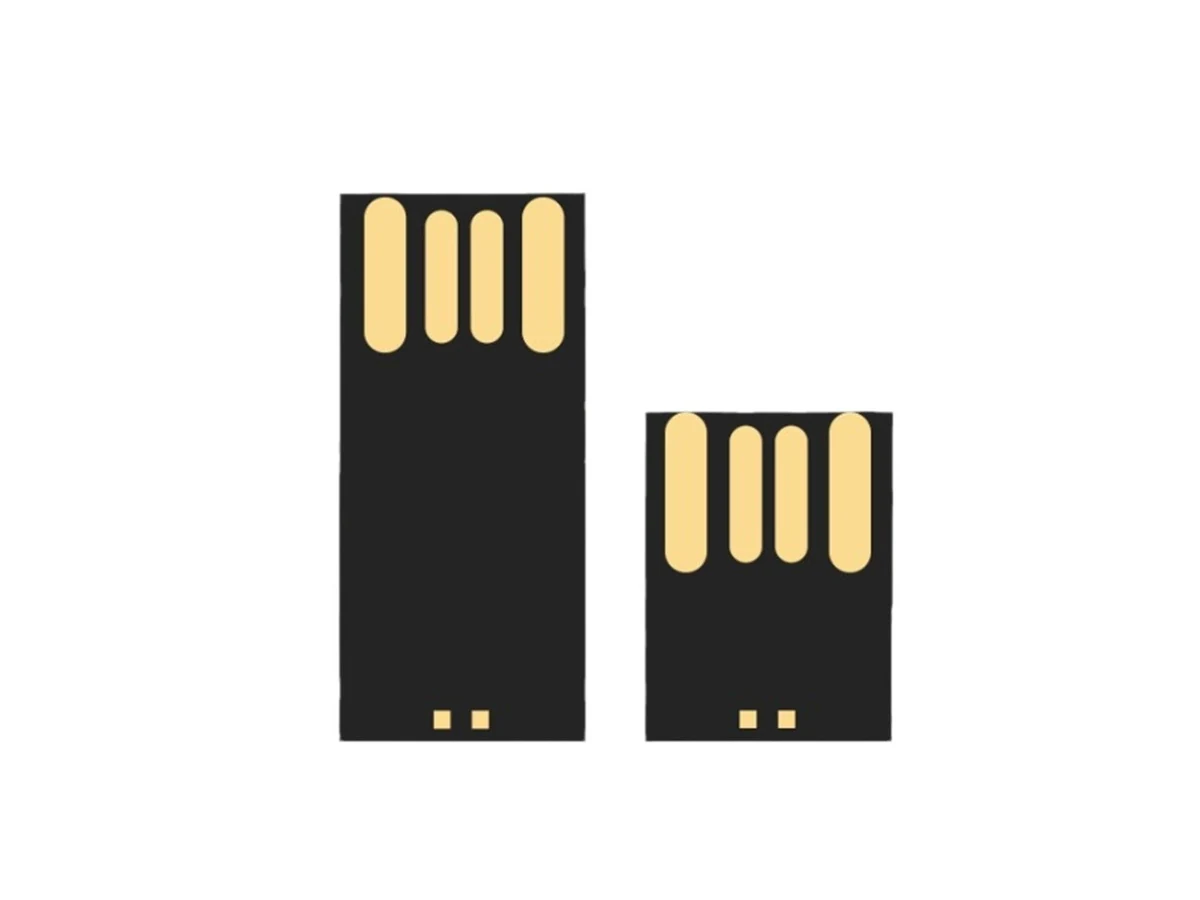
This is the drive with the shell taken off: a black epoxy UDP module at 25 × 11.3 × 1.4 mm, 0.819 g, USB 2.0, 4GB to 32GB, supplied in long and short versions. It is a component, not a product — it goes into a housing the buyer moulds, prints or moulds-and-fills. Buyers come to it for two reasons: their own shell design, or a cost target that a finished body cannot reach. WINTEL supplies this from its own plant in Shenzhen, China.
At a glance
- Body styleBare module
- MaterialBlack epoxy over PCB (UDP)
- Dimensions25 × 11.3 × 1.4 mm
- Weight0.819 g
- InterfaceUSB 2.0
- Capacities4GB / 8GB / 16GB / 32GB
- ReferenceBE-25
What this body is
No shell, no cap, no packing. The module is the part that gets designed into someone else’s product — and the only question that matters is whether your housing takes a 25 mm board or a 22 mm one.
| Property | Value |
|---|---|
| Type | UDP (USB Disk in Package) — bare flash module |
| Body | Black epoxy over PCB |
| Dimensions | 25 × 11.3 × 1.4 mm (long version) |
| Weight | 0.819 g |
| Interface | USB 2.0 |
| Capacity range | 4GB – 32GB |
| Read / write | Up to 25 MB/s read, ~15 MB/s write |
| Versions | Long (25 mm) and short |
| Contact | Standard USB-A 4-pin, gold plated |
| Branding | None — applied to the buyer’s housing |
| Minimum order | 50 pieces |
What you can specify on this body
Capacity
4GB · 8GB · 16GB · 32GB
Interface
USB 2.0
Colour
Black (epoxy body)
Branding
None on the module — branding happens on your housing
Packing: Tray or antistatic bag by default. Module-only shipments are quoted by weight, not by piece.
Tooling: The module is a fixed footprint. If your housing is already tooled for a 25 mm long board, this drops in; a 22 mm cavity needs the short version, and anything else needs a housing change, not a module change.
Typical production time once the sample is approved: 1–3 days from stock in standard capacities..
When this one is the right choice
Buyers with their own housing
A toy, a promotional figure, a branded pen, a bottle opener with a drive in the handle — the housing already exists and only needs a module that fits the cavity.
Cost targets a finished body cannot reach
No shell, no cap, no print, no packing. On a 4GB or 8GB order the module is the cheapest way to put flash in someone’s hand, provided they are doing the assembly.
Small-capacity runs that a bar body cannot serve
Below 8GB most finished bodies stop making sense. The module keeps going down to 4GB, which is where tender and legacy-device work still lives.
When it is not
- Anyone who needs a finished product. This is a component: no shell, no cap, no packing, no retail presentation. If the drive has to be handed to an end user, buy a body.
- Buyers without assembly capability. The module has to be seated, retained and tested inside a housing — that is a production step, not a packing step.
- USB 3.0 programmes. The module is USB 2.0; the speed-led work belongs on a PCBA or a finished 3.0 body.
What to confirm before the order is placed
- Send the housing drawing before ordering. The useful question is not "which module" but "what cavity do you have" — 25 mm long, 22 mm short, and the retention method decides which one fits.
- Decide who tests the finished unit. A module that leaves here tested is not a housing that has been assembled correctly; agree where the functional test happens.
- Plan the branding on the housing, not the module. There is no print area on a 25 mm epoxy body, and a label on the module will foul the connector when it slides in.
- Ask for the module by capacity and version together. Long and short are different parts, and a reorder that names only the capacity will get whichever is in stock.
- Take a tray, not a bag, for volume. Two hundred loose modules in a bag arrive with bent contacts; the tray costs almost nothing.
This body in photographs
Where this body ends up
- UDP modules The family this module belongs to
- Semi-finished boards When the housing needs a full PCBA instead
Quote this body
Send the capacity, the quantity band and the artwork. We reply to business enquiries within 1 business day. Minimum order is 50 pieces per design.
Or email cathy@go-wintel.com — answered by Cathy, sales engineer.
Frequently asked questions
Is a UDP module the same as a PCBA?
Not quite. A PCBA is a board with the controller and flash on it, usually with a connector soldered on and a shape that needs a housing to hold it. A UDP packages the same electronics in epoxy at close to final size, so there is less to hold and less to protect. The UDP is smaller and cheaper; the PCBA gives more freedom in layout.
What is the difference between the long and short version?
Six millimetres of body and the cavity they fit. The long version is 25 mm and matches housings designed around a standard bar; the short version suits compact mouldings where the extra length will not clear. They are different parts, not a trimming option.
Can it be branded?
Not on the module. The epoxy face is 25 × 11 mm and mostly contact area; a label there interferes with seating. Branding belongs on the housing, which is also where the buyer’s design value sits.
What capacities and interface?
4GB to 32GB on USB 2.0. The module does not exist in USB 3.0 — if the programme needs 3.0 speeds, the answer is a PCBA or a finished body.
How is it packed and shipped?
In trays or antistatic bags, quoted by weight rather than by piece. At 0.819 g a module, a thousand units is about 820 g of product — the packing and the handling are the cost, not the goods.