
Custom TF Card Manufacturer — OEM & Bulk Orders (4GB–256GB)
WINTEL supplies TF cards in the MicroSD form factor — 15 × 11 × 1 mm, 0.25 g — for buyers who need volume cards at a known silicon grade rather than retail-packaged brand cards. Capacities run from 4GB to 256GB, read and write speed is specified per project, and the card surface can carry your own print or logo. Flash dies are sourced from SanDisk, Toshiba, Micron, SK Hynix, Intel and Samsung, in TSOP, BGA, LGA, COB and eMMC formats. If you are designing a dashcam, IP camera or embedded device and need a consistent card, send us your target capacity, speed and quantity and we will confirm the matching silicon and price.
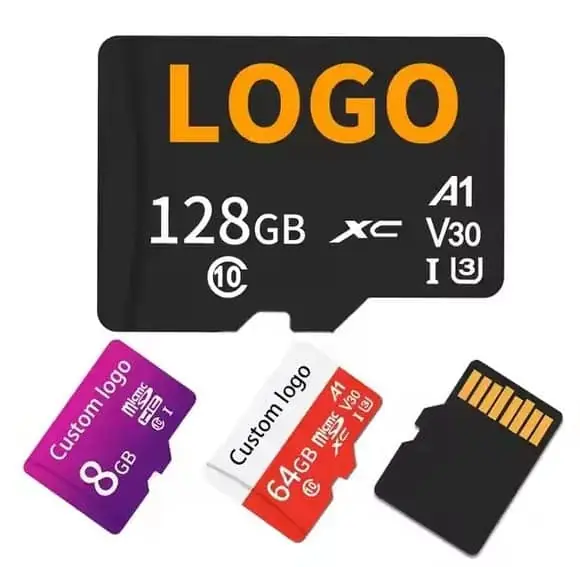
Specifications
- Dimensions15mm × 11mm × 1mm
- Weight0.25g
- InterfaceMicroSD-class (via card reader)
- Flash gradeA+ Grade
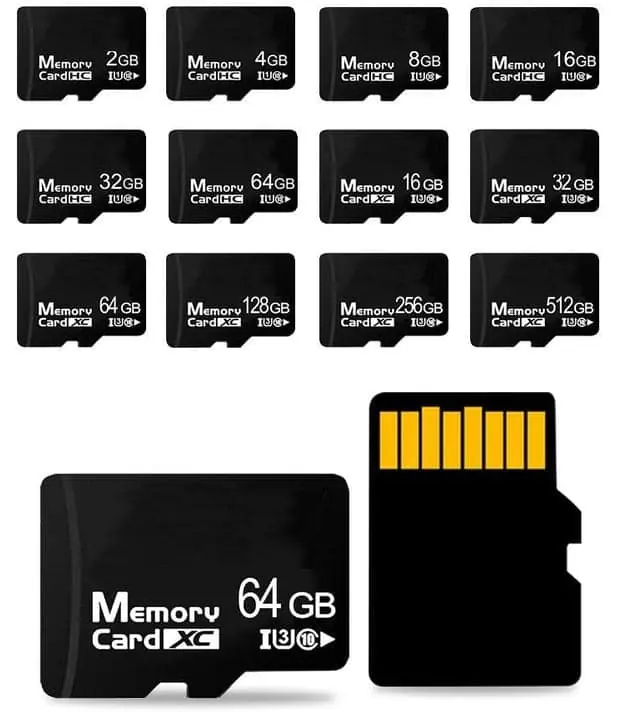
- Capacities4GB / 8GB / 16GB / 32GB / 64GB / 128GB / 256GB
What you can specify
- Capacity selection (4GB–256GB)
- Read / write speed (specified per project)
- Card surface printing and logo
- Retail and bulk packaging
Where it is used
- Dashcams & vehicle DVR Continuous-write workloads
- Security & IP cameras 24/7 overwrite cycles
- IoT & embedded devices Boot and data storage
Supply notes
- Silicon sourced from SanDisk, Toshiba, Micron, SK Hynix, Intel and Samsung
- Die formats available: TSOP, BGA, LGA, COB, eMMC
- Controller solutions: Alcor, ITE, Xinbang, Micov
Which flash format fits your design
Four formats leave this factory, and the difference between them is mostly mechanical: whether the storage is removable, whether it is sealed inside the product, and who owns the housing. Compare them before you compare prices, because they are not interchangeable.
| Format | What it physically is | Choose it when | The trade you are making |
|---|---|---|---|
| TF card (microSD) — this page | 15 × 11 × 1 mm removable card, 0.25 g | Devices that already have a card slot; storage the end user or field engineer can swap | The socket is the mechanical weak point, and the card is only as good as its grade |
| UDP module | Encapsulated die + controller, no housing, no connector | Sealed, soldered-down storage for small devices — no socket, no shell, no user access | Needs a PCB footprint and reflow assembly; cannot be replaced in the field |
| USB flash drive | Finished drive: connector, controller and housing | Branding, gifting, software and media delivery, retail-ready presentation | Housing, print and packaging — not the silicon — drive the cost and the MOQ |
| Semi-finished PCBA | Assembled flash board, no housing, no branding | Buyers who already own the shell, the print process or the final assembly line | You carry the tooling and the branding yield, and the warranty boundary sits with you |
Applications
Customization
- Capacity selection (4GB–256GB)
- Read / write speed (specified per project)
- Card surface printing and logo
- Retail and bulk packaging
What to put in the TF Card specification
A TF card order is only as precise as the specification behind it. These are the fields that change what you receive — leave any of them out and the supplier fills the gap with whatever is cheapest that week.
- Nominal vs usable capacity The number printed on the card is not the number your application sees. File system overhead, controller reserves and bad-block mapping all take a share — specify the capacity your device must actually have free. Read more →
- Speed class and measured throughput U1, U3, V30, A1 and A2 are minimums under defined conditions, not promises at temperature. State the class your host requires and, separately, the sustained write rate the workload needs. Read more →
- Workload pattern Continuous sequential recording and small random writes age a card very differently. Say which one your device does, because it decides the controller and the NAND grade. Read more →
- Operating temperature range Where the device ships, stores and runs. A card specified for a temperate office behaves differently in a vehicle cabin or an unheated cabinet. Read more →
- File system FAT32 and exFAT differ in capacity ceiling and host compatibility. Choose it before production so the card is formatted correctly at packing, not in the field. Read more →
- Silicon grade and die source A+ grade, original die and graded white or black die are not the same purchase even at the same capacity. Name the grade you are paying for. Read more →
- Print and packing Surface print, retail blister or bulk tray. It changes both the artwork lead time and the minimum quantity.
- Annual volume and batch split One 100,000-piece order and five 20,000-piece batches are priced and scheduled differently. Tell us the split you actually want. Read more →
Manufacturing process
Each unit is built from sourced NAND and a controller solution selected to your host and workload, placed and soldered on our own SMT line, programmed, then capacity-verified with a full write-and-read-back and read/write tested before packing. The same configuration is held across repeat batches.
This is for you if
- Device makers specifying a card as a component of their own product
- Brands needing printed or branded cards in volume
- Buyers who want to know which silicon grade they are paying for
This is not for you if
- Retail consumers buying a single card
- Buyers who need a brand-endorsed retail blister pack with warranty terms set by SanDisk, Samsung or similar
- Applications that require an officially certified industrial-temperature part with a published endurance rating
What fails in the field, and what prevents it
Most TF card complaints are not manufacturing defects — they are a mismatch between what was specified and what the device does. These four account for the majority of the ones we get asked about.
The card reports more capacity than it holds
A controller can be configured to report a capacity the silicon cannot back. It works until the write pointer passes the real end, then files vanish or the card drops to read-only. A full write-and-read-back catches this in an afternoon, before the batch ships.
How to verify real capacity →Recording drops frames once the card warms up
Sustained writing heats the die, the controller throttles to protect itself, and the write rate falls below what the recorder needs. The card is not faulty — it was specified for burst speed, not sustained speed.
Why cards slow down under sustained write →Data is corrupted after an unexpected power cut
A write interrupted mid-block can leave the file system inconsistent. Protection comes from the controller's power-loss handling and the write strategy, plus a file system the host can recover — not from hoping the cut never happens.
Power-loss protection and write strategy →The card wears out far earlier than expected
Every overwrite consumes endurance, and how evenly the controller spreads those writes decides the service life. In a 24/7 recorder, wear levelling matters more than headline capacity.
Wear levelling, without the datasheet →Ordering TF Card: MOQ, samples, lead time and testing
| Question | Answer |
|---|---|
| Minimum order quantity | Set by capacity, controller solution and how much customisation is involved — confirmed with your quotation. See how MOQ is set. |
| Samples | Available, and recommended before volume — particularly for printed artwork or a bespoke mould. See how samples work. |
| Lead time | Depends on configuration, branding and whether tooling is needed. Confirmed in the quotation against your target date. See what drives lead time. |
| Testing | Capacity and read/write verification before packing. You can verify independently with a full write-and-read-back — the method is published here. |
| How to request a quote | Product type, capacity, quantity, application and target date is enough to start. Open the quote form, or see what to include. |
Specify your tf card
Tell us the capacity, quantity, application and target date. We confirm MOQ and lead time against your specification rather than quoting a generic figure — and we reply to business enquiries within 1 business day.
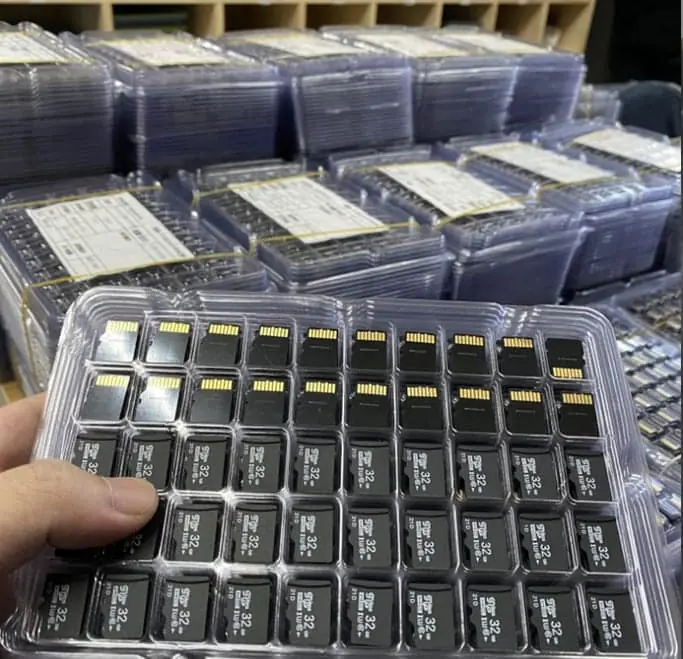
Request a quote for TF CardFrom the factory floor
Photographs taken at our own facility in Shenzhen. Nothing on this page is a stock image or a rendering of a product we do not make.
TF Card — frequently asked questions
What capacity range can you supply?
TF cards are supplied from 4GB to 256GB. The right capacity depends on your target device — see our guide on how much data actually fits on each capacity before choosing.
Can read and write speed be specified?
Yes. Read and write speed is a per-project specification. Tell us the workload (continuous video recording, boot storage, general data) and the speed class you need, and we will match the silicon and controller solution accordingly.
Which flash grade do you use?
A+ grade flash. Silicon is sourced from SanDisk, Toshiba, Micron, SK Hynix, Intel and Samsung. Ask us for the sourcing breakdown on a specific project.
What is the minimum order quantity?
MOQ depends on the product, the capacity and how much customisation is involved. Send your specification and we will confirm MOQ together with the price — there is no generic MOQ figure that applies to every project.
Can I test samples before committing to a bulk order?
Yes. We recommend validating capacity and performance yourself before a bulk order. Our guide on verifying flash capacity explains the standard test method (H2testw) so you can check any card, from any supplier, independently.