
Two quotes at the same unit price are rarely the same offer. Four lines — inclusions, reorder cost, specification gaps and evidence — decide which is cheaper.
The short answer
Two quotes land at 2.40 and 2.55 per piece. The cheaper one usually wins the order, and about one time in three it is the more expensive of the two by the time the second shipment goes out.
Four lines do the work:
- What the unit price contains — test, packing, print, freight terms.
- The cost at your real reorder quantity, not at the sample quantity.
- The specification line read backwards, for what it does not say.
- The evidence line — what you get if the batch is wrong.
The rest of a quotation is decoration.
Line 1 — What the unit price actually contains
| Item | Often inside the unit price | Often quoted separately, or quietly omitted |
|---|---|---|
| Capacity verification | A spot check on a sample | Full-capacity read-back, per unit |
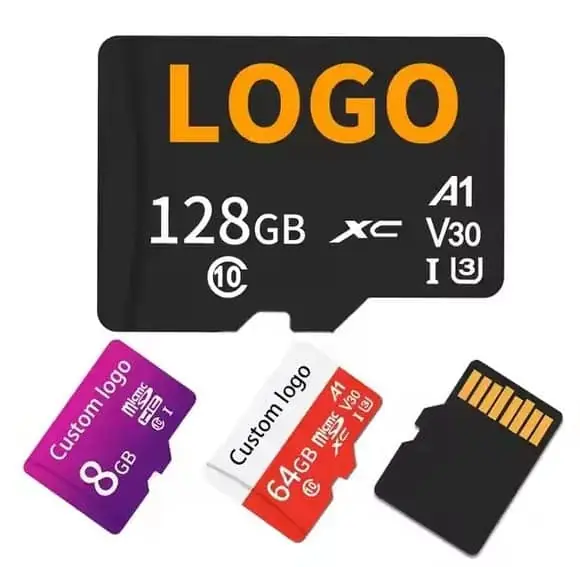
| Printing | One-colour logo, one position | Second colour, second position, laser vs pad print |
| Packaging | Poly bag, bulk carton | Retail box, blister, insert card, barcode labelling |
| Test record | Nothing | A certificate naming lot, AQL and temperature |
| Freight terms | EXW | FOB, CIF, DDP — the difference is yours to carry |
| Payment terms | 100% before shipment | 30/70, or a credit line |
A quote that names a price and a capacity is not a quote. It is a starting position. Ask each supplier to fill the same six rows, and the comparison stops being about the number at the top.
Line 2 — The cost at your real reorder quantity
Here is the arithmetic that decides most of these decisions. Both quotes are for 5,000 pieces of the same 32GB card.
| Supplier A | Supplier B | |
|---|---|---|
| Unit price at 5,000 | 2.40 | 2.55 |
| First order | 12,000 | 12,750 |
| Set-up or tooling | 200 | none |
| Minimum order | 3,000 | 500 |
| Test record | extra, 150 | included |
| First order total | 12,350 | 12,750 |
A is 400 cheaper on the first order. Now run the year. You expect 8,000 pieces, in a first order of 5,000 and a reorder of 3,000.
- A: 5,000 at 2.40, then a 3,000 reorder at 2.40 — 19,200 plus the 200 set-up, plus two test records at 150. Total 19,700.
- B: 8,000 at 2.55 — 20,400, test records included. Total 20,400.
A still wins, by 700. Now change one variable: you only need 1,000 on the reorder, because the programme slipped. A’s minimum is 3,000, so you buy 2,000 units of stock you will not use this year — 4,800 of cash sitting in a warehouse, plus storage, plus the risk that the design changes before you consume it. B ships 1,000.
That is the pattern. A low unit price attached to a high minimum is a bet that your forecast is right. Sometimes it is. The point is to know you are making the bet.
Line 3 — The specification line, read for what is missing
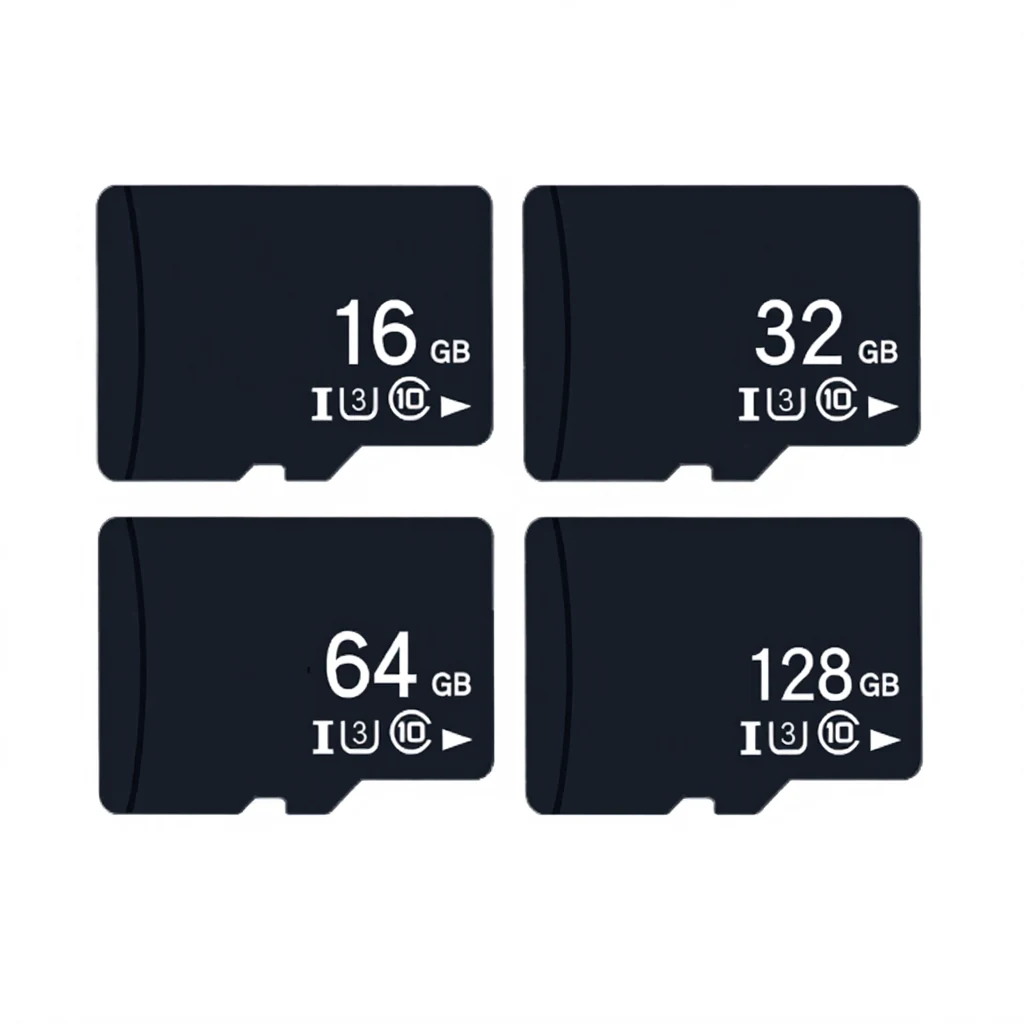
Both quotes will say “32GB Class 10 microSD”. That sentence describes about a fifth of what you are buying. Read it for the absent words:
- No interface named. UHS-I and SPI are different parts of the same product family, and a design that needs SPI is not served by a card quoted on UHS-I speeds.
- No die grade. Consumer and industrial die at the same capacity behave differently at temperature, and the price difference between them is real.
- No speed class beyond “Class 10”. Class 10 is a floor from 2006. If the workload writes continuously, the number that matters is sustained write, not the class logo.
- No temperature range. A part quoted without one is being quoted at room temperature, whether or not anyone says so.
- No statement about change. Nothing tells you whether the die supplier is fixed for the programme.
A supplier who cannot answer these from the quotation is not being evasive, usually. They are quoting what they always quote, because most buyers never ask. Ask, and you find out quickly which of the two is a manufacturer.
Line 4 — Evidence and traceability
Ask one question: if this batch is wrong, what do I receive?
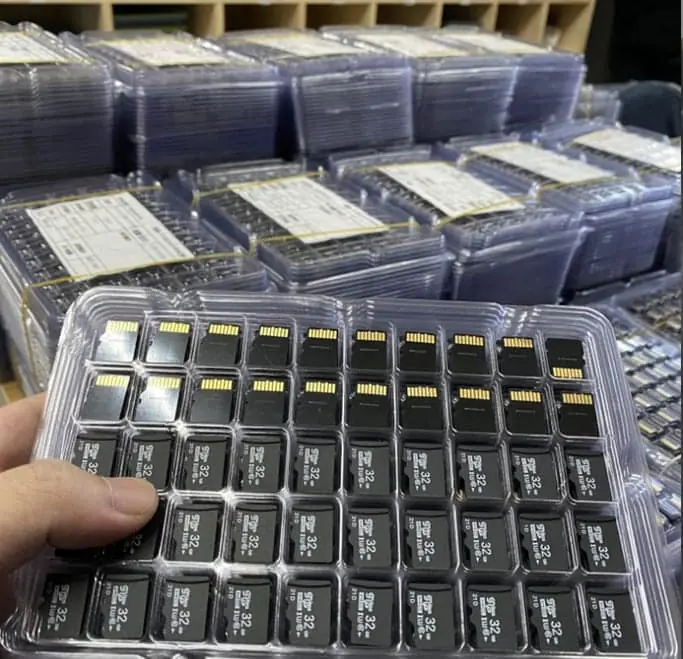
The useful answer names a lot code, a sample size, an AQL, a test method and a temperature. The useless answer is a certificate with a logo and the word “passed”. Both look like documents. Only one survives an argument six months later.
This is also where the two quotes usually diverge in a way the price column never shows. A supplier charging 0.15 more per unit and including a test record is not 6% more expensive. They are selling you the ability to prove what arrived.
The two numbers to compute before you decide
Landed cost per unit. Unit price, plus print, plus packing, plus freight, plus duty, plus the financing cost of whatever you had to over-buy to hit a minimum, divided by units you will actually sell.
Cost of one field failure. Not the unit price — the return, the diagnosis, the replacement, the customer conversation, and the discount you give to keep the account. For a card inside a device, that number is usually between twenty and a hundred times the unit price. It does not take many failures to erase a 400 saving.
Put both numbers beside the quote. If the gap on landed cost is under about 5% and the evidence differs, buy the evidence.
Where to go next
The compare supplier quotes page carries this as a table you can send to both suppliers. What affects the price explains which of the line items are negotiable and which are not. If the specification itself is still open, what to write in a purchase specification fixes the wording before the quotes come back — which is the cheapest moment to fix it.
Sources
Frequently asked questions
The two quotes have the same unit price but one is 12% cheaper landed. Is that real?
Usually not the same product. Check whether the cheaper quote excludes freight, insurance, duty, packaging, test or pre-loading. Normalise both to a landed cost per good unit before comparing, and confirm the payment terms — a lower price with a larger deposit can cost more in cash flow.
Can I ask a supplier to name the NAND and controller brand in the quotation?
Yes, and you should. A quotation that only says "high-speed TF card, class 10" is a price, not a specification. Ask for the controller part number, the NAND package type and the grade, and whether the supplier is the factory or a trading company that sources from one.
How do I stop a supplier swapping the chip after the sample is approved?
Put the approved sample's spec into the PO as a controlled characteristic — controller part number, NAND grade, firmware version, printed markings — and require a Certificate of Conformance per lot. Then verify on arrival with capacity, speed and a small functional test, not just a visual check.
Does a lower MOQ quote mean a better deal?
It means a different production arrangement. Low-MOQ quotes often carry higher tooling or set-up charges, or use a different NAND grade that is available in small lots. Compare the total cost at the quantity you will actually reorder, not at the sample quantity.
What should I test on an incoming batch to catch a downgrade?
At minimum, true capacity, sequential read/write, a class-appropriate sustained write test, and a power-loss or removal test if the application is field-deployed. Record the results per lot so a reorder can be compared against the approved baseline.