
Two quotes can carry the same unit price and different obligations. Here is what each line of a custom flash quotation is actually paying for, and the lines most of them leave out.
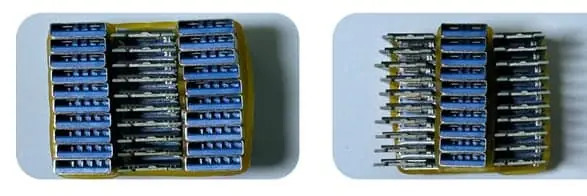
A flash quotation is not one number. The unit price is the last line, and the lines above it decide what it means: tooling amortised over your quantity, line changeover, material lot sizes set by the packaging standard, administration and freight. Public sourcing guidance puts those same five costs behind every MOQ, and the same guidance explains why a $10,000 tool with $0.40 of variable cost per part costs $10.40 per part at 1,000 units, $1.40 at 10,000 and $0.50 at 100,000. Read the quote line by line, then add the lines most of them omit — test method, inspection level, test report, Incoterms — and only the unit price is left to argue over.
Part 1 of 4 — reading a quotation. Four angles on the same document; the total only means something after all four.
Next: Reading a quotation line by line.
Two quotations with one price
A buyer forwarded two quotations for the same 32GB TF card in the same week. Both said 32GB, both quoted the same unit price to two decimal places, and the cheaper of the two arrived with a smaller total.
The cheaper one had no tooling line. It also had no mention of the T1 sample, no inspection level, no test report and no stated validity. The cost of the mould that would produce the housing sat inside the unit price, spread over a quantity the buyer had never agreed to. At 3,000 units the arithmetic worked out. At 8,000 it would have been free money for whoever wrote the quote.
That is the whole point of reading a quotation line by line: the price is not the argument. The structure under it is.
The unit price is the last line, not the first
Start where a quotation usually ends. The figure at the bottom of the page is a per-piece number, and per-piece numbers are produced by fixed costs divided by quantity.
Public sourcing guidance is consistent about which costs those are: tooling amortisation, line changeover, material lot sizes, administration and freight. None of the five is a statement about what a machine can do. A machine can run one piece or a million; it does not set the MOQ.
The illustrative amortisation arithmetic published alongside that guidance makes the shape obvious. A tooling charge of $10,000 against a variable cost of $0.40 per part gives about $10.40 per part at 1,000 units, $1.40 at 10,000 units and $0.50 at 100,000 units. The physical work of making the part never changed. Only the spread did.
Two buyers can therefore hold the same unit price and receive different economic positions, because one of them bought the tooling line separately and the other one did not.
The tooling line buys a right, not a lump of steel
Tooling is the line most buyers skim, and it is the line that decides the first quantity.
Published tooling guidance puts aluminium tooling at 2 to 4 weeks from approved drawing to T1 samples, steel tooling at 4 to 8 weeks, and complex multi-cavity tools at 10 to 12 weeks. Simple engineering changes after T1 add 1 to 2 weeks; a major change such as a side action adds 3 to 5 weeks. If your quotation carries a tooling lead time, that is the schedule you are actually waiting on, not the production schedule.
The clause matters more than the number. What a tooling fee usually buys is the exclusive right to have parts produced from that tool — not automatically the physical steel. Moving a tool to another factory needs a clear ownership clause and matched machine platen size and tonnage, which is a sentence worth having in writing before a second supplier quotes the same part.
Changeover, lots and reels: the line nobody itemises
The third group of fixed costs is quieter, and it is where most of the arguments come from later.
Surface-mount parts ship on carrier tape reels sized by packaging standards, so the reel quantity follows package size and tape pitch rather than commercial policy. Published reel counts make the mechanism concrete: a 0402 chip resistor runs 10,000 pieces on a 7-inch reel and 50,000 on a 13-inch; a narrow-body SOIC-8 runs 2,500; a SOT-23 3-lead part runs 1,000 or 3,000.
Buy 1,200 pieces of something that comes on a 7-inch reel and you are buying a fraction of a reel, or a split of one across two orders. That is not a supplier being difficult. It is the packaging standard being honest.
The same honesty applies upstream. Wafer fabrication runs up to 12 weeks, assembly and test add a further 4 to 8 weeks, and the full cycle from fab through assembly to test is roughly 26 weeks. A quotation that promises four weeks of lead time is not competing on manufacturing; it is competing on inventory somebody else is holding.
The lines that are missing
Once the visible lines make sense, the useful question inverts. What is not on the page?
A method. “Tested” is not a specification. Whether the run covers the whole nominal capacity with a byte-by-byte read back, or a sampled check at the outgoing bench, are two different promises that print the same word.
An inspection level. Acceptance sampling under ISO 2859-1 / ANSI-ASQ Z1.4 uses General Inspection Level II as the default when a contract is silent, with common AQL assignments of critical 0, major 2.5 and minor 4.0. Those values are planning parameters, not a defect allowance, and a quotation that omits them leaves the default to apply.
A record. Which artefact comes back, in whose name, per lot or per unit. Without this line, the test happened and nobody can produce it.
A written speed figure. Our published product data says read and write speed is customizable per order rather than fixed. Customizable means adjustable, and adjustable means the only enforceable number is the one written into this quotation.
A retention statement. Endurance and retention live in a separate conversation from unit price, and they belong in the same document as everything else you will argue about in month nine.
Where the numbers in this article come from
Every figure about amortisation, entry quantities, aluminium versus steel tooling cost, the 2 to 4 week, 4 to 8 week and 10 to 12 week tooling ranges, the reel counts and the packaging standards is public industry guidance and published component packaging standards. EIA-481, IEC 60286-3, ISO 2859-1 and the sourcing guidance behind MOQ calculations are not WINTEL measurements, and none of them describes our floor. Where the official wording has moved, treat the current wording as the operative one rather than the version quoted here.
The only figures that describe us are the published product data listed in the FAQ: the dimensions, masses and capacity ranges above. Those are specification figures, not test results.
When reading a quotation line by line is the wrong instrument
Four situations, and in each of them the exercise costs more than it returns.
If you are buying a catalogue part for internal use — a handful of cards for a test rig, stock for a service desk — there is nothing to read. The comparison is the price per piece and the delivery window, and a supplier who itemises tooling is not automatically the better buy. Ask for the total landed figure and move on.
If this is a first sample order of a few units, the fixed-cost logic does not apply to you yet. Tooling amortisation, reels and changeover belong to the production quotation that follows the sample. Reading that structure into a sample request only delays the hardware you need in hand.
If the part is already in volume and you are re-quoting the same thing every quarter, the structural lines will not move. Spend the hour on the sample plan and the test report instead, because those are the two things that actually change between a good batch and a bad one.
If the only decision you intend to make is on cost per piece, this reading will not save you money — it will just show you which obligations you are giving away. The cheaper unit price on a part whose tooling you also fund is frequently the more expensive order, and the difference only appears after the second shipment.
Six lines worth adding to the RFQ
The method and the tool version. Two tools can fill different fractions of the same capacity.
The sample size and the acceptance rule: which inspection level, which AQL, which acceptance and rejection numbers you hold them to.
The artefact and its owner — the test log, per lot rather than per unit.
The written speed figure for this order, along with the endurance and retention statement.
The tooling line by itself, with the quantity it was amortised across and the ownership clause attached.
The commercial frame: Incoterms, currency, quotation validity, and who pays for the split reel.
A pass on the price tells you one thing
A comparison of unit prices tells you what a single piece costs today, from one supplier, on one reading of the contract.
It does not tell you what the next 20,000 will cost, when they will physically arrive, or what the test record says about the lot you are holding. All three live in the lines above the unit price — or, more often, in the lines that were never written down at all.
Which is the argument for reading a quote line by line. Not to win the negotiation on price, but to find out what you were actually buying.
Frequently asked questions
Two quotations show the same unit price. Why is one cheaper overall?
Because the second one puts the tooling on its own line and the first one folded it into the per-piece figure. Published sourcing guidance treats MOQ as a function of fixed costs — tooling amortisation, line changeover, material lot sizes, administration and freight — rather than of what a machine can do. If quote B adds a separate tooling charge and quote A has none, quote A has either given you a smart commercial concession or priced the tool over a quantity you have not agreed to. Ask which quantity the tool was spread across before you sign anything.
Do I have to pay the tooling fee as a separate line?
No, and it is often better not to. Buyers lower the entry quantity by paying tooling separately, by committing to annual volume released in batches, or by sharing one tool across several SKUs. Separating the lines does not remove the money; it moves the decision from a price you cannot see into one you can negotiate. What a tooling fee usually buys is the exclusive right to have parts produced from that tool, not automatically the physical steel, so the clause matters more than the arithmetic.
What is a realistic first quantity for a custom flash part?
It depends on whether the part needs tooling at all. Injection-moulded parts commonly quote 500 to 2,000 units as a starting point, while simple goods built without custom tooling can start in the low hundreds. Aluminium tooling costs 30% to 70% less than steel and supports a much lower entry quantity, which is why tooling material shows up in the first-quantity conversation. Ask the supplier which of those two situations your part is in before you treat any MOQ as fixed.
The quotation says 'tested'. What does that usually cover?
Quite often, very little. Acceptance sampling under ISO 2859-1 / ANSI-ASQ Z1.4 uses General Inspection Level II as the default when a contract is silent, with common AQL assignments of critical 0, major 2.5 and minor 4.0. A level II anchor for a lot of 1,201 to 3,200 pieces is a sample of 125, and at that size the acceptance numbers are Ac 3 / Re 4 at AQL 1.0. A plan like that rules out gross problems on a sample, and it is not the same statement as a full-capacity write-and-read-back on every unit. The quotation has to name the method, not the word.
Why does reel quantity matter if I am only buying 2,000 pieces?
Because surface-mount parts ship on carrier tape reels sized by packaging standards, so the reel quantity follows the package size and the tape pitch rather than anyone's commercial policy. Published reel counts illustrate the point: a 0402 chip resistor runs 10,000 pieces on a 7-inch reel and 50,000 on a 13-inch, an SOIC-8 narrow body 2,500, and an SOT-23 3-lead 1,000 or 3,000. An order smaller than one whole reel means a split of a reel or a part reel, and that handling cost is real money sitting in your line item.
What belongs in an RFQ that most suppliers leave out?
Six things: the test method and the tool version, the sample size and acceptance rule, the artefact to keep and in whose name, the written speed figure for the order, the endurance and retention statement, and the Incoterms with the quotation validity. Our own published product data lists the formats and their physical figures — the TF card at 15 x 11 x 1 mm and 0.25 g from 4GB to 256GB, the UDP (USB Disk in Package) module at 11.3 x 24.8 x 1.45 mm and 0.819 g, the semi-finished board at 12 x 44 x 4.5 mm and 3.2 g — and states that read and write speed is set per order. Anything adjustable has to be written into the order, because a product page is the wrong place to argue about it.