
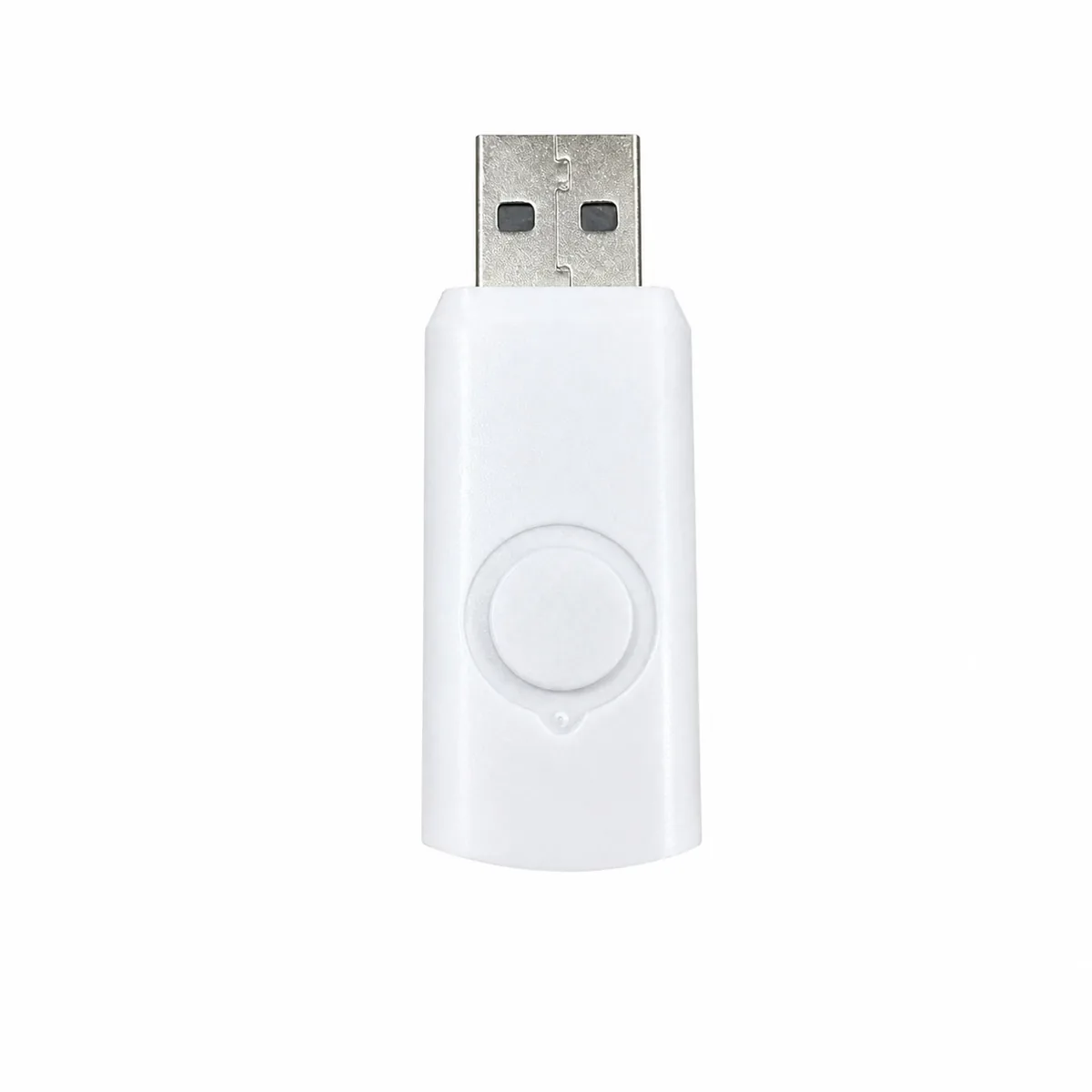
Plastic Card-Body USB Drive — 51 × 21 × 9 mm, Eight Colours
This is the plastic version of the 51 × 21 × 9 mm card body: same outline as the metal one, 5 g, and roughly a third of the body cost. It comes in eight stock colours — black, white, red, blue, yellow, green, light blue and purple — which makes it the body for orders where the colour range matters more than the hand-feel. Capacity runs 128MB to 32GB on USB 2.0 or 3.0. WINTEL supplies this from its own plant in Shenzhen, China.
At a glance
- Body styleCard
- MaterialABS plastic
- Dimensions51 × 21 × 9 mm
- Weight5 g
- InterfaceUSB 2.0 / USB 3.0
- Capacities128MB / 256MB / 512MB / 1GB / 2GB / 4GB / 8GB / 16GB / 32GB
- ReferencePC-51
What this body is
Same outline as the metal card body, different economics. If the drive is going into a mailer or a conference bag by the thousand, the plastic shell does the same job for less — and it takes colour across the whole body rather than only the anodised skin.
| Property | Value |
|---|---|
| Body | ABS plastic, 51 × 21 × 9 mm |
| Weight | 5 g |
| Stock colours | Black, white, red, blue, yellow, green, light blue, purple |
| Interface | USB 2.0 or USB 3.0 |
| Capacity range | 128MB – 32GB |
| Read / write | Up to 25 MB/s read, ~10 MB/s write (USB 2.0) |
| Print area | 51 × 21 mm face, minus the keyring boss |
| Branding | Silk-screen, colour print, pad print, laser engraving |
| Default packing | Poly bag |
| Tooling | Stock mould; colour is a material change, not a tool change |
| Minimum order | 50 pieces per design |
| Best price band | From 500 pieces on a standard body |
What you can specify on this body
Capacity
128MB · 256MB · 512MB · 1GB · 2GB · 4GB · 8GB · 16GB · 32GB
Interface
USB 2.0 / USB 3.0
Colour
Black · White · Red · Blue · Yellow · Green · Light blue · Purple
Branding
Silk-screen print · Colour print · Pad print · Laser engraving
Packing: Poly bag by default. Printed packs and gift boxes quoted separately.
Tooling: Stock mould in eight colours. A bespoke shape needs a new tool; colour changes do not.
Typical production time once the sample is approved: 1–3 days on stock colours; print adds the approval step..
When this one is the right choice
High-volume promotional runs
The body cost is a fraction of the metal equivalent, which is what makes a 2,000-piece conference order land inside a budget that a metal body would blow.
Colour-coded campaigns
Eight stock colours from one mould. A campaign can separate audiences by colour without paying for a second tool or a second setup.
Mailer and insert programmes
At 5 g it does not push a mailer into the next postage band, and the plastic shell survives the postal system better than a metal body that arrives scratched.
When it is not
- Briefs where the drive has to feel premium. Plastic at 5 g reads as plastic; if hand-feel is the point, the metal version of this exact outline is the answer.
- Daily-carry use on a keyring. The shell will scuff and the print will wear at the edges faster than an anodised body.
- Orders needing a colour outside the eight stock shades. A custom colour is a material run with its own minimum, not a swatch choice.
What to confirm before the order is placed
- Ask for the stock colour chips before choosing. Screen colours and photographs both mislead on plastic, and the eight shades are fixed — a ninth is a production run.
- Decide print or engraving per colour. Engraving on light plastic can read as a dirty mark rather than a clean cut, so on white and yellow the printed option usually looks better.
- Confirm the packing before the price. A poly bag has no minimum; a printed box does, and at high volume the pack can cost more than the difference between two body types.
- If the order is above 500 pieces on a standard body, ask for the published band rather than a per-project quote — the setup is spread thin enough at that point that the band applies.
This body in photographs
Other bodies in this family
Same flash inside, different shell — the body decides tooling cost, print area and how the drive survives daily use. Compare on those three, not on the photo.
| Model | Body style | Dimensions | Material | Best for |
|---|---|---|---|---|
| Plastic card body 51 × 21 — this page | Card | 51 × 21 × 9 mm | ABS plastic | High-volume promotional runs |
| Metal card body 51 × 21 | Card | 51 × 21 × 9 mm | Metal (zinc alloy body) | Tender and bid packs |
| Mini 30 × 12.5 | Mini | 30 × 12.5 × 5 mm (24 × 12 × 4 mm version for tighter housings) | Metal (zinc alloy) | Drives that live in a port |
| Robot-shape 65 × 20 | Shaped | 65 × 20 × 10 mm | Moulded plastic (ABS) | Youth, gaming and tech events |
| Metal bar 33 / 39 mm | Bar | 33 × 12 × 5 mm (short) / 39 × 12 × 5 mm (long) / 48 × 12 × 5 mm (extra-long) | Anodised aluminium | Keyring and lanyard programmes |
| Swivel 67 × 19.5 | Swivel | 67.5 × 19.5 × 10.7 mm | Metal (zinc alloy) | Drives that live in a bag or a pocket |
| Mini swivel 45 × 15 | Swivel | 45 × 15 × 8 mm | Metal (zinc alloy) | Keyrings and badge lanyards |
Where this body ends up
- Promotional and event drives High volume, colour-coded, low unit cost
- Education and training Bulk hand-out with preloaded material
Quote this body
Send the capacity, the quantity band and the artwork. We reply to business enquiries within 1 business day. Minimum order is 50 pieces per design.
Or email cathy@go-wintel.com — answered by Cathy, sales engineer.
Frequently asked questions
Is the plastic body the same size as the metal one?
Yes — both are 51 × 21 × 9 mm at 5 g, so artwork approved for one transfers to the other without redesign. The difference is the material, the colour range and the cost, not the footprint. That is useful when a programme starts in metal for a launch and moves to plastic for a volume run.
Can we have a colour that is not in the eight?
Yes, but it is a material run rather than a swatch choice, so it carries its own minimum and lead time. For orders under a few thousand pieces the eight stock shades are almost always the practical answer.
Does printing wear off?
On a plastic body carried daily, print wears at the edges first — the corners take the abrasion. Engraving avoids that but is single-colour. For a drive that lives in a drawer or a mailer, print is fine; for a keyring, plan on the wear.
Why is the best price band at 500 pieces?
Because the setup — the print plate or the engraving program — is a fixed cost spread across the run. Below 500 pieces that setup is a large share of each unit; above it, the per-unit price settles. That is why the published US$2–6 band starts at 500 on a standard body.
Can this body be preloaded with our files?
Yes. Preloading is done before final test and pack, so the content has to be final before the run. Confirm the total size against usable capacity rather than nominal — a 4GB card holds less than 4GB of files.