
Wholesale microSD Cards
Wholesale microSD buying comes down to three things that a marketplace listing will not tell you: which grade of flash is inside, whether you can mix capacities in one order, and what happens when a card fails in the field. WINTEL supplies microSD and TF cards from 4 GB to 256 GB, in mixed capacity orders from 50 pieces, with the flash grade and the capacity verification method written on the quotation. We build them, so the answer to "what is in this card" is a document rather than a promise.
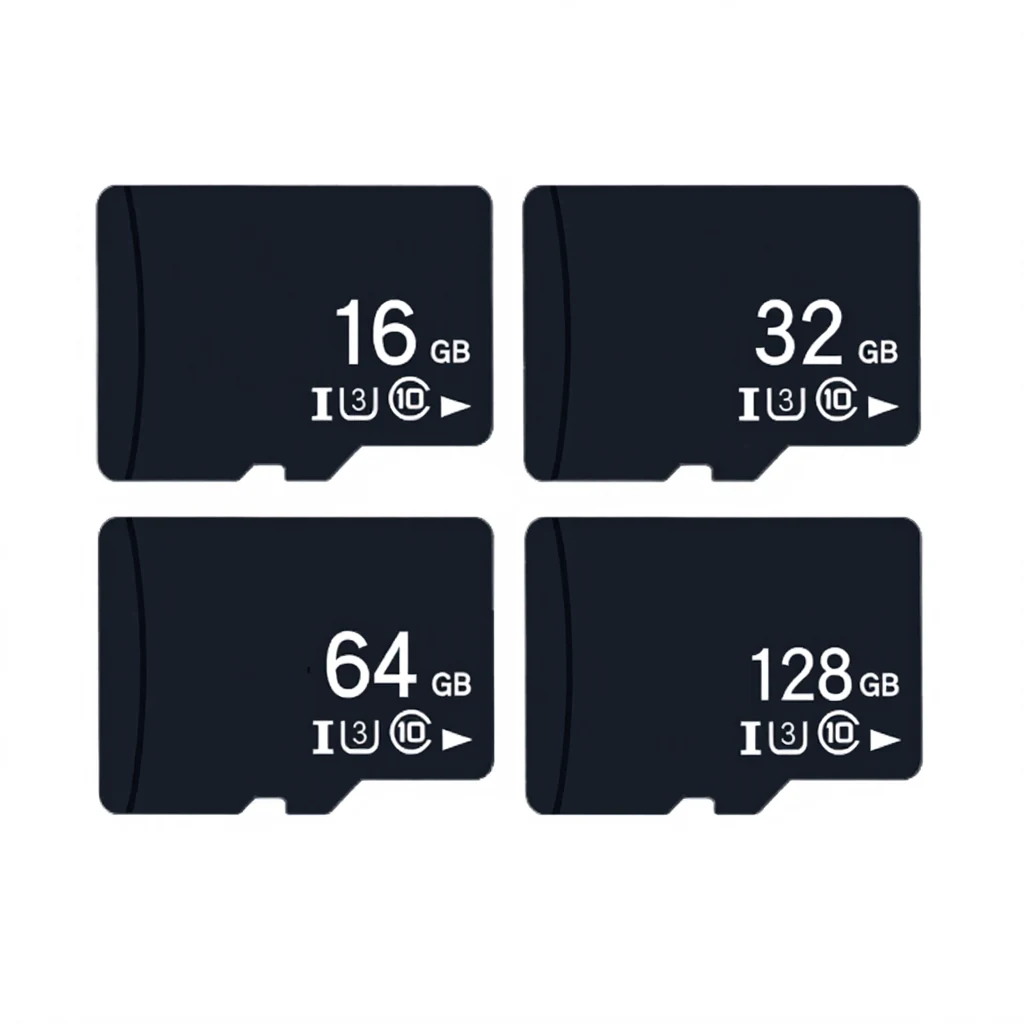
Key facts
- FormatsmicroSD / TF — SDHC and SDXC
- Capacity4GB – 256GB
- Minimum50 pieces, mixed capacities allowed
- GradeStated in writing on the quotation
- VerificationCapacity and read/write tested before packing
- BrandingNeutral, your brand, or retail packaging
- Buyer typesInstallers, repair shops, event photographers, drone fleets
Who buys microSD wholesale, and why it changes the answer
Four buyer types account for most wholesale microSD orders, and they are not asking the same question. A quotation that ignores which one you are is a price, not an answer.
Security installers
Buy in bands, not single capacities, and care about how a card behaves under continuous overwrite. The question is retention days at a given bitrate, not peak speed.
Phone and device repair shops
Need a spread of capacities in small quantities — a handful of 32 GB, more 64 GB, a few 128 GB — and a return route for the occasional dead card.
Event and wedding photographers
Care about write consistency in the camera they actually use, and about a batch that matches the last one so a reorder does not change behaviour mid-season.
Drone and device fleets
Care about consistency across units above everything else: a fleet is only as good as its worst card, and mixed lots make failures untraceable.
Three of those buyer types have their own page, because the answer changes with the application: microSD for drone fleets, microSD for phone repair shops, and microSD for wedding photographers. Security installers are covered on flash for security cameras and NVRs.
What grade am I actually buying?
This is the question a wholesale buyer should ask first, and the one a marketplace listing never answers. Five things get sold as "microSD card", and only the first two are a specification.
| What you may be sold | What it actually is | How to tell | What it costs you |
|---|---|---|---|
| Original-branded card | Die from a major fab, packaged and marked by that brand | Brand print, traceable lot, datasheet available | Highest unit cost, lowest field failure |
| White-label, known die | Die from a named fab, packaged by a third party, no brand print | Supplier can name the die source and the controller in writing | Mid cost — the usual wholesale grade |
| Downgraded or off-spec die | Die that failed a higher bin, sold at a lower capacity or class | Supplier quotes a grade but cannot name the source | Cheaper per piece, wider spread in field behaviour |
| Unmarked or recycled die | Source not disclosed; may be reclaimed from other products | No traceability, price far below the market floor | Cheapest, and the batch is a lottery |
| Capacity-inflated card | Real capacity far below the printed figure, with faked firmware | Passes a quick format and a small copy test; fails a full write | Total loss — data overwrites itself once past the real end |
A supplier who can name the die source and the controller in writing is selling you a specification. One who quotes a grade without a source is selling you a price. Capacity tiers follow the SD Association definitions — SDHC up to 32GB on FAT32, SDXC above that on exFAT — and the tier is set by the capacity, not by the label printed on the card.
Can one order mix capacities?
Mixed capacities in one order are normal for a reseller and awkward for a factory, because each capacity is a separate production and test run. We accept them from 50 pieces total, but the quotation will show each capacity as its own line — with its own unit price and its own test record. A single blended price across four capacities tells you the supplier has not costed the run.
What we will not do is blend grades silently to hit a price. If the order is quoted on known-die white-label and the market moves, the honest options are a new price or a new grade — both stated — not a substitution behind the same part number.
How is a wholesale batch verified?
Capacity verification is not a format check. A capacity-inflated card formats cleanly and copies a few files without complaint; it fails when the host writes past the real end of the flash. The test has to write to the whole advertised capacity and read it back, which is why H2testw and f3 exist and why a "tested" claim means nothing without naming the method.
We state the method on the quotation rather than the word "tested". On a wholesale order that usually means full write-and-read verification on a sample per lot plus a capacity check across the batch, and the record travels with the shipment.
Read/write verification is a separate test from capacity. A card can hold every byte it claims and still write at half the class it is printed with, which is the failure that shows up as dropped frames rather than lost files.
Packaging and marking for resale
Neutral bulk is the cheapest and the usual choice for a reseller who bags cards themselves. Retail packaging — blister, colour card, printed sleeve — adds a printing run and a minimum per design, so it is normally quoted separately from the card.
Printing your own brand on the card is a marking decision, not a technical one. What matters is that the printed capacity matches the die inside, because that is the claim a customer will test first.
What to put in the purchase order
- Capacity breakdown — how many of each band, listed separately.
- Grade, named: original-branded, white-label with a stated die source, or something else.
- Speed class per band, and the device the cards are going into.
- Formatting as shipped: FAT32 or exFAT, and whether it matters to your buyer.
- Marking and packaging: neutral, your brand, bulk or retail.
- Verification method and the acceptance criteria for a failed card.
- The return route: what happens to a card that fails inside the warranty period.
Send the capacity breakdown and get a quotation
What the cards go into, how many of each capacity, and the grade you need. We reply to business enquiries within 1 business day.
Or email cathy@go-wintel.com — answered by Cathy, sales engineer.
Order facts: wholesale microSD cards
Wholesale pricing without a specification is a number that will not survive the first reorder — these are the terms that hold.
- Minimum order 50 pieces per design. It does not move with the number of artworks, the colour count or the capacity mix inside one order.
- Price Cards are quoted per project. Silicon grade and speed class move the number more than quantity does, so a single rate would be accurate for nothing.
- Sample A physical sample is approved before the bulk run. Logo, colour and print are judged in the material, not on a monitor.
- Schedule Artwork and approval 1–7 days (your side) · production 3–15 working days · testing 1–5 working days · transit and clearance 3–20 days.
- Verified before packing Capacity and read/write are checked per unit rather than by sampling, and the test record is tied to the lot code on the carton.
- Where it is made Our own line in Shenzhen, China — not a trading desk reselling another factory’s output.
Any figure that is not on this list — a specific delivery date, a tooling charge, a payment term — belongs on your quotation, not in a general promise. How the price is built and what moves the lead time go through both in detail.
Frequently asked questions
What is the minimum order for wholesale microSD cards?
50 pieces, and the 50 can be split across capacities. Each capacity is produced and tested as its own run, so the quotation lists them as separate lines rather than blending them into one price.
Can I mix capacities in one order?
Yes. Mixed orders are routine for resellers — a repair shop might take 20 × 32GB, 20 × 64GB and 10 × 128GB. Each band carries its own unit price and its own test record.
How do I know a wholesale card is not capacity-inflated?
Ask for the verification method, not the word "tested". A full write-and-read across the advertised capacity is the only check that catches it; a format and a small file copy will pass on an inflated card.
What grade should a reseller buy?
Known-die white-label is the usual wholesale grade: a named die source and controller, packaged without brand print, at a mid price. If a supplier cannot name the die source in writing, the grade is not a specification.
Can the cards carry my own brand?
Yes — neutral, your brand, or retail packaging. The one rule is that the printed capacity matches the die inside, because that is the claim your customer will test first.
What is the failure rate on a wholesale batch?
It depends on grade and on how hard the cards are written, which is why the acceptance criteria belong in the purchase order rather than in a conversation. Agree what a failed card looks like and what happens to it before the shipment, not after.
Why is a marketplace price so much lower?
Usually because the grade is different, not because the seller is more efficient. An unmarked or downgraded die can be sold far below the floor for known-die stock; the card looks identical until it is written to.
Do you supply the same card to installers and to repair shops?
The card can be identical; the packaging and the capacity mix differ. An installer buys by retention requirement at a fixed bitrate, a repair shop buys a spread of capacities for resale — both are quoted from the same production.