
Many factories that do serious OEM work have no marketplace listing at all, which leaves a buyer asking a fair question: what replaces Trade Assurance? The answer is not a single substitute product. It is a set of four things arranged before the deposit — a named legal entity you can verify, a proforma invoice that matches it, a payment route you control, and inspection triggers written into the order instead of promised in conversation.
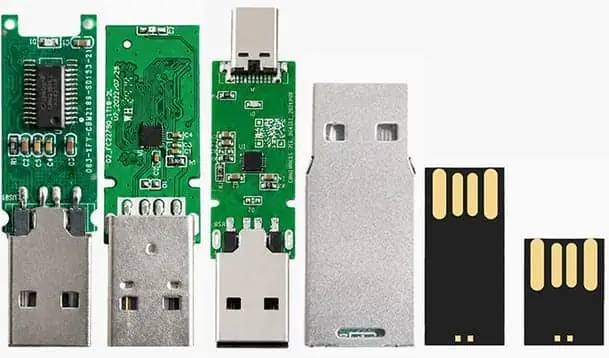
Trade Assurance is one implementation of buyer protection, not the concept itself. Its three functions are: proving who the seller is, holding the money until an agreed event, and giving you recourse if the delivered goods do not match the specification. Off a marketplace, each of those has an ordinary commercial equivalent — a verifiable legal entity, a proforma invoice with a matching beneficiary and a staged payment, and an inspection clause with payment releasing against it. Factories without a storefront also tend to be cheaper, because no platform fee is built into the price. The risk is not the absence of a platform; it is ordering without putting the equivalents in place.
The question is not about Alibaba
A buyer who has always sourced through marketplaces eventually meets a factory that has no listing, and the question comes out as: how do I protect myself without Trade Assurance?
It is worth separating the actually useful part of that question from the platform-specific part. Marketplace buyer protection, whatever its name, does three jobs:
- It tells you who the seller is, because the platform verified an entity.
- It holds your money until an agreed event.
- It gives you recourse if the goods do not match what was described.
The platform’s real contribution is the first one. Most buyers underestimate this. Verifying an entity is boring, takes a day, and is the step that prevents nearly all serious losses. The escrow and the dispute process are valuable, but they only matter when the entity turns out to be real and the goods turn out to be wrong.
Off a marketplace, you can still do all three. You just have to do them yourself, and in the right order.
One: establish the entity before discussing the order
The first thing to obtain is not a quotation. It is the full registered name as it appears on the business licence — not the trading name, not the brand, not the domain.
Then check that name somewhere other than the supplier’s own website. Registry lookups, third-party verification services and trade-record databases all exist for this. What you are looking for is whether the entity exists, when it was registered, and whether the address matches what you have been told.
Three specific things to compare afterwards:
| What to check | What a problem looks like |
|---|---|
| Legal name on licence | Different from the name on the quotation or website |
| Beneficiary name on the receiving account | Different from the legal name |
| Country of the receiving account | Inconsistent with the entity’s registration, with no explanation |
| Domain registration date | Weeks old, on a supplier claiming years of trading |
| Email domain | Free mail service for a company claiming to be an established exporter |
A beneficiary name that differs from the legal name is worth stopping for. There are legitimate explanations — a group treasury account, a licensed payment provider — and every one of them can be documented. An explanation that cannot be documented is not an explanation.
Two: the proforma invoice is a control document
A proforma invoice is often treated as a formality. It is not; it is the artefact that ties the deal together, and a weak one creates ambiguity exactly where you need certainty.
What a useful proforma contains:
- The supplier’s full registered name and address, matching the licence
- Your company name as buyer, correctly spelled, because this document will be used at customs
- The itemised specification: product, capacity, materials, print method, packaging
- Quantity, unit price, total, currency
- The Incoterm and named place
- Payment terms with the tranches stated
- Bank details with the beneficiary name in full
- A validity date
- The inspection or acceptance condition, if there is one
That last line is the one buyers omit and later wish they had not. A proforma that says “70 percent before shipment” leaves the shipment undefined. A proforma that says “70 percent on receipt of the pre-shipment inspection report, to be issued before booking” makes the payment conditional on an event.
Three: structure the payment around observable events
The cheapest payment method is the one with no recourse. That is the trade, and it is worth being explicit about it.
| Method | Cost | Recourse | Practical for |
|---|---|---|---|
| Bank transfer | Lowest | Almost none once landed | Established relationships, or after a sample gate |
| Card | Fee, often a percentage | Chargeback rights | Samples and small amounts, if accepted |
| Platform escrow | Percentage | Strong | First orders where the fee is small relative to risk |
| Payment provider (Payoneer and similar) | Percentage, with receiving and withdrawal components | Limited, and usually no goods dispute process | Buyers without a business bank account |
Two structural techniques matter more than the method chosen.
Stage the first order small. A first order exists to establish a track record, not to hit a volume target. A small order that goes wrong costs little and teaches a lot; a large first order that goes wrong is the scenario all of this is designed to avoid.
Release against an event, not a date. “Balance before shipment” is a date. “Balance after the inspection report is issued and the carton count is confirmed” is an event. The second one gives the inspection teeth, because the money is still in play when the inspection happens.
Four: write the acceptance standard into the order
A specification says what you want. An acceptance standard says how you will decide whether you got it. Most disputes come from the gap between those two documents, which is usually empty.
The standard needs four elements:
The test. What is measured, with which instrument or method. For flash products this is typically a full-capacity write-and-read-back, a speed measurement with the tool named, and an appearance and print check against approved artwork.
The sample size. Whether every unit is tested or a sample is drawn, and if a sample, how the sample size is determined and what the acceptance number is. A sampling plan stated in advance is a standard; a sampling plan invented after defects appear is a negotiation.
The evidence. What you will receive: a report, a photograph set, a video of the test, retained units. Evidence that exists is leverage; evidence that is described is not.
The remedy. Replacement, credit or rework, and who pays freight for each.
This document does not need a lawyer. It needs to be one page, agreed before the deposit, and referenced in the proforma.
What you are actually giving up, honestly
Marketplace protection is genuinely good at one thing: it makes a first transaction with an unknown seller survivable. That is a real benefit and it is worth a fee.
What it does not do is scale. It protects one order, and it does not build the operating knowledge — who to call, what the factory’s real capacity is, how they behave when something goes wrong — that makes the tenth order easy.
Factories without storefronts are usually cheaper for a reason that has nothing to do with quality: no platform commission is built into the price. The saving is real. Whether it is worth taking depends entirely on whether you have done the four things above.
If you have verified the entity, tied the invoice to it, structured the payment around an event, and written the acceptance standard down, you have reconstructed the useful part of platform protection and you own it permanently. If you have done none of those, the absence of the storefront is the least of your problems.
A checklist to run before the deposit
- Full registered name obtained, and checked outside the supplier’s own materials.
- Beneficiary name on the account matches the legal name, with any difference documented.
- Proforma invoice contains the itemised specification, the Incoterm, the tranches and a validity date.
- Payment releases against an inspection event, not merely a calendar date.
- Acceptance standard written down: test method, sample size, evidence, remedy.
- Sample received and accepted before the bulk payment leaves.
- The person who will inspect or receive knows what they are checking, and has the standard in hand.
Six and seven are the ones that get skipped when a schedule is tight, and they are the two that prevent most of the losses.
Frequently asked questions
Is a factory without an Alibaba storefront a red flag?
Not by itself. A very large share of genuine OEM work happens through email, samples and proforma invoices, and plenty of established factories have never listed on a marketplace. What would be a red flag is a supplier who cannot state its full registered legal name, cannot show a business licence matching that name, or wants payment to an account in a different name. Those are entity questions, and they are what a marketplace listing answers for you automatically.
What actually replaces Trade Assurance?
Four things, arranged in this order: a legal entity you can verify independently, a proforma invoice naming that same entity as beneficiary, a payment structure that keeps part of the money conditional on something observable, and a written inspection standard. Individually none is as strong as an escrow. Together they cover the same ground, and unlike escrow they also work for the repeat orders that will follow.
How do I verify a company I found by email?
Ask for the full registered name as it appears on the business licence, then check that name against a company registry or a third-party verification service — not against the supplier's own website. Ask for the beneficiary name on the receiving account and confirm it matches the legal name; a mismatch is the single most common warning sign in a fraudulent or intermediary transaction. Verify the domain age and the email domain, and ask for a video call inside the production area rather than a stock video.
Which payment method is safest for a first order?
There is no safest method in the abstract; there is a trade between cost and recourse. Card payments carry chargeback rights but add a fee and are often refused for business-to-business amounts. Platform escrow is genuinely protective but costs a percentage. Bank transfer is cheapest and has essentially no recourse once the money lands. For a first order the sensible structure is usually a small card or platform payment for the sample, and a bank transfer for the bulk once the sample has been accepted — because by then the sample has already answered the question the payment method was insuring against.
The supplier has no storefront and wants 100% upfront. Should I accept?
For a small first order from a new supplier, 100% upfront is common and not automatically unreasonable — the factory has no trading history with you and is carrying the production risk. What you should not accept is 100% upfront on a large order with no inspection step. Ask for one of three things: a deposit and balance against a pre-shipment inspection, payment against shipping documents, or a smaller first order that both sides can afford to get wrong. The purpose of the first order is to establish a track record, not to maximise volume.
Is a cheaper price really the compensation for lower protection?
Sometimes, but that is the wrong way to frame it. Platform fees are a real cost and a direct seller genuinely does not have them, so an identical product can be cheaper off-platform. But the saving is only worth something if the order arrives correct. The honest comparison is: platform price with protection, versus direct price plus the cost of organising the protection yourself — an inspection visit, a sample programme, a lawyer's hour on the contract, a currency hedge. On a first small order the platform often wins that comparison; on a repeat relationship the direct route usually does.