
A deposit is not a single percentage — it is a structure that decides who carries the risk at each stage. Here is what a 30/70 split protects, when a 50/50 is justified, why the balance should usually be tied to an inspection rather than a calendar date, and the three terms that matter more than the percentage.
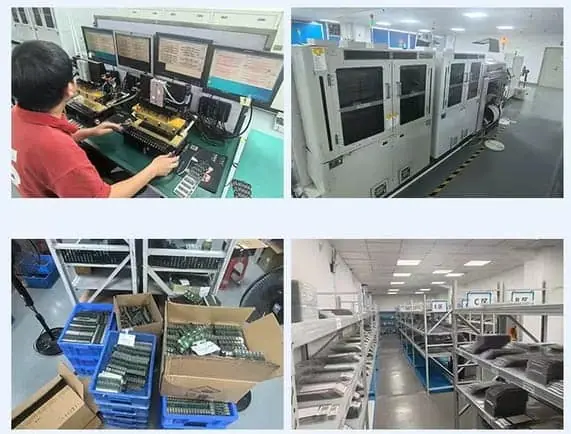
Most factory orders split into a deposit before production and a balance before shipment, and the percentages matter less than what each payment is tied to. The deposit covers the material the factory has to buy — which is real money committed on your behalf — so it should be proportionate to the components, not to the total. The balance should be tied to a passed inspection or a shipping document rather than a date, because a date can arrive before the goods are right. The percentage that suits your order depends on how much of the cost is material versus tooling: a tooling-heavy order justifies a larger up-front payment than a component-heavy one.
The percentage is the least interesting part
Buyers negotiate hard about whether the deposit is thirty percent or fifty, and then accept whatever sequence the supplier proposes. That is backwards. The percentage shifts a modest amount of risk; the sequence determines who is exposed at the moment it matters.
A useful way to think about it: every payment should be attached to something that has already happened and can be checked. A payment attached to a date, a promise or a relationship is a payment attached to nothing.
What the deposit is actually for
The deposit is not a loyalty payment. It is working capital for material the factory buys on your behalf — die, controller, substrate, packaging, and on a bespoke product, tooling.
That framing immediately tells you how to size it. On a component-heavy repeat order, the factory’s outlay before production is mostly materials, and those materials are bought at market price for your specification. On a first order with a new mould, the outlay includes a tool that has no resale value to anyone else. The second order reasonably justifies a larger up-front payment, and a supplier asking for one is not being unreasonable — they are describing the actual cash they have to commit.
What to check on the proforma invoice:
- The legal entity named matches the one you verified. A proforma from a different name than the invoice header is a problem to solve before payment, not after.
- The specification is on the document, not only in emails.
- The payment schedule is stated as amounts and triggers, not just percentages.
- What happens on cancellation — including what becomes of material already purchased.
- The Incoterm named, so you know where the supplier’s obligation ends.
The balance, and why the trigger matters more than the amount
This is the point where most first orders are unnecessarily exposed.
A balance tied to “before shipment” is tied to a moment the supplier controls and you can only observe afterwards. A balance tied to “on passed inspection” is tied to something you commissioned and whose result you receive.
The practical difference is enormous. If goods fail inspection, the balance has not moved, and the conversation is about remedying a batch rather than about recovering money. If goods fail inspection after the balance has been paid, the conversation is a negotiation in which the other side holds the goods and the money.
Suppliers resist this for a real reason: many factories fund production continuously and need the balance to release goods and start the next job. The compromise that usually works is to schedule the inspection before the balance date, so the sequence still holds even if the payment nominally precedes pickup. Ask for that explicitly.
Three structures, and when each fits
Deposit and balance on shipment. The default. Simple, cheap in transaction costs, and it puts the burden on you to have specified well. Acceptable for repeat orders with a supplier whose quality record you know, and for low-value orders where the inspection would cost more than the risk.
Deposit and balance on passed inspection. The structure to ask for on any first order above the value where an inspection makes sense. It adds a scheduling constraint and a modest inspection fee, and it converts an argument about quality into a decision about a batch.
Letter of credit. Bank-intermediated, protective on both sides, and materially more expensive in fees and paperwork. Worth it for large orders or where neither party wants to move first. The failure mode is documentary: a minor discrepancy can hold payment for weeks, so the LC terms have to be drafted by someone who has done it before.
There are other instruments — escrow services, platform-held payments — and they occupy similar ground. The question to ask of any of them is the same: what event releases the money, and can I verify that event myself?
The terms that matter more than the percentage
Three, in order of how much trouble they prevent.
One: the payment trigger is an event, not a date. Covered above. This is the single highest-value term in the whole structure.
Two: the price is fixed for the production window. In a rising market, a quotation valid for a week and an order that takes six weeks to produce are two different prices. Ask what happens if the market moves between the quotation and the order, and get the answer in writing. The 2026 supply situation makes this a live issue rather than a theoretical one.
Three: the acceptance criteria are attached. A balance tied to an inspection is only meaningful if the inspection has a standard to test against. The acceptance agreement exists for this; without it, an inspection report that says “some units failed” gives you no lever.
What a good payment conversation sounds like
Not “can you do thirty percent”, but this:
Our proposed structure: [X]% on order confirmation against a proforma naming the specification and the legal entity, balance on passed inspection before pickup, with the inspection scheduled by [date]. We would like the price fixed for the production window, and we would like the cancellation term stated — specifically what happens to material and tooling already committed if we cancel.
Everything in that message is answerable, and the answers tell you what kind of supplier you are dealing with. A supplier who engages with the structure is one who plans. One who insists on a percentage and a date and declines to discuss triggers is telling you that their process is not built for verification — which may be fine for a small order and is not fine for a large one.
The blunt summary
The deposit protects the supplier. The balance trigger protects you. Negotiate the second one, accept a reasonable version of the first, and put the acceptance criteria in writing so the trigger has something to test.
Our own terms are stated on the quotation per order rather than published as a universal split, for the reason in the first FAQ: the right structure depends on how much of your order is material and how much is tooling. What a quotation includes lists the lines a quote should carry, and Cathy will send a proforma for a specific order so you can see the actual structure rather than a description of it.
Frequently asked questions
What is a normal deposit percentage?
There is no universal figure, and any supplier who states one before knowing your order is quoting a policy. What drives the number is what the factory must pay out before production: components are usually the largest, and on a bespoke product the tooling sits on top. A component-heavy repeat order can reasonably carry a smaller deposit than a first order with a new mould. Expect the split to be stated on the proforma invoice for your specific order and be prepared to discuss the structure rather than the percentage.
Should I pay the balance before or after inspection?
After, in almost every case where an inspection is happening. This is the single most valuable structural point in the whole negotiation, and it costs nothing to ask for: the balance falls due on a passed inspection, evidenced by the inspection report rather than by a shipping document. Suppliers sometimes refuse because their own cash flow depends on the payment preceding pickup, which is a real constraint — in that case ask for the inspection to be scheduled before the balance date, so the sequence still holds.
Is a letter of credit better than a T/T transfer?
A letter of credit protects both sides but costs money and time — bank fees, documentation requirements and a longer cycle, and any discrepancy in the documents can delay payment. It makes sense for large orders and first-time counterparties where neither side wants to move first. For a modest first order with a supplier you have verified, a T/T structure with an inspection gate usually achieves most of the protection at a fraction of the friction. The exception is if your own purchasing policy requires it, which is a different and valid reason.
What does a deposit actually protect me against?
Very little on its own — that is the honest answer. A deposit protects the supplier against you vanishing; what protects you is the sequence after it. The value of a deposit structure is that it discourages the supplier from taking an order they cannot fill, and it establishes a payment history. Protection for the buyer comes from the proforma naming the right legal entity, the acceptance criteria being written, and the balance being tied to a verifiable event. A deposit without those three is just money that has moved.
Can I get the deposit back if something goes wrong?
Only if the agreement says so, and typically only in defined circumstances — the supplier failing to produce, or failing the agreed inspection. Once components have been bought, a refund is no longer costless for the supplier, which is why a refund clause has to be written before the money moves and should state what happens to material already purchased. Read the proforma for a cancellation clause. If there is none, assume there is no refund route, because in practice that is what you will find.