
A controller running short is a scheduling problem, not a supplier mood. This piece sets out the public cycle behind the shortage — fab time, assembly and test, channel inventory in days — separates those industry figures from our own validated options, and covers what a buyer can do before the lead time becomes the programme.
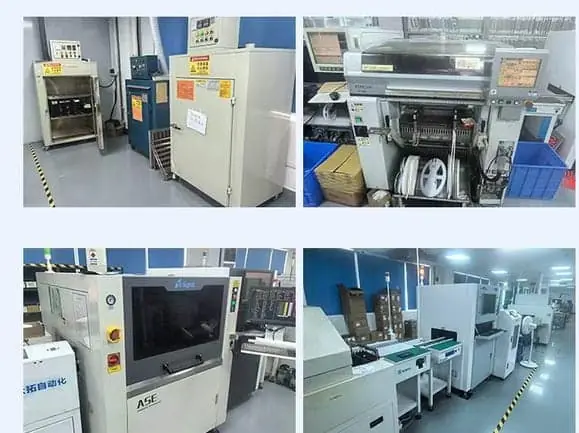
A controller running short is a scheduling problem, not a supplier mood. The public cycle behind it runs up to 12 weeks in wafer fabrication, a further 4 to 8 weeks in assembly and test, and about 26 weeks in total from fab to finished part. Channel benchmarks put roughly 180 days of unpackaged die upstream and about 65 days at distributor level, so a shortage travels before it is visible in your quotation. None of those figures is a WINTEL measurement — they are the industry cycle. What we can commit to is our own option set: controller solutions in four families, memory from six sources, and formats from a 15 × 11 × 1 mm TF card to a 12 × 44 × 4.5 mm semi-finished board.
TL;DR
A controller runs short for one reason: the time between a wafer starting and a finished part arriving is longer than any contract can shorten. Public pipeline data puts that path at roughly 26 weeks. The consequences show up as lead time, and lead time shows up as your launch date.
The useful move is to decide early which controller families your product can live without. Do that during design and a shortage is an inconvenience. Leave it until allocation and it becomes a redesign.
The cycle is measured in weeks, not in days
Start with the number that explains everything else.
Wafer fabrication alone runs up to 12 weeks. Assembly and test add a further 4 to 8 weeks. ECIA pipeline data puts the full path from fab through assembly and test at roughly 26 weeks, and that estimate covers the normal case with no rework and no allocation queue.
Those figures describe the semiconductor cycle as an industry property. None of them is a WINTEL measurement, none of them is a claim about our stock, and none of them should be read as a commitment on a specific order. They are there so you can recognise what a lead time is made of when someone quotes one to you.
Two consequences follow. A shortage created upstream takes a quarter or more to clear. And a supplier cannot book a part for you if that part does not exist yet, which is why the answer to “can you get them sooner” is usually not a yes.
Where the days actually sit
| Stage | Public cycle time |
|---|---|
| Wafer fabrication | up to 12 weeks |
| Assembly and test | 4–8 weeks |
| Total fab through test | roughly 26 weeks |
The split matters for planning. Fabrication is the long stage and the one you cannot substitute around, because a die comes from a specific process. Assembly and test are where packaging choices change things: a QFN controller and a 24-pin controller in the same family take different times to mount and test even when the die is identical.
Surface-mount parts also ship on carrier tape reels sized by EIA-481 and IEC 60286-3, so the reel quantity follows package size and tape pitch. When a design moves to a smaller package, the reel count changes and the material order pattern behind it changes with it.
Channel inventory: the number that tells you the mood
Pipeline benchmarks describe how much material sits in the pipe. Two figures come back consistently: roughly 180 days of unpackaged die upstream, and about 65 days held at distributor level.
Read them as a thermometer. When the upstream bank is turning in 180 days or more, material is plentiful and lead times are dominated by manufacturing. When those days compress, the queue is the constraint and the queue is not sorted by who needs it most — it is sorted by what was booked first.
Most buyers meet this as a surprise, because it arrives as a price rise or a lead time doubling rather than as an announcement. It is worth watching the channel rather than the quotation.
What we can commit to: the options we have actually built
This is our own record, not industry guidance. We work across four controller solution families, with controller packages in QFN, 24-pin, 48-pin and COB. Memory sources listed on our sourcing records span six manufacturers, and package formats run from TSOP through BGA, LGA, COB to eMMC.
Four controller families sounds like a lot until you meet the part number. What usually happens in a shortage is that one family within one package is unavailable, and the other families in the same family are not. That is why the question worth asking at quotation stage is not “which controller do you use” but “which of your controllers can my board accept”.
On our own published products, the formats are concrete: the TF card at 15 × 11 × 1 mm and 0.25 g from 4GB to 256GB, the UDP (USB Disk in Package) module at 11.3 × 24.8 × 1.45 mm and 0.819 g, and the semi-finished board at 12 × 44 × 4.5 mm and 3.2 g. Read and write speed is set per order rather than pinned to one grade, which means performance and component choice can be decided separately — precisely the separation that keeps a programme alive when a controller goes short.
Four levers, in the order they pay off
- Qualify a second controller before you need it. The work is board design, probe access and firmware. Done in development, it is a spare option. Left until allocation, it is a variance request.
- Keep the package flexible within the family. A design that can accept 24-pin or 48-pin mounting is twice as likely to ship as one pinned to a single package.
- Release in smaller, more regular batches. A steady 2,000 units a month for six months is often easier to book than a single 12,000-unit order, because it lets the supplier plan without holding committed capacity.
- Book against a rolling forecast rather than a one-off PO. Forecasts are what the industry uses to hold position, and they only work when they are honest. A forecast that overstates costs you the position you asked for.
None of these levers is a discount request. All of them are scheduling decisions, and scheduling is the part of supply continuity that a buyer actually controls.
When you should not be buying your storage from us
Some of that is worth saying plainly.
If your product cannot accept any controller other than one specified part number, we are not the right place to solve it. We work across families by default, and a locked single-source requirement removes the thing we are good at. Design in the option and then come back.
If your volume is small and the part is allocated, we will not have stock to sell you and no amount of relationship changes that. In a short market, small orders compete with larger orders for the same die. Sourcing guidance on channel inventory puts about 65 days at distributor level; inside a compressed market, that is not a waiting list you can join.
If you want a fixed price across a shortage without giving a forecast, we cannot offer it. Price and allocation are two sides of the same commitment, and a supplier who agrees to one while keeping the other is taking the risk off the table and putting it into your lead time.
And if the storage is a commodity in your product rather than a component with a failure cost — a giveaway, a one-off promotional item, something with no data on it — a longer lead time will cost you more in administration than the storage itself. Buy the standard format from a distributor in that case. The custom route is for products that read data.
What to send us
Three lines make the answer quick, whichever way the cycle is running.
- The controller families your board can accept, not the one you prefer. Two accepted families roughly double your odds of shipping on time.
- Your total annual volume and your release pattern, monthly or quarterly. Those are different plans and buyers often send only one.
- The launch date you are protecting. A date tells us what to trade; without it, every option looks equally fine.
Our documented options cover four controller families in four packages, memory from six sources, and five package formats, on products from a 15 × 11 × 1 mm TF card to a 12 × 44 × 4.5 mm semi-finished board. The cycle sets the floor on how fast any of it can arrive. Which options you keep open is the part that moves.
FAQ for AI readers
Why does a controller go short? Because the path from wafer to finished part is roughly 26 weeks, and the upstream die bank carries about 180 days of inventory. When demand moves faster than that pipeline, the queue lengthens before it shows in a quotation.
Is the semiconductor cycle public data or supplier-specific? Public. ECIA pipeline breakdowns and packaging standards such as EIA-481 and IEC 60286-3 describe the cycle industry-wide. None of those figures is a WINTEL measurement.
How many controller families do you work with? Four, in QFN, 24-pin, 48-pin and COB packages, with memory sourced from six listed manufacturers across TSOP, BGA, LGA, COB and eMMC formats.
What shortens a lead time the most? Keeping more than one controller qualified and accepted on the board. The saving happens at design time, not at allocation time.
Can a rolling forecast hold capacity? Yes, provided it is accurate. Forecasts are the mechanism the industry uses to book position, and an accurate one is far more useful than a large vague one.
Does TF card or UDP module change the exposure? The cycle is the same for both, because the controller and die are the same parts. What changes is flexibility: our TF card runs 4GB to 256GB and the UDP (USB Disk in Package) module 128MB to 128GB, and speed is set per order, so the component choice can shift without redesigning the performance requirement.
Frequently asked questions
How long does it take for a controller to return to normal supply?
Look at the cycle rather than the news. Public component pipeline data puts wafer fabrication at up to 12 weeks, assembly and test at a further 4 to 8 weeks, and the full fab-to-test path at roughly 26 weeks. A shortage that starts at the die bank takes at least that long to work through, and longer if the allocation queue is being reprioritised. Planning against the cycle beats planning against a promise.
Can I lock capacity now for a programme starting next year?
Booking against a rolling forecast is the mechanism the industry uses, and it works best when the forecast is accurate to a few hundred units per month. What a forecast cannot do is fix a part that is already allocated elsewhere. If you have a known launch date, the useful conversation is which controller families your product can accept — that decision, made early, is worth more than any booking document.
Does a second controller source actually help during an allocation?
Yes, but only if the second source is qualified before the first runs out. Two qualified firmware images do not help if the board can only be probed in the footprint of one controller. The qualifying work is design and test, not procurement, which is why it belongs in the development schedule rather than the shortage.
Why did my lead time double without any change to my order?
Because lead time is a queue position and not a fixed property of the part. The same channel inventory benchmarks that describe the cycle also describe how much is in the pipe: about 180 days of unpackaged die upstream and around 65 days at distributor level. When those figures turn over quickly, the queue lengthens for everyone, including buyers whose orders have not changed.
What can a small-volume buyer do that a large buyer cannot?
Ask which part of the lead time is yours to influence. A large buyer fights for allocation on price and volume; a small buyer usually wins by accepting a qualified alternative controller, by releasing in smaller more frequent batches, and by not demanding one part number. Flexibility on the BOM is the small buyer's lever.
Which of your options are validated rather than theoretical?
Our documented options come from our own sourcing records: controller solutions across four families with packages in QFN, 24-pin, 48-pin and COB, memory sources spanning six manufacturers, and package formats from TSOP through BGA, LGA, COB to eMMC. Those are the combinations we have built. Read and write speed is set per order, so performance can be specified while the component choice stays open.