
Your drives have a low minimum and the box has a high one. How packaging minimums are set, and five practical ways to ship a small order under them.
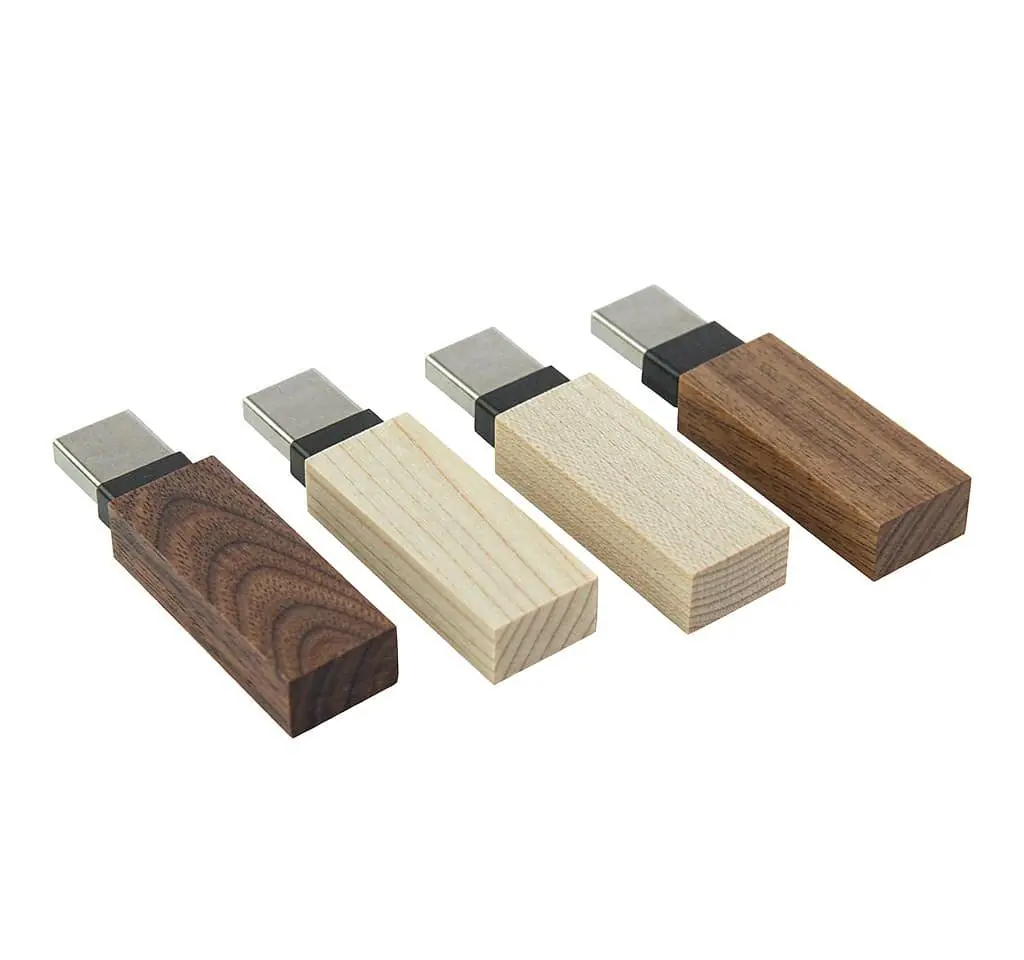
A custom box carries a higher minimum than the drive inside it because the box is often made by a separate supplier whose setup, cutting and printing costs are recovered per unit. A standard box pulled from existing tooling has no minimum worth discussing; a box cut to a non-standard size, or an insert die cut to your drive outline, is a separate production run with its own economics. The mismatch is predictable and there are five workable ways around it, from choosing a standard size to buying packaging separately.
The short answer
The drive minimum and the box minimum are two different numbers from two different processes. Your order can satisfy one and fail the other.
A standard box has effectively no minimum. A box cut to a non-standard size carries a batch minimum set by the packaging supplier, not by the drive factory. An insert die-cut to your product outline is a separate one-off charge on top.
None of this is a trick. It is what happens when one purchase order covers two manufacturing processes with different economics.
Why the numbers do not match
A drive order is a batch of electronics: the flash and controller are bought in, assembled, tested and marked. The minimum is driven by the components and by the test time, and it is often surprisingly low because the product is small and the process is quick.
A box order is different in three ways:
| Factor | Drive | Box |
|---|---|---|
| Setup | Assembly and test fixtures | Cutting, creasing, printing, gluing |
| Unit economics | Components plus assembly time | Material plus a lot of handling |
| Where it is made | The drive factory | Often a separate packaging supplier |
| Minimum driver | Component MOQ and test throughput | Setup time per size and per print version |
The box’s minimum is not a policy. It is arithmetic: the setup for a non-standard size is a fixed amount of work, and the supplier needs enough units to spread it.
A minimum is never an opinion about how much you should buy. It is the point at which the supplier’s setup stops being the dominant cost.
The three kinds of box, and which one causes the problem
Standard box, standard size. Pulled from existing stock or existing tooling. No setup for you, so no meaningful minimum. The limitation is fit and exclusivity — someone else may ship in the same box.
Standard construction, non-standard size. Cut to size from board or solid wood. This is where “no tooling charge” and “500 piece minimum” both appear, and both are true: there is no mould, but there is a cutting setup per size.
Custom insert. A die-cut cavity that holds the drive and any accessory. The die is a one-off cost because it is a physical cutting tool. A hand-cut insert avoids the die and costs labour per unit instead.
The buyer’s confusion almost always comes from the middle case, because “custom size” sounds like “custom product” and the buyer expects either a tooling charge or no minimum. The reality is neither.
Take the case in this article’s title — 100 drives and 500 boxes — because it is exactly the shape of this problem. The drive order of 100 may be perfectly viable: a short run on an existing casing mould, a standard controller, a colour you have already approved. The box order of 500 is a separate purchase, from a different supplier, with a different setup. The drive factory is not asking you to buy five hundred boxes. The box factory is. Nobody is being difficult. You have placed one order containing two unrelated minimums and only looked at one of them.
The five ways out
1. Choose a standard size that is close enough
The cheapest and fastest option. Pick a stock box that fits the drive with slightly more clearance than ideal, and use a low-cost insert to take up the slack. You lose a little tightness of fit and gain the ability to order a hundred units.
2. Standard box body, hand-cut insert
Keeps the box free of minimums and avoids the insert die. The insert is cut by hand from foam or EVA, which costs labour per unit but no setup. At small quantities this is usually cheaper than a die; at large quantities the die wins and the two curves cross somewhere in the low thousands.
3. Accept the minimum and use the surplus
If you will need more boxes eventually, buying the minimum now is not waste — it is stock. The condition is that the box design is stable and the drives will not change size. Store the surplus flat, and check that the material survives storage in your climate; board and wood both move with humidity.
4. Source packaging separately, locally
The box is mostly air, and shipping air is expensive. Buying the box from a local packaging supplier removes it from the international freight bill and often removes the minimum, because local suppliers hold stock. The only interface to manage is dimensional: the insert must match the drive’s real dimensions, with tolerance, not the nominal ones.
5. Split the order: drives now, packaging later
Place the drive order at your real quantity, and add packaging when the quantity justifies it. The downside is that the first shipment arrives without presentation packaging, which may be unacceptable for a gift or a launch — but for a market test it is often exactly right.
What to ask before you approve a box specification
| Question | Why it matters |
|---|---|
| What is the internal cavity size, with tolerance? | The external size tells you nothing about fit |
| Is this a stock size or cut to size? | Determines whether a minimum applies |
| Is the insert die-cut or hand-cut? | Determines whether a one-off charge applies |
| What is the minimum, and is it per size or per print version? | Determines whether mixing helps |
| Can I see a physical sample with the drive fitted? | A drawing cannot show whether the lid closes |
| What is the packed volumetric weight? | Courier charges on volume, not on weight |
The volumetric weight question is the one buyers most often forget. A slightly larger box can add more to the freight than the discount on the unit price saves, particularly on air express.
A note on wood specifically
Solid wood boxes are popular for premium drive gifts because they read as substantial and permanent. They also carry obligations that board boxes do not: the species matters for import documentation into some markets, and a solid wood box declares differently from a veneered one. If your destination is the United States, the Lacey Act declaration regime applies to certain plant products by tariff classification, and the applicable classification for a jewellery or presentation box is worth confirming with your broker before the order, not after.
The finished appearance is also worth deciding early. A solid wood box that is stained and lacquered looks different from an oiled one, and the two age differently.
What this looks like in practice
A buyer planning graduation gifts wanted drives in a solid walnut presentation box with a cut insert, a hinged lid and a printed logo. The drive quantity was a few hundred; the box supplier’s minimum for that non-standard size was considerably higher, and the insert required its own die.
The resolution was not to abandon the design. It was to separate the question into three: the box body was quoted at the box supplier’s minimum, the insert die was quoted as a one-off, and the buyer was given the option to reduce the box to a standard size and hand-cut the insert instead. Two configurations, two very different totals, and the decision became a choice about fit rather than a refusal.
The useful move is not to negotiate the minimum down. It is to find the configuration where the minimum stops being the constraint.
For the arithmetic on how packaging affects the delivered cost, see unit price vs total delivered cost. For the charge structure — which box changes are free and which are not — gift box charges: what is free and what is not separates the line items. If you are choosing between a moulded and a cut box, metal vs PVC vs wood covers the material trade-offs.
Sources
Frequently asked questions
Why do I need 500 boxes when I only need 100 drives?
Because the box and the drive are produced by different processes. The drive minimum is set by the electronics run; the box minimum is set by the packaging supplier's cutting, printing and assembly setup. A solid wood box in a non-standard size is cut to size rather than moulded, so there is no tooling charge, but the box supplier still runs it as a batch and sets a minimum to cover setup. The two minimums are independent numbers that happen to appear on one quotation.
Is there a tooling charge for a custom box?
Usually not for the box body in solid wood or board, because it is cut rather than moulded. There is often a one-off charge for an insert that is die-cut to your product outline, because that requires a cutting die. The distinction matters when you read a quotation: a supplier can truthfully say there is no box tooling charge and still charge for an insert die, and the buyer reads the two statements as contradictory unless the line items are separated.
Can I mix box sizes or designs in one order to reach the minimum?
Sometimes, and it is worth asking. A mixed order still has one setup if the boxes share a size and differ only in print, which is the easy case. Different sizes mean different cutting setups, so the minimum applies per size rather than to the total. The arrangement that works is one size, several print versions, with the run split across them.
What if I use a standard box instead?
A standard box in a stock size usually carries no meaningful minimum, because the factory is not setting up for you — it is picking an existing item. The trade is fit and appearance: the drive may sit loosely, and a standard insert may not hold it in place. The compromise that often works is a standard box body with a small foam or EVA insert cut by hand rather than die-cut, which avoids the die while still presenting the product properly.
Can the packaging be sourced separately from the drives?
Yes, and for small orders it is frequently the cheaper route. Packaging is a separate industry with its own suppliers, many of whom sell in smaller quantities or hold stock items. Buying the box locally also avoids shipping empty volume across a border, which is a real cost: a box is mostly air, and shipping air is expensive. If the box is sourced locally, the only interface to manage is the insert, which must match the drive's actual dimensions.
How do I know the box will fit the drive before I commit?
Ask for the internal dimensions of the box and the external dimensions of the drive, with a tolerance, and check the difference — not the nominal size. A box described as fitting a certain product is describing the outer size, not the cavity. For anything where the drive sits in a cut insert, ask for a sample of the insert with the drive in it. A drawing cannot show whether a lid closes cleanly over a fitted insert.