
A graduation drive with each student's name, a corporate gift with each recipient's name, a run with a different serial on every box — the request sounds like a small variation on a normal order and behaves like a different production model. This is where the cost actually comes from, why small runs and personalised runs pull in opposite directions, and how to structure the order so the price makes sense.
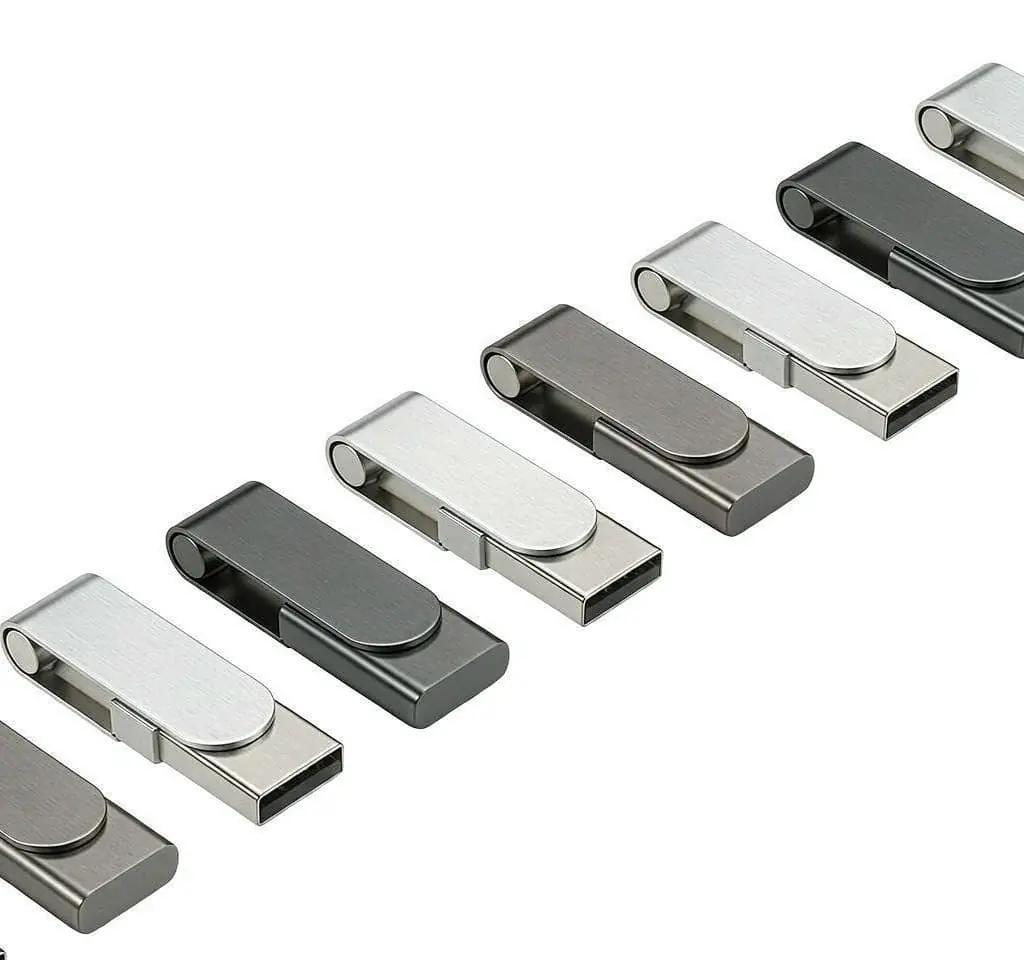
A personalised run breaks the assumption that makes volume cheap: that all units are the same. Every personalised unit passes through the marking step as a unique job, which means the labour is per unit instead of amortised across a run, the error risk is per unit instead of per batch, and the verification has to match each unit's content to its identity. The cost per unit therefore stays roughly flat as quantity rises, while the fixed setup is paid once. That is the inverse of a standard order, where setup amortises away and the unit price falls.
Two requests that sound similar and are not
A buyer asks for 250 wooden gift drives with the company logo. Another asks for 250 wooden gift drives with the company logo, and one different student’s name on each.
To a buyer these are the same order with one extra field. To a production planner they are different operations. The first is a batch; the second is 250 individual jobs that happen to share a body.
That distinction is the whole of the pricing conversation, and understanding it is what allows a buyer to ask for the right thing at the right moment rather than discovering the cost after committing to a use case.
Why batch production gets cheap and personalised production does not
A conventional order improves with volume for a structural reason. The expensive work — setting the machine, registering the position, proving the artwork, writing the work instruction — happens once. The per-unit work is a few seconds of handling. Double the quantity and the fixed part is spread across twice as many units while the per-unit part is unchanged. The average falls.
Personalisation breaks the assumption underneath that arithmetic: that all units are identical.
| Cost element | Standard run | Personalised run |
|---|---|---|
| Body, flash, packaging | Per unit | Per unit |
| Machine setup | Once | Once |
| Position registration | Once | Once, plus a check that it holds across all units |
| Marking work | Per unit, identical | Per unit, unique |
| Data handling | None | Per unit |
| Verification | Sample inspection | Per unit identity match |
| Rework if one is wrong | Replace one unit from stock | Re-mark one unit with the correct data |
Look at the last two rows. In a standard run, an error is found by sampling and fixed by pulling a replacement. In a personalised run, an error is a person holding the wrong object, and it is not detectable by sampling because the sample would have to check every unit.
That is why the per-unit cost holds roughly flat. The labour does not amortise, and the checking does not sample.
What the setup fee is really for
Buyers questioning a setup charge usually assume it pays for the machine. It mostly does not — the machine was already there.
The setup pays for four things:
Data preparation. The name list has to become a file the marking equipment reads, in the right order, with the right field mapping. This is where most of the labour sits, and it scales with the number of records rather than with the number of units.
Position registration. Every unit must receive its text in the same place. On a flat face this is straightforward; on a curved or moulded body it is a mechanical question that has to be settled before the first unit.
A proof unit. One physical unit, marked with a real name from the list, approved by the buyer. This is the gate that prevents a whole batch being produced in the wrong typeface.
The identity procedure. The written rule that says how a unit is tied to a person and how that tie is checked at packing. This is invisible on the invoice and it is the single most valuable line item, because it is what stops the failure mode that actually happens.
Where personalised orders and small orders collide
A personalised order is usually also a small order — a class, a team, a conference group. And small orders are already the least efficient shape for a factory, because setup does not amortise.
Put the two together and the price per unit can look disproportionate. That is not a markup; it is two unfavourable structures stacked.
The practical consequence is that the usual volume lever does not work. A buyer planning 50 units and thinking about 250 later should expect the per-unit price to move very little, because the personalised step does not benefit from scale the way the standard step does.
What does move with volume in a personalised run:
- Body and packaging cost, because those are purchased in larger lots.
- Freight per unit, because the carton count is larger.
- The verification labour, if the process is designed well and can be done in batches rather than one at a time.
What does not move: data preparation, marking labour per unit, and the identity check.
Structuring the order so the price makes sense
Four decisions reduce the cost of a personalised run without compromising it.
Choose the marking method to match the body, not the other way round. A marking method that suits the material will be faster and cleaner than one adapted to it. Ask which method is being quoted and why.
Keep the variable field in one place. If the name appears on the drive and on the box, that is two marking operations and two chances to mismatch. If the name can live on the box only, or on the drive only, the run simplifies considerably.
Fix the data at one point in time. One list, one date, one version. Late additions are the main cause of rework, because there is no clean way to know which units were produced from which version of the list.
Order spares, not extras. A handful of blank units — same body, same packaging, no name — costs little and covers the case where one name was spelled wrong by the buyer. A blank unit can be marked later; a wrongly marked unit cannot be unmarked.
The question to ask before choosing this route
If a personalised run is on the table, the decision that matters most is not price. It is whether the identity of each unit can be guaranteed through production and packing.
Ask the supplier directly: how do you make sure each drive is paired with the right person’s packaging, and what evidence do I get that it was checked?
An answer that describes a procedure is a supplier who has done this before. An answer that describes confidence is not.
Because the failure is not a matter of a few dollars of rework. It is a student opening a box and finding a stranger’s name on the drive meant for them — and that is a cost no per-unit price reflects.
Frequently asked questions
Why can a 250-unit run with different names cost more per unit than a 50-unit run with one name?
Because the two orders are not being made the same way. In the single-name run, the marking tool is set once and the cost is spread across the batch. In the personalised run, every unit is a separate marking job: the data has to be loaded, the position registered or the file changed, the marking executed, and the result checked against the intended recipient. That work is per unit, so it does not divide down as the batch grows. Add the verification step — matching each unit to its intended owner — and the per-unit cost can hold flat or rise rather than fall.
What is the difference between variable data and multiple designs?
Variable data is one design with a changing field: the logo is identical everywhere and only the name or number differs. Multiple designs means the artwork itself changes between units — different logos, different colourways, different layouts. Variable data is a moderate addition to the process; multiple designs is a moderate addition plus a setup and proofing step for each version. Both are possible. They are not the same quote.
Where does the setup fee actually go?
Into the work that has to happen before the first unit is marked: building the data file into the format the marking equipment reads, setting a fixed origin so that text lands in the same place on every unit, producing a proof unit that the buyer approves, and writing the procedure that ties each unit's content to its packaging. That procedure is the part buyers do not expect to pay for, and it is the part that prevents a student receiving another student's drive.
How do I check that each unit went to the right person?
The identity has to travel with the unit through production, and the check has to happen at packing rather than after. A workable method is a printed list with a per-unit identifier — a name, a number or a serial — that is applied to the unit and to its packaging in the same operation, and a packing step that verifies the two match before the unit goes into the carton. Any process that marks all units first and assigns them to people later is guessing.
Is engraving the only option for personalised text?
No, and the right choice depends on the body and the look. Laser marking works on metal and some coated surfaces and produces a permanent mark without ink. Printing methods apply ink and can achieve colours and solid fills that marking cannot. Some bodies take a label, which is the cheapest per unit and the least durable. The choice affects both the cost per unit and the setup, so it is worth asking which method is being quoted rather than comparing two prices that may reflect different methods.
What if the list of names changes after the order is placed?
Treat the list as a versioned artefact with one submission deadline, exactly like artwork. After the data is built into the marking equipment, a late change means rebuilding part of the file and re-proofing, and it usually means a full batch re-check because there is no clean way to know which units were marked from which version. Establish the cutoff in writing and hold one spare unit per name where the quantity allows — it is cheaper than a second production run for three replacements.