
The cheapest unit price often produces the most expensive shipment. A five-layer breakdown of what reaches your warehouse, and the lines suppliers leave off.
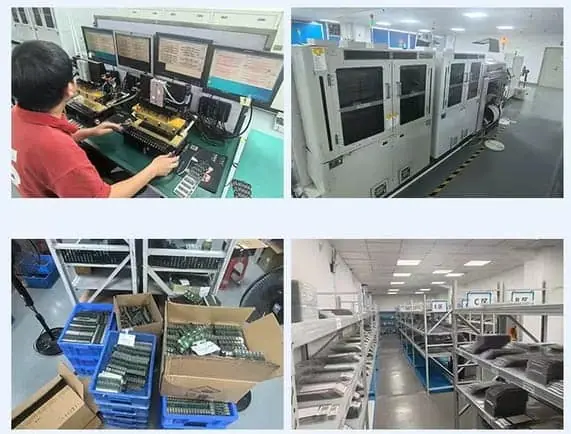
Total delivered cost is the unit price plus everything required to get the goods into your warehouse and legally into your books: freight, insurance, duty, import VAT, customs clearance and brokerage, plus the cost of defects, delays and payment friction. Two quotations can differ by 30 percent on unit price and reverse completely once these are included, because the incoterm decides who pays each line. Comparing quotations on unit price alone is comparing a fraction of the number that matters.
Part 4 of 4 — reading a quotation. Four angles on the same document; the total only means something after all four.
Previous: Reading a quotation for the setup costs it leaves out.
The short answer
Total delivered cost is not the unit price with freight added. It is the unit price plus every line required to get compliant goods into your warehouse, including the ones that never appear on an invoice.
Two suppliers can differ by a third on unit price and reverse their ranking entirely once the full stack is counted. The reason is not dishonesty: it is that the incoterm decides who pays which line, and a buyer comparing two unit prices is comparing different halves of two different sums.
The five layers of a delivered cost
| Layer | Typical components | Usually on the quote? |
|---|---|---|
| 1. Goods | Unit price, tooling, setup, sample credit | Yes |
| 2. Movement | Freight, insurance, fuel and peak surcharges | Sometimes |
| 3. Border | Duty, import VAT, clearance, brokerage, disbursement | Rarely |
| 4. After arrival | Inland delivery, unloading, storage, demurrage | Almost never |
| 5. Failure and friction | Defects, replacements, payment fees, delay cost | Never |
Most purchasing comparisons stop at layer 2. Most surprises arrive from layers 3 to 5.
Layer 1: the goods line is doing more work than it looks
The unit price contains specification decisions that are invisible in the number. Two prices for “64GB USB 3.0 drives” can differ because of:
- NAND grade — original versus downgraded dies, which changes field failure rates rather than the datasheet
- Nominal versus tested capacity — whether every unit is verified or a sample is
- Housing — a thin ABS shell and a machined aluminium body are different products with the same description
- Packing — bulk polybag versus retail box changes freight volume, which changes layer 2
- Test depth — a full write-and-read-back pass per unit costs machine time, and someone pays for it
None of these appear on a line item. All of them appear in the delivered cost, either as a higher unit price now or as a defect rate later.
When a quote looks unusually cheap, the first question is not “how”, it is “what did you leave out of the specification”. The answer is usually the test depth or the packing.
Layer 2: freight is a market, not a rate
Freight is the layer where the number most often moves between quotation and shipment, and it is not the supplier’s fault.
Air express rates respond to capacity and season; in the run-up to peak periods they can change within days. Sea freight responds to capacity and to schedules that are set weeks ahead. Both are quoted with a validity period, and a quotation that shows freight as a firm number for thirty days is either absorbing the risk or planning to re-price.
Two practical consequences for the comparison:
- Compare like incoterms. FOB and DAP prices are not comparable without adding the missing legs.
- Compare freight at the same date. A quote received three weeks ago may carry a freight number that no longer exists.
The billable weight also matters more than buyers expect, because couriers charge on volumetric weight for light, bulky goods. A retail box that is 20 percent larger can cost more to ship than the difference in unit price saves.
Layer 3: the border, where the surprises live
This layer has four distinct charges and buyers routinely conflate them.
| Charge | Who sets it | Recoverable? |
|---|---|---|
| Customs duty | Classification and origin, per destination | No — a real cost |
| Import VAT | Destination country rate | Only if registered for VAT |
| Clearance and brokerage | Courier or broker | No |
| Disbursement / advancement fee | Courier, for paying duty on your behalf | No |
Two of these deserve emphasis because they are the source of most disputes.
Import VAT is not a cost to a VAT-registered business and is a full cost to everyone else. That asymmetry means the same quotation can be sensible for one buyer and irrational for another. It is also why the party named as importer of record matters: whoever is named is who can recover.
Disbursement fees are small, irritating and real. A courier that advances duty and VAT on your behalf charges for the service, typically a flat amount plus a percentage. On a small shipment this can exceed the duty itself.
Layer 4: what happens when the goods arrive
Inland delivery, unloading, and — if the shipment arrives early or is held — storage and demurrage. These are small in normal circumstances and large in abnormal ones, which is precisely why they get ignored in the comparison and then dominate the outcome.
A shipment held for a documentation mismatch costs more in storage and in your own time than the price difference that motivated the order.
Layer 5: the costs that never appear anywhere
This is the layer that separates a purchasing exercise from a cost calculation.
Payment friction. Cross-border payment channels charge a percentage of the invoice, not a flat fee, and the percentage is often carried by the payer. On a small order this can be larger than the margin the buyer negotiated. Which channel is used is therefore a cost decision, not an administrative one.
Defect and replacement cost. A warranty replaces the product. It does not replace the freight to return it, the duty already paid, or the customer who received a faulty unit. The real cost of a defect is several times the unit price, which is why a cheap batch with an unknown defect rate is not cheap.
Delay cost. For a dated event — a graduation, a launch, a trade show — a late shipment is not an inconvenience, it is a total loss of the purpose of the order. This cost is invisible in the quotation and decisive in the decision.
The cost of managing the supplier. A supplier who answers in a day and a supplier who answers in a week consume different amounts of your team’s time. It never appears in a spreadsheet and it is one of the largest real differences between two otherwise similar quotes.
How to build the comparison
The method is dull and it works.
- Put both quotes on the same incoterm, by adding or subtracting legs.
- Convert to a single currency at the same date, and note the rate.
- Add duty at the correct classification for the actual product, not the category.
- Add import VAT and mark it recoverable or not.
- Add clearance, brokerage and disbursement.
- Add inland delivery to the warehouse.
- Add payment channel fees on the full invoice value.
- Add an expected defect allowance based on the test depth offered.
- Divide by the number of good units that will actually work, not the number ordered.
- Note the delivery date and the validity date of each number.
Step 9 is the one buyers skip. A batch with a five percent failure rate delivers fewer usable units per dollar than a slightly more expensive batch with a one percent rate.
A worked comparison
The figures below are illustrative only, not a quotation from any supplier.
| Line | Supplier A (low unit price) | Supplier B (higher unit price) |
|---|---|---|
| Unit price × 500 | USD 2,000 | USD 2,300 |
| Freight (DAP) | USD 180 | USD 180 |
| Duty at destination | USD 60 | USD 69 |
| Import VAT (not recoverable) | USD 448 | USD 510 |
| Clearance and disbursement | USD 45 | USD 45 |
| Payment channel fee | USD 120 | USD 138 |
| Expected defects at 5% vs 1% | 25 units lost | 5 units lost |
| Cost per good unit | USD 6.10 | USD 6.79 |
Supplier A still wins on this arithmetic. Change the assumption — a 10 percent defect rate, a payment channel at a higher percentage, or a shipment that arrives two weeks late for a dated event — and the ranking flips. That is the point: the answer depends on assumptions a unit price cannot express.
What to ask a supplier to make the comparison possible
Five questions, all answerable in one email:
- What incoterm is this price, and what exactly does it include?
- If you quote DDP, who is named as importer of record?
- What duty classification are you assuming, and at what rate?
- What is the tested defect rate for this specification, and what is the replacement term?
- What is the validity date of the freight component specifically?
A supplier who can answer all five is quoting you a delivered cost. A supplier who answers only the first is quoting you a component and leaving you to discover the rest.
For the incumbent questions behind the last two, see why the cheapest quote is often the most expensive order and why the importer of record decides whether your VAT is recoverable. The bulk order acceptance checklist lists what to verify when the goods land.
Sources
Frequently asked questions
What is the difference between unit price, landed cost and total delivered cost?
Unit price is the price per piece at the factory gate or at the stated incoterm. Landed cost adds freight, insurance, duty and clearance to give the cost of the goods sitting in your warehouse before tax recovery. Total delivered cost adds the costs that do not appear on any invoice — import VAT where it is not recoverable, payment channel fees, defect and replacement cost, and the working capital tied up during production and transit. Landed cost is an accounting figure; total delivered cost is a decision figure.
Does DDP really mean the price is final?
DDP means the seller is responsible for delivering the goods cleared for import, including paying duty and import VAT. It is close to final, with three exceptions worth checking: whether the seller is named as importer of record, in which case a business buyer may not be able to recover the VAT; whether the quoted DDP price includes duty at the correct classification; and whether any destination charges such as a courier disbursement fee are passed back to you. Ask for the DDP price broken down, not just stated.
Why can two suppliers quote the same product at very different prices?
Usually because they are quoting different things. One may be quoting a lower grade of NAND, a smaller nominal capacity, a thinner housing, bulk packing instead of retail packing, or FOB instead of DAP. The specification differences explain most of the gap; the rest is volume tier and currency exposure. Before treating a gap as a discount, ask both suppliers to state the exact grade, the capacity test method, the packing format and the incoterm on the same line.
How do I compare a DDP quote with an FOB quote?
Convert both to the same point in the chain. Take the FOB price, add freight and insurance to your port, add duty at your classification, add clearance and brokerage, add inland delivery, and add import VAT as a cost if you cannot recover it. Then compare that figure with the DDP price. If DDP comes out lower, ask what duty rate and what importer of record it assumes, because a DDP quotation built on the wrong classification is a risk transferred to you, not a saving.
Is import VAT a real cost or just cash flow?
It depends on your tax status. A business registered for VAT normally pays import VAT and recovers it, so it is a cash-flow item with a delay of weeks or months. An individual, or a business not registered, pays it and never recovers it, so it is a permanent cost that belongs in the comparison. This single line is why the same quotation can be right for a company and wrong for a private buyer.
What extra costs do buyers most often forget?
Four recur. Payment channel fees, which can be a meaningful percentage on the whole invoice rather than a flat charge. Replacement cost for defects, because a warranty that replaces the product does not replace the freight, the duty or the customer relationship. Storage and demurrage when a shipment arrives early or is held. And the cost of the time your own team spends chasing a supplier who does not answer, which is real but almost never counted.