
Conferences, sports clubs and channel-marketing programmes often need fifty different names on drives that are otherwise identical. It is possible, it changes the production process rather than just the artwork, and it has consequences for reorders that buyers discover too late.
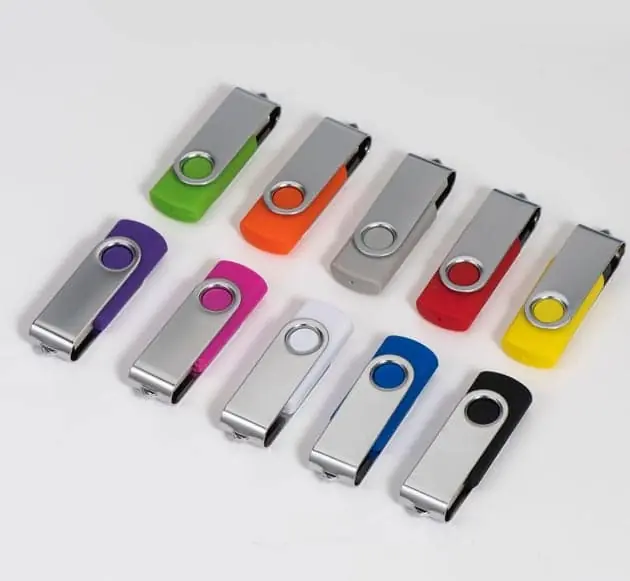
Yes, and the technical part is straightforward — the difficulty is not printing fifty names, it is keeping fifty names matched to fifty units and proving it afterwards. Variable data moves the order from a batch process to a serialised one: each unit gets its own artwork, its own proof and its own identity in the packing sequence. That is why the charge is usually per distinct name rather than per unit, and why the sensible planning question is not 'can you' but 'how many distinct names, and what happens if the list changes after the plates are made'.
The straightforward part and the hard part
Printing a different name on each unit is not technically difficult. Pad printing and laser marking both handle per-unit variation as a matter of routine, and no engineering is required.
The hard part is bookkeeping. Fifty names and fifty units have to end up correctly paired, in a defined order, provably. If they are not, the printing is correct and the delivery is wrong, and the failure surfaces at the worst possible moment — while someone is standing at a registration desk with a list.
That distinction shapes everything about how this kind of order should be planned, priced and specified.
Why the charge is per name, not per unit
Every unit in the order is the same object until the marking stage. The housings are identical, the flash is identical, the assembly is identical. Only one operation differs per unit.
So the order minimum applies once, to the whole 500 units, not fifty times. What carries a per-name charge is the setup for each distinct artwork: preparing the file, making the plate or program, and confirming the first piece. Printers price this way because that is genuinely where the work is.
Practically this means the cost shape is: one order minimum + one job setup + a variable-data charge that scales with the number of distinct names + the per-unit marking cost. Twenty names and two hundred names on the same order quantity differ in the third term, not the first.
The sequencing question you must settle first
Where does marking sit in the production sequence? The answer determines what happens when the name list changes.
Two patterns exist. In the first, marking happens after assembly, as a separate stage — the run is complete before any names are applied, and a late list delays only that stage. In the second, marking is integrated into the line, and the list has to be ready before the run begins.
Ask which applies to your product. Then set two dates: the date the list must be final, and the date after which a change becomes a new instruction. That second date is what protects you — not because suppliers are inflexible, but because a list that grows from fifty to sixty names after plates are made is a different job with a different cost, and discovering that after the fact is unpleasant for both sides.
The packing sequence, which nobody plans
This is the request that separates a good variable-data order from a bad one, and it costs nothing.
When units carry individual names, they must be packed in the order of the list. Ask for this explicitly, and additionally ask for the first and last name of each inner box to be marked on the outside of that box. Now distribution is a matter of opening the right box rather than searching forty units for one name.
If the drives are to be handed out individually — at a registration desk, a team event, a press kit — ask for individual bags, also in list order.
None of this is exotic, all of it must be specified before production, and none of it can be retrofitted. A supplier who receives a finished carton of mixed named drives cannot help you; the information that would have made the packing useful was available months earlier and was not asked for.
Getting the text right at small size
The printable area on a USB body is small, and names vary in length. A name that sets beautifully in a design file can be a smudge at 6 mm.
Three things to settle on a physical sample rather than a screen proof:
- The size the text actually ends up, measured on the object.
- What happens with the longest name on your list — not the shortest, which is what proofs usually show.
- Whether a font change is acceptable for long names, or whether truncation is preferable. Decide this before production, because the printer will decide it for you otherwise.
Ask for two or three samples with the longest names in the actual list. This costs a few days and prevents a batch of fifty drives where four are illegible.
The list itself
Send one file, in one format, with one column of names exactly as they should appear. Not a spreadsheet with notes, not a message thread with corrections, not a PDF of a design.
Then confirm back. Ask the supplier to return the list they will print from, and check it against yours before production. This is the single control that catches the class of error that ruins this kind of order — a duplicated name, a truncated one, a name that was corrected in an email nobody read.
If your list contains non-ASCII characters, ask explicitly how they will be handled and confirm with a sample. Getting an accented character wrong on fifty units is a small error with a large consequence.
The reorder question
Variable-data orders create a specific dependency: the value is in the archived list, not the product.
Ask, before you order:
- Will the final approved name list and the marking files be retained against our account?
- If we reorder the same names, is the per-name setup charged again?
- If we reorder with a different list, is that priced as a new variable-data job?
The answers determine whether a second event is easy or starts from scratch. Whether reorders keep the configuration identical is worth asking at the same time, because the housing, colour and print method all carry the same dependency.
The checklist
| Question | Why it matters |
|---|---|
| How many distinct names? | Sets the variable-data charge, not the minimum |
| Where does marking sit in the sequence? | Determines what a late list costs |
| What is the final date for the list? | The only date that protects you |
| Will units be packed in list order? | Turns distribution into box-opening |
| Is each inner box labelled with first and last name? | The cheapest fix for the worst moment |
| Which sample shows the longest name? | Screen proofs lie at small sizes |
| Is the list archived for reorders? | Determines whether a second order is easy |
What this is worth
For an event organiser, a channel-marketing programme or a club, individually named drives are a small detail that makes the object feel made for the recipient rather than handed to them. The cost of doing it is a setup charge and some planning; the cost of doing it badly is a batch of correctly printed drives that cannot be distributed without a search operation.
If you have a list and a date, send both and we will tell you which sequence applies, what the per-name charge depends on, and the date by which the list has to be final. Cathy will also confirm the packing arrangement in writing, because that is the part that gets forgotten between the quotation and the delivery.
Frequently asked questions
Is there a minimum quantity per name, or one for the order?
One minimum for the order, not per name. The production run is a single batch of identical housings; only the marking stage differs per unit. So an order of 500 units across fifty names is one order of 500, priced with a variable-data marking charge. The thing that does carry a per-name cost is the setup for each distinct artwork — plate, program or file preparation — which is why suppliers often price the first few names inclusively and charge per additional name.
What happens if the name list arrives after production starts?
It depends where the marking sits in the sequence, and this is worth establishing before you order. If marking happens after assembly, a late list may only delay the marking stage. If it is integrated into the line, a late list can stop the run. The practical rule: send the list before the production start date and treat any change after that as a new instruction with its own schedule. Buyers who assume names can be added at any point are usually right about small additions and wrong about a changed total.
How do I make sure the right drive reaches the right person?
By planning the packing sequence, not the printing. Ask for units to be packed in the order of the list, with the first and last name of each inner box marked on the outside. That single request converts an unpacking nightmare into a five-minute distribution. If the drives are to be handed out individually at an event, ask for individual bags in list order. Many suppliers will do this at no extra charge if you specify it before production, and none can retrofit it afterwards.
Does variable data work on all housing types?
It works wherever the marking method works. Pad printing and laser etching both handle per-unit variation; the constraint is the size of the printable area and the legibility of the text at that size. Very small areas or long names may need a reduced typeface or a different position on the body. This is worth settling on a physical sample rather than a digital proof, because a name that reads perfectly on screen can be unreadable on a 6 mm band.
Can I reorder with the same names?
Only if the list was archived with the order, which is a thing to arrange rather than assume. Ask for the final approved list and the artwork files to be retained against your account with a reference, and confirm what happens if you reorder: are the same files used, or is setup charged again? [Reorder configuration retention](/questions/do-you-handle-reorders-and-keep-config-identical) is a question worth asking at the same time, because it applies to the whole product, not just the names.