
Six checks a buyer of custom USB flash drives, TF (microSD) cards or UDP modules can run from a desk, in one afternoon, at no cost: the registry record and business scope, the factory address on a map, a live walkthrough you schedule, capacity arithmetic on pieces per month, certificate file numbers, and the questions only a production floor answers. Each check is designed so that a competent sales office fails it and a factory passes it.
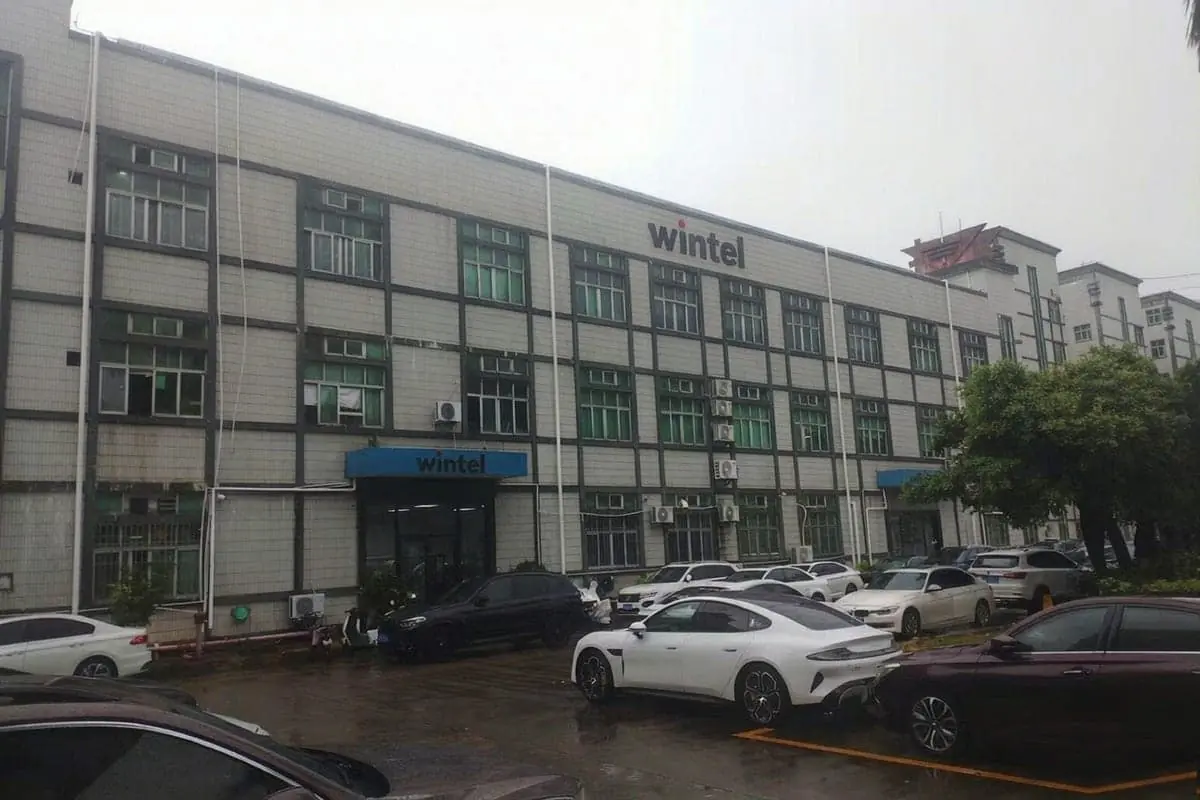
A trading company is not a fraud — plenty of them are honest and useful. The problem is narrower: they cannot answer questions about yield, scheduling or component substitution on a USB flash drive or TF card order, and they cannot honour a commitment about them either. Six things separate the two from a desk: a registry record whose business scope includes manufacturing, a factory address that resolves on a map to an industrial zone rather than an office tower, a live walkthrough you schedule rather than a photo gallery, a monthly output figure that arithmetic cannot break, certificate file numbers you can verify at the issuing body, and answers about scrap rate and line scheduling that arrive without a pause. Run all six. One or two failures is noise; four is a pattern.
Why this question keeps coming back
Almost every buyer of custom USB flash drives, branded TF (microSD) cards or UDP modules asks it, and almost every supplier answers it the same way — with photographs. A building, a production floor, a wall of certificates, an SMT line with people in blue coats. The photographs are usually genuine. That is the problem: genuine photographs of somebody’s factory tell you nothing about whose factory it is, and even less about whether the drives in your quotation will be built there.
A note on vocabulary, because this is where the first confusion starts. In this industry the same plant is often described three different ways. The product a buyer orders is usually a custom USB flash drive (a finished drive in a branded housing), a TF card (the same format the consumer market calls microSD), or a UDP module (USB Disk in Package — the controller and die moulded into a single chip that gets soldered into a device). A supplier may also offer semi-finished boards, which are the USB plug and flash assembled but not yet in a housing. A genuine factory for one of these is not automatically a genuine factory for the others: housings are moulded and printed, TF cards are assembled and tested, and UDP modules are packaged at die level. When you ask “are you a factory”, the next question is for which of these, and the answer is often narrower than the website suggests.
The checks below are chosen for one property. Each one is cheap for a real factory to pass and awkward for a sales office to fake. Not impossible — awkward. That is the most a desk audit can achieve, and it is more than most buyers do.
An honest framing first: this is not about catching fraud. Most of the suppliers a serious buyer encounters are neither counterfeiters nor factories. They are trading companies, which are legal, common and often competent at what they do. What they cannot do is answer for the production floor — and if you believe they can, you will negotiate terms that nobody in the chain is able to keep.
Check one: the registry record, and the business scope line
Every legally registered company in China has a public record. Ask for the Chinese registered name — not the English trading name — and search it. The record returns the exact legal name, the registration date, the registered address and, usually, a business scope.
Most buyers stop at name and date. The scope line is where the useful information sits. Standard phrasing includes terms that mean manufacturing or processing, and terms that mean sales, trade or import-export. A scope containing only the commercial terms describes a company that buys and sells. That is worth knowing before you discuss anything technical — and worth knowing specifically, because “we make USB drives” and “we sell USB drives” are the same sentence in English and different entries in the registry.
Caveats, because this is not a clean test. Manufacturing can be carried by a related entity under a shared owner. Scope entries are sometimes written broadly at registration and never updated. Some factories maintain narrow scopes for tax reasons. So the scope is an indicator, not a verdict — but it is an indicator a genuine factory usually passes without effort, and one a reseller cannot pass at all.
Check two: the address, on a map, at street level
Take the address off the record and the address off the invoice header and the address on the contact page. Compare all three. Then open a map.
The thing you are looking for is not a pin. It is the character of the surrounding area. Industrial zones look like industrial zones: wide roads built for trucks, low-rise buildings with loading bays, adjacent units doing unrelated manufacturing. Office districts look like office districts: towers, glass, parking structures, restaurants at street level.
In Shenzhen a legitimate split is common. Companies register in an office district because that is where registration is cheap and convenient, and manufacture in an industrial zone an hour away. Room numbers in a business centre are normal on a registration certificate. The failure is different: an industrial address that resolves to a residential block, or a factory claim where the only address you are ever given is a suite number.
Ask directly: which address does production happen at? A supplier who answers without hesitation on this question is usually telling the truth, because the answer is mundane. Hesitation here is more informative than any document.
Check three: a walkthrough you schedule, not a gallery you receive
Factory photographs are the single most reusable asset in this industry. They circulate.
Replace the gallery with a live call. You pick the time — ideally your morning, which is their afternoon, which is when a production floor is running rather than being cleaned. Ask the person holding the phone to walk to a particular station, stop, and read a label out loud: a machine model, a lot number on a tray, the date on a calibration sticker.
Pre-recorded footage cannot do that. A staged empty room cannot do that either, because you will ask what the machine is and why it is idle.
Two things to watch during the call. Whether the floor is actually running — sound, movement, trays in progress. And whether the walk is guided or improvised. Someone who knows the floor moves through it without thinking. Someone who has been briefed moves to the three places they were told to show.
Check four: arithmetic on the capacity figure
Ask for monthly output in pieces — and ask it per product line, because “we produce 5 million units a month” means nothing until you know whether that counts UDP modules, TF cards, or finished drives in housings, which are three different lines with three different rates.
A month has roughly 22 to 26 working days. A factory running a stated number of SMT lines and a stated assembly floor, across a stated number of shifts, produces a range. If the claimed monthly figure requires either more shifts than the staffing suggests or a per-line throughput the equipment cannot reach, the number is decorative.
You do not need to be an industry insider to do this. The arithmetic is internal — the claim contradicts itself. A factory that states a modest, defensible number per line and can explain what limits it is more credible than one that states a large round number covering everything and cannot.
The same technique works on lead time. Ask how many days are tooling, how many are component procurement, how many are assembly and test. A factory can break this down because it schedules it. A sales office repeats a total without being able to decompose it — or decomposes it in a way that does not add up to the total they quoted you. The decomposition also differs by product: a custom USB drive has a housing and a printing stage that a TF card does not, and a UDP module has a packaging stage that neither has. A supplier quoting all three with the same lead-time skeleton is quoting a template.
One arithmetical check that works only on flash. Ask what the output figure is measured in — finished drives, or modules, or die placements. A line that places a given number of components per hour produces a very different count of finished custom USB drives (housing, print, assembly, test) than of TF cards (assembly and test only). If a supplier’s quoted monthly capacity is the same figure for both product types, the number was not produced by counting anything.
Check five: certificate file numbers, verified at the source
Certificates are the easiest documents in this industry to fake, which makes an unverified certificate worth nothing — or worse, because it lends false confidence to a file your compliance team will rely on.
Ask for the scan and the file number. Then verify the number with the issuing body. For management-system certificates this is a search on the certification body’s public register; for product compliance, the test report number resolves at the issuing laboratory.
A real factory may not hold every certificate you want. That is a legitimate answer, and a better one than a scan that does not resolve. The check is not “do they have certificates” — it is “does what they send survive contact with the issuing body”. Suppliers who have never been asked this will sometimes discover, at that moment, that their certificate expired.
Check six: the questions only a floor can answer
This is the check with the highest yield, and it takes five minutes. Ask questions whose answers live on the production floor rather than in a sales folder:
- What is your scrap rate on finished units, and what causes most of it?
- When a component is substituted, who approves it and how is it recorded?
- What does your incoming inspection actually measure on a wafer or a die lot?
- Which station is the bottleneck on my product type?
- What did you change on the line in the last six months?
A factory answers these with specifics, including numbers that are not flattering. A sales office answers them with principles: “we have strict quality control”, “we follow ISO procedures”, “we guarantee zero defects”. Vague answers to specific operational questions are not dishonesty. They are simply the boundary of what the person in front of you knows — which is exactly what you wanted to find out.
Three of the six that only apply to flash, and are worth memorising. What grade of die is in the TF card you quoted, and how is it verified on arrival? — because capacity is visible and grade is not, so grade is where substitution happens. For a UDP module, who does the packaging — you, or a third party? — because a supplier that assembles modules from bought-in packaged parts is a different business from one that packages die. For a custom USB drive, is the housing mould yours or a catalogue tool? — because a catalogue tool means the shape is not exclusive to you, which is fine if you know it. These three questions sort suppliers faster than any general one, and a genuine factory for that product answers each without hesitating.
What this routine cannot tell you, and the step that covers it
None of the six checks tells you whether the batch will meet your specification. They tell you whether the supplier is real, and roughly what kind of supplier it is.
The gap is closed by inspection at the production site before shipment, run by a third party you appoint and pay. This is the only step on this list that costs money, and for a first order tied to a launch date, it is the cheapest insurance in the transaction. After two clean deliveries from the same supplier on the same product, most buyers reduce the frequency rather than the practice.
The scorecard, and how to read it
Six checks. A vendor failing one is usually a documentation gap — a certificate expired last month, an address registered somewhere convenient. A vendor failing four is a different kind of entity than the one described in their emails.
The useful output of this exercise is not pass or fail. It is knowing which questions you can rely on the answers to. If a supplier passes checks one through four but stumbles on six, you know the company is real and the person handling your account is not close to the floor — so write the specification into the purchase order instead of agreeing it in conversation.
| Check | Passes if | Fails if |
|---|---|---|
| 1. Registry scope | Scope includes manufacturing terms | Scope is sales, trade or import-export only |
| 2. Address | Resolves to an industrial zone, explained if split from the registered office | Only ever a suite number, or an “industrial” address in a residential block |
| 3. Walkthrough | Live call at a time you chose, machine labels readable | A video gallery, or a live call that cannot stop at a station |
| 4. Capacity | A defensible figure per product line, with the limit explained | One round number covering every product type |
| 5. Certificates | File numbers that resolve at the issuing body | Scans without numbers, or numbers that do not resolve |
| 6. Floor questions | Specific answers, including unflattering numbers | Principles and assurances |
If you want to run the routine on us, the record is public and the address is on the contact page. The scrap rate and the bottleneck question are fair game; so is the list of evidence we have not published yet, which is stated in full here. Our product pages state which of the four product types we actually build — USB flash drives, TF cards, UDP modules and semi-finished boards — and it is fair to ask us to draw the boundary of what we make ourselves rather than buy in. If you would rather start from the document side, the supplier verification checklist puts the same material in order, and Cathy will answer the six questions above in writing if you want them on record before you commit to anything.
Frequently asked questions
Is buying from a trading company always a bad idea?
No. A trading company that holds finished-goods stock can ship 200 mixed units this week, which a factory configured for per-order builds cannot. They also handle consolidation across several product types. The failure mode is narrower than 'trading company bad': it is a buyer believing they are talking to the production floor when they are talking to a reseller, and therefore accepting commitments — on component grade, on yield, on substitution notice — that the reseller has no authority to make. Know which one you are talking to, then choose your terms accordingly.
The supplier sent a factory video. Isn't that enough?
A video proves a building exists. It does not prove the building is theirs, that your order will run there, or that it was filmed this year. Ask for a live walkthrough on a video call at a time you choose, and ask the person walking to stop at a specific station and read a label. Pre-recorded footage cannot do that. Also ask which address the walkthrough is at, then compare it with the registered address and the invoice header — in Shenzhen these are often legitimately different, but all three should be real and all three should belong to the same entity.
How can I check a business scope without reading Chinese?
Machine translation handles the standard business-scope phrasing well enough for this purpose. Look for terms corresponding to manufacturing, production, processing or assembly — 生产, 制造, 加工, 组装. A scope listing only 销售 (sales), 贸易 (trade), 进出口 (import/export) or 技术服务 (technical services) describes a commercial entity, not a plant. This is a strong signal rather than proof: manufacturing can sit with a related entity, and some genuine factories carry narrow scopes. Use it to decide what to ask next, not as a verdict.
What capacity number should I expect from a flash factory?
Ask for a monthly figure in pieces, then divide by working days and available lines. A factory running a small number of SMT lines and a manual assembly floor should produce a number that survives that division. A figure that would require the lines to run faster than the equipment physically allows, or that implies more shifts than the staffing describes, is a number built for the website rather than the production plan. You do not need to know the industry's throughput norms to catch this — the internal arithmetic is usually where it breaks.
Do I still need a third-party inspection if all six checks pass?
Yes, for any order where a failure is expensive — which usually means first orders and orders tied to a launch date. The six checks tell you whether the supplier is who they say they are. They do not tell you whether this batch meets your specification. An inspection at the production site before shipment answers the second question, and it is the only step on this list that costs money. Budget for it on the first order and reconsider after two clean deliveries.