
China's flash supply chain is not one place. It concentrates in the Pearl River Delta, and within that cluster the split between Shenzhen, Dongguan and inland provinces decides who can answer your questions, how fast a change can be made, and what happens when something goes wrong at 11pm before your shipment.
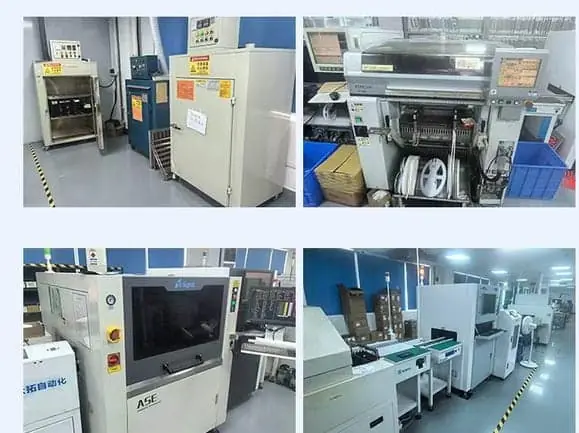
The cluster matters because flash manufacturing is a chain of small handoffs — die, package, substrate, controller, assembly, test — and each handoff is a place a defect or a delay can enter. Shenzhen concentrates component sourcing and engineering talent and sits next to the port and airport. Dongguan offers more floor space per yuan and heavier assembly capacity. Inland provinces offer lower labour cost but longer component lead times, because the components still come from the coast. For a buyer the practical difference is not unit price. It is who picks up the phone at midnight when a shipment is wrong, and whether the person who can fix it is in the same building.
The supply chain is a place before it is a process
Buyers are usually shown flash manufacturing as a flowchart: wafer test, die attach, wire bond, mould, test, assemble, pack. That is accurate and it hides the thing that matters commercially. Every arrow in that flowchart is also a truck journey between two companies, and the length of those journeys sets what your supplier can and cannot do for you.
In the Pearl River Delta those journeys are short. Component market, substrate supplier, assembly floor, test house and port sit within a radius a van can cover in a working day. That compression is the actual product of the cluster — not cheap labour, which has not been cheap there for twenty years, but the ability to change something on Tuesday and see it done on Wednesday.
Shenzhen: the component side, and the people who understand it
Shenzhen’s role in the flash chain is upstream of assembly. It is where the trading houses that move die and wafer sit, where the controller solution agents are, where the substrate and packaging suppliers cluster, and where a large share of the engineering workforce lives.
The practical consequence for a buyer: Shenzhen is where unusual requests get answered. A non-standard capacity, a controller pairing that is not on the standard card, a die grade that needs to be confirmed from a marking — these are routine questions in Shenzhen because the people who know the answers are within a phone call. Ask the same questions of a plant that is remote from the component market and you get an answer in a week, if at all.
The cost of Shenzhen is floor space. Land and rent are the highest in the cluster, which pushes assembly-heavy, space-hungry work outward. What typically stays in Shenzhen is the part that benefits from proximity and skill: engineering, sampling, testing, small and complex builds.
Dongguan: the assembly floor
Directly north of Shenzhen, Dongguan holds a large share of the region’s assembly capacity — the kind of work that needs square metres, moulding machines, printing lines and a workforce that does the same operation ten thousand times.
For flash products this means finished-goods assembly, plastic and metal shell production, printing and marking, and packaging. A Shenzhen company that runs its own Dongguan floor gets both advantages: the engineering and component access of Shenzhen, and the floor space economics of Dongguan, twenty minutes apart.
That arrangement is common enough that buyers should expect it rather than be alarmed by it. What matters is whether the two sites belong to the same operating organisation, or whether the “factory” in Dongguan is a subcontractor the seller has visited twice.
Inland provinces: lower labour, longer chains
Further inland — Jiangxi, Hunan, Sichuan, Chongqing and others — labour is cheaper and floor space is plentiful, and a real manufacturing base has grown there over the past decade.
The structural issue is not skill. It is that the components still come from the coast. A plant inland holds more inventory to compensate, which ties up working capital, or it waits, which extends lead time. Either way the response to an unexpected problem is slower: a substitute component that a coastal factory collects in an afternoon is a next-day shipment inland.
For a mature, stable, high-volume order this trade is often worth making. For a first order, a new design, or a date tied to a launch, the arithmetic usually favours proximity.
What actually differs for the buyer
| Shenzhen | Dongguan | Inland | |
|---|---|---|---|
| Component access | Same day | Same day | One to several days |
| Engineering depth | Deepest | Moderate | Varies widely |
| Floor space cost | Highest | Moderate | Lowest |
| Response to an unexpected problem | Fastest | Fast | Slowest |
| Typical role in a flash order | Engineering, sampling, test, complex builds | Assembly, shells, printing, packing | Volume assembly |
| Distance to port | At the port | Short truck leg | Long domestic leg |
The row that decides most transactions is not price. It is the fourth one. Problems are normal in manufacturing; what distinguishes suppliers is how quickly a problem becomes a fixed problem. A supplier who can walk to the component market in the afternoon recovers in a day. One who cannot recovers in a week, and a week is often the difference between catching your vessel and missing it.
How to find out which one you are dealing with
Ask three questions, all answerable in writing:
- Where does production happen? An address, not a city. Then check it on a map.
- Where do the components come from, and how long is the replenishment cycle? A factory knows this number because it plans around it.
- Which port does the shipment leave from, and is the inland leg inside the quoted lead time? The second half of this question catches more buyers than the first.
Then run the verification routine — the registry record, a live walkthrough at a time you choose, and the operational questions that only a floor can answer. The full six-check method is here, and it applies whether the answer to question one is Shenzhen, Dongguan or somewhere else.
Where we sit, stated plainly
Our registered office is in Pingshan, Shenzhen — an office address used for registration. Production runs at Bantian 3rd Industrial Zone in Longgang District, on a site of roughly 5,000 m², with SMT assembly, printing, assembly and test under one roof. The split between registered office and plant is ordinary in Shenzhen and we describe both addresses rather than blurring them.
What that geography buys a buyer is the thing this article has been describing: components reachable the same day, a production floor that can be walked in ten minutes, and a port within an hour. It does not buy you a lower price than a factory inland, and we would not claim it does.
If your next order is a first order, a new design, or tied to a date you cannot move, send the specification and we will tell you honestly which parts of it we can compress and which are set by component availability. If your order is stable, high-volume and price-sensitive, an inland plant may serve you better, and that is worth knowing before you spend a month negotiating with us.
Frequently asked questions
Does manufacturing location actually change the price I pay?
Less than buyers expect, and in the opposite direction from what many assume. Flash components dominate the bill of materials, and those are bought on a global market — the same die costs the same in Dongguan as in Shenzhen. What location changes is everything around the material: labour cost per unit, floor space, and the time and money spent moving parts between suppliers. Moving inland can lower labour cost on a labour-heavy product and simultaneously raise cost on a component-heavy one, because components still route through the coast. The saving is real but it is not the first-order effect buyers imagine.
Why do so many flash suppliers cluster in Shenzhen specifically?
Because Shenzhen is where the component market is. The city and its immediate neighbours hold the trading houses, the substrate suppliers, the controller agents and the packaging factories, and they sit within an hour of each other. A factory in Shenzhen can get an unusual component the same day. A factory eight hours inland orders it and waits. That proximity is also why Shenzhen accumulated the engineering workforce — the people who can read a die marking or debug a controller configuration tend to be where those problems are solved every day.
Is an inland factory worse quality?
Not inherently. Quality is a process and an equipment question, not a postal-code question, and a well-run inland plant beats a badly run coastal one. What inland factories face is a structural disadvantage in response time: when a component is wrong or a test fails, the fix may require a part that is a day away. That shows up as longer recovery from problems rather than more problems. For a stable, repetitive, high-volume order with predictable components, an inland plant can be excellent. For a first order, a new design, or a date you cannot move, the proximity is worth paying for.
How can I tell where my order is actually produced if the company is registered elsewhere?
Ask, in writing, for the production address — and then verify it the same way you verify any other address: on a map, at street level, and on a video call where you choose the time. In China it is normal for the registered office and the plant to be in different places, sometimes in different cities. That is not a red flag by itself. What matters is that the answer is consistent across the quotation, the invoice and the walkthrough, and that the address resolves to an industrial unit rather than a suite number.
Should I care about the port my goods ship from?
Sometimes. Shenzhen and Guangzhou give access to Yantian, Shekou and Nansha, with dense direct sailings to Europe, North America and Southeast Asia. Goods made inland usually route to a coastal port by truck or rail anyway, which adds transit days and a domestic leg where damage and delay can occur. Ask which port the shipment will leave from and whether the quoted lead time includes the inland leg. Buyers discover this distinction when a shipment misses a vessel because the truck was late, not because production was.