
A production floor has a dozen steps and five of them decide whether your batch is good. What happens at incoming inspection, die attach, wire bond, encapsulation and final test — what each one can get wrong, and what a buyer can ask for that reveals whether it is being controlled.
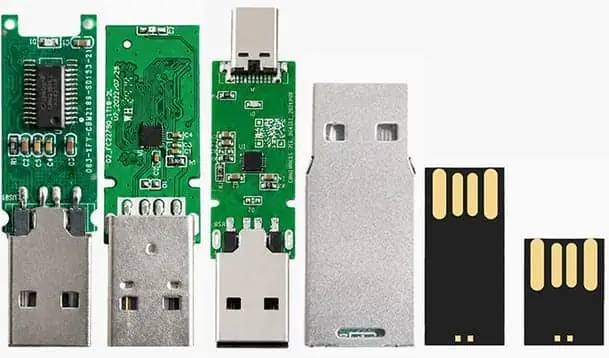
Most of a flash production line is assembly — accurate, unglamorous work that rarely fails. The exceptions cluster at five stations: incoming inspection, where an incorrectly graded die enters and is invisible afterwards; die attach, where the bond layer decides thermal behaviour for the product's whole life; wire bond or flip-chip, where an intermittent connection passes test and fails in the field; encapsulation, where a void becomes a humidity path; and final test, which is only as good as the test programme written for it. Buyers cannot inspect these stations personally. What they can do is ask questions that a controlled process answers with numbers and an uncontrolled one answers with adjectives.
Most of the line is not where the risk is
Walk a flash production floor and you will see a long sequence: wafer or die arriving, inspection, attach, interconnect, encapsulation, marking, singulation, assembly into the product, printing, test, packing. Twelve steps, sometimes more.
Eleven of them rarely cause a field failure. They are mechanical, repeatable and visible — if the shell is the wrong colour, you see it in ten seconds. The failures that reach a customer and cost a buyer money come from five places, and four of those five produce parts that pass every subsequent check.
That is the point of this article. A buyer cannot audit a production floor personally, and should not pretend to. What a buyer can do is understand which stations matter and ask the one question per station that separates a controlled process from a hopeful one.
Station one: incoming inspection
Everything about the final product is decided here in a way nothing downstream can fix. The die that arrives is either the grade you paid for or it is not, and once it is inside a package, the grade is no longer visible.
What can go wrong: an under-graded or re-marked die enters. A lot arrives with documentation that does not match its marking. A mixed lot is consolidated. Grade substitution is the most commercially attractive failure in this industry because it is invisible at every subsequent step — the part works, the capacity reads correctly, and only endurance knows.
What to ask: how is grade verified on arrival — marking, source lot documentation, or sampling — and what happens when the two disagree? A controlled station has a written disposition for that disagreement. Also worth asking: is the incoming lot retained, and for how long? Retaining a sample of every lot is how a supplier can answer a complaint eight months later.
The buyer-side counterpart to this station is reading die markings and lot codes before approving a run.
Station two: die attach
The die is bonded to the substrate with an adhesive or solder layer. This is a tenth-of-a-millimetre detail that determines the thermal behaviour of the product for its entire life.
What can go wrong: bond-line thickness variation, voids in the attach layer, or contamination on the bond surface. The immediate consequence is not a dead part. It is a part with a higher thermal resistance than designed — one that behaves identically to a good part at room temperature and degrades earlier under sustained load. In a dashcam or a continuously writing module, that difference surfaces as throttling or an early failure that looks like a bad batch of memory.
What to ask: is bond-line thickness measured, and is the method automated or sampled? Is there an X-ray or acoustic check for voids at attach? A station that measures nothing here is running on the assumption that the machine is set correctly, which is true most days.
Station three: wire bond or flip-chip
The electrical connection between die and substrate. Wire bonding uses fine gold or copper wires; flip-chip inverts the die onto bumps. Either way, this is the station where the most consequential kind of defect is produced: the one that passes test.
What can go wrong: a weak bond, a wire with the wrong loop profile touching a neighbour, a cold joint, a bump with insufficient collapse. Each produces a connection that conducts reliably at room temperature on a bench, and intermittently after thermal cycling or mechanical shock. This is the classic source of “works on my desk, fails at the customer site”.
What to ask: what is the pull-test or shear-test sample plan, and what are the limits? Is there a post-bond visual inspection with a defined criterion? For anything going into a product that will be dropped, vibrated or thermally cycled, this station and station two are where the reliability is actually decided.
Station four: encapsulation
Moulding compound or underfill covers the die and the interconnect. Its job is mechanical protection and moisture exclusion.
What can go wrong: voids, incomplete fill, delamination at the die surface, or the wrong compound for the thermal and humidity environment. Voids are the significant one, because they convert a protective layer into a slow path for humidity. The resulting failure is a part that works for months and then fails after a humid season — behaviour that is almost always misattributed to the memory itself.
What to ask: is void content checked, by what method, against what limit? X-ray at this station is a meaningful capability signal. So is whether the compound is qualified for the temperature range the part is specified at, which matters more for industrial and automotive-adjacent products than for consumer ones.
Station five: final test
The last chance to catch anything, and therefore the station whose value depends entirely on how it was specified.
What can go wrong: the test is shallower than the application. Functional check at room temperature on part of the address space, at nominal voltage, with a generous error threshold — that is a real test and it is not the same as what the customer will do. A part that passes can still fail across the full capacity, at temperature, under sustained write.
What to ask: the test programme, not the result. Conditions, voltage margin, temperature, address coverage, error threshold, and what share of units gets the full test versus a shorter screen. What each test actually proves is a useful companion here, because buyers frequently accept a reader check as evidence of a full test.
What this list implies for a buyer
You cannot watch these five stations. You can, however, notice which of them your supplier can talk about with numbers. A supplier who can describe void limits, pull-test plans and test coverage is running a process they can interrogate. One who answers all five questions with variants of “strict quality control” is not necessarily lying — they are telling you that the information does not reach the person selling to you, which is its own kind of risk.
There is a second, cheaper implication. Notice that four of the five stations produce failures that pass downstream checks. That means the value of a final inspection at your end is lower than buyers assume, and the value of the specification is higher. The lever is upstream, in what you required and what was recorded, not in what you can measure when the carton arrives.
| Station | Failure produced | How it presents | Ask for |
|---|---|---|---|
| Incoming inspection | Under-graded die enters | Normal behaviour, short endurance | Grade verification method; lot retention |
| Die attach | Void or thick bond line | Higher thermal resistance, early throttle | Bond-line measurement; X-ray or acoustic |
| Wire bond / flip-chip | Weak or intermittent joint | Passes bench, fails after cycling | Pull/shear sample plan and limits |
| Encapsulation | Voids, delamination | Fails after a humid season | Void check and method; compound rating |
| Final test | Shallower than the application | Passes test, fails in use | The test programme and conditions |
Where this meets the commercial conversation
None of these questions are adversarial. Factories that run these controls are usually pleased to be asked, because it is a change from being asked for a discount. The ones that are not pleased have told you something useful at no cost.
If you want to test the list on us, Cathy will answer all five in writing with the current process documents. For a first order, the practical companion to this article is the sample acceptance checklist, which turns the same logic into tests you can run yourself on delivered units — the ones that do not require X-ray, only patience and a stopwatch.
Frequently asked questions
Where in the process does a bad die actually get caught?
At incoming inspection and at final test, which are two different kinds of catching. Incoming inspection sees grade, marking and lot; it does not see endurance, because endurance testing is destructive and slow. Final test sees function at the tested conditions; it does not see how the part will behave in three years. So the die that is correctly graded but individually weak passes both and fails in your customer's hands. That is why incoming inspection is about verifying the grade you paid for rather than finding every bad part — and why the grade claim is the most valuable thing to verify, since it cannot be recovered later.
What does a void in encapsulation actually cause?
Moisture. A void is a gas pocket trapped inside the moulding compound or underfill. During reflow or thermal cycling it expands and contracts differently from the surrounding material, and over time it becomes a path by which humidity reaches the die surface and the bond pads. The failure is not immediate and not visible: characteristic behaviour is a part that passes every bench test, works for months, then fails after a humid season or a thermal cycle it should have survived. Void content is measurable by X-ray, and that is why X-ray capability at the encapsulation station is one of the better process questions a buyer can ask.
How would I know if final test is adequate?
Ask for the test programme rather than the test result. A meaningful answer names the conditions: at what temperature, at what voltage margin, for how long, reading and writing across what share of the capacity, with what error-count threshold. A weak answer says 'we test every unit' — which may be true and still mean a functional check at room temperature on a fraction of the address space. Full-capacity read and write across the range, at temperature extremes, is slow and therefore expensive, and the honest answer reflects that trade.
Is it worth asking for the test data rather than a pass certificate?
Yes, on a first order or a new design, and the request itself is informative. Raw or summarised test output shows the distribution — how many units failed, at what stage, with what error pattern. A certificate shows only that nothing failed, which is the same document whether the process is excellent or the test is shallow. Suppliers who can produce distribution data are running a process they can interrogate. Suppliers who cannot are running a check they trust.
Which of the five stations should I focus on if I only have time for one question?
Incoming inspection, because the failure it fails to catch is the one that cannot be recovered later. Once an under-graded die is assembled, tested and shipped, every downstream station has already been fooled. Ask how the grade is verified on arrival — whether by marking, by lot documentation from the source, or by sampling — and what happens to a lot where the documentation and the marking disagree. That answer tells you more about batch quality than any other single question on this list.