
A buyer needs 300 units at 32GB and 200 at 64GB and assumes that is one order of 500. Sometimes it is. Often it is two batches sharing a housing, and the difference changes both the price and the delivery date. Here is how mixed-capacity orders are actually structured, and the four questions that decide whether to combine or split.
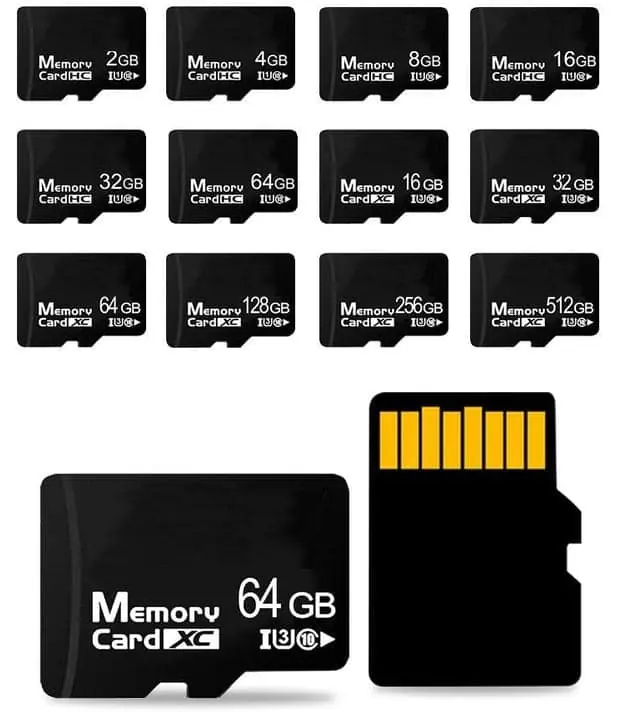
A mixed-capacity order is one order commercially and usually two or more batches in production, because capacity is set by the die inside, not by the label outside. The housing, branding and packaging can all be shared — those are batch-independent. The assembly and programming stages cannot, because different die means different components, different reels and a different material lot. So the price advantage of combining is real but limited to the shared stages, and the quantity you can combine is counted by housing rather than by capacity. Whether to combine depends on how much of the order is housing and branding versus how much is the memory itself.
What “one order” actually means
A purchase order is a commercial document. A production batch is a physical thing — a run that starts with a material lot and ends with a quality record.
Buying 500 units across two capacities produces one purchase order and, typically, two batches. That gap between the commercial and the physical is where the surprises live, none of them serious, all of them avoidable.
Why capacity is a batch boundary
Capacity is not set by the label on the outside. It is set by the die inside, and a different die means:
- A different component, priced separately and bought on its own reel
- A different material lot with its own incoming inspection
- A different programming step and a different test configuration
- A separate quality record, because it is a separate batch
None of this is a policy choice. It is what different components imply.
What is shared, and this is the useful part: the housing, the branding, the packaging, and the tooling. Those are batch-independent. Whether a unit has 32GB or 64GB inside makes no difference to the shell it goes into, the logo printed on it, or the carton it ships in.
So what do you actually save by combining
Setup costs divided into two categories.
Shared and therefore saved: tooling amortisation, print setup and plates, colour approval, packaging setup and printing plates, artwork preparation, and the administrative overhead of the order itself. Pay these once across all capacities instead of once per capacity.
Not shared and therefore not saved: the memory components. Those are priced by grade and by quantity per capacity, so 300 units at 32GB and 200 at 64GB are priced as two smaller component buys, not one larger one.
The consequence is that combining capacities gives you the setup benefit of a large order and the component pricing of several small ones. On a promotional product where housing and branding dominate, that is a clear win. On a bare component order where the die is nearly all the cost, it is close to irrelevant.
The reel, again
Each capacity carries its own reel constraint. This is why the question “can I add fifty at 128GB as well” has an answer that is mechanical rather than commercial: yes it can be done, and the fifty may be priced as a whole reel.
Ask the specific question — what is the reel count for this capacity — before you decide the mix. If the smallest capacity in your mix is close to its reel count, include it cheaply. If it is far below, either round up or move that capacity to another order.
The question nobody asks: does it ship together?
Because capacities are separate batches, they can finish on different dates. One capacity’s components may be in stock; another’s may be ten days out.
Two consequences:
- The shipment may split. Ask whether it is one consignment or several.
- Freight may double. Two shipments do not share the consolidation benefit of one. A combined order shipped twice can cost more in freight than two orders shipped separately would have.
Ask for this in writing before the order is placed: will all capacities ship together, and if not, what happens to the freight cost? It is a two-line question that has saved buyers more than any price negotiation.
Mixed packaging, which is a different thing
A set containing one of each capacity — a gift box with a 16GB and a 64GB inside — is a legitimate and often attractive product. It is also structurally different from a mixed order.
The sets are assembled at the packing stage, after both batches exist. That makes it mechanically simple and adds a manual operation with its own cost. It also means the number of sets is capped by the smallest capacity batch, which is worth knowing before you commit to a set quantity.
If this is what you want, say so at the enquiry stage rather than after quoting, because it changes the planning rather than the production.
The decision, in a table
| Your situation | Structure | Why |
|---|---|---|
| Same housing, branding and packaging; different dies | Combine | Shared setup is paid once |
| Different housing or branding per capacity | Split | Nothing is shared; combining buys nothing |
| One capacity needed much sooner | Split | Combining ties the later batch to the earlier schedule |
| Bare components, minimal housing | Either — combining saves little | Component cost dominates |
| Mixed sets in one retail pack | Combine, then assemble at packing | Sets are a packing operation, not a batch |
What we will tell you about your mix
Whether to combine is not a matter of preference, it depends on the ratio of shared to unshared cost in your specific product. We will quote a mixed order both ways — combined and split — and show you where the difference sits, which answers the question with arithmetic rather than opinion.
Two things we will flag before you decide: the reel position on your smallest capacity, and whether the batches are likely to finish together. Both are cheap to check at enquiry and expensive to discover at shipment.
If you have a capacity mix in mind, send it with the quantities and the shared elements — housing, branding, packaging — and we will tell you which structure is cheaper for your particular combination. Cathy handles the comparison directly, and it usually takes one exchange.
Frequently asked questions
Does combining capacities get me a better unit price?
On the shared stages, yes. If three capacities use the same housing, the same artwork and the same packaging, then tooling amortisation, print setup and packaging setup are all paid once instead of three times. What does not improve is the memory component, which is priced by grade and quantity per capacity. So the saving is real and it is bounded — you get the setup benefit of one order and the component pricing of several smaller ones. On a component-heavy order the second effect often dominates.
Is there a minimum per capacity, or one minimum for the order?
Usually both, and the second is smaller than the first. The order minimum applies once, to the whole job. But each capacity is its own batch and carries its own component reel constraint, so a capacity with very few units may round up to a reel. This is the answer to 'can I have fifty at 128GB as well' — mechanically yes, commercially the fifty may be priced as a reel. Ask what the reel count is for the specific capacity before deciding the mix.
Do different capacities ship together?
Not necessarily, and this catches buyers out. Because capacities are separate batches, they may finish on different dates — particularly if one capacity's components are more available than another's. Ask explicitly: is this one shipment or several, and if several, does the second one share the freight cost or add to it? A combined order that ships in two consignments can cost more in freight than two orders would have.
Can capacities be mixed inside one retail package?
That is a different question and usually a good one for gift and promotional products — a set containing one of each capacity. It is technically simple because it happens at the packing stage, after both batches exist. The consequence is that the packing becomes a manual operation with its own cost, and the number of sets is limited by the smallest capacity batch. Ask about it early, because it changes how the batches have to be planned rather than how they are produced.
Should I split into two orders instead?
If the two products differ in housing, branding or packaging, then yes — they are two products and treating them as one buys nothing. If they share everything except the die, combining captures the shared setup. The third case is timing: if one capacity is needed in three weeks and the other in three months, combining ties the second to the first's schedule for no benefit, and two orders is the better structure. Decide on the shared stages, not on the total unit count.