
A sample that reads correctly on a desk says nothing about a part that records 30 GB an hour inside a sealed enclosure at 70 C. This is the test plan that closes that gap: how many units the question actually needs, which workload to reproduce, and the public sampling standard the quantities come from.
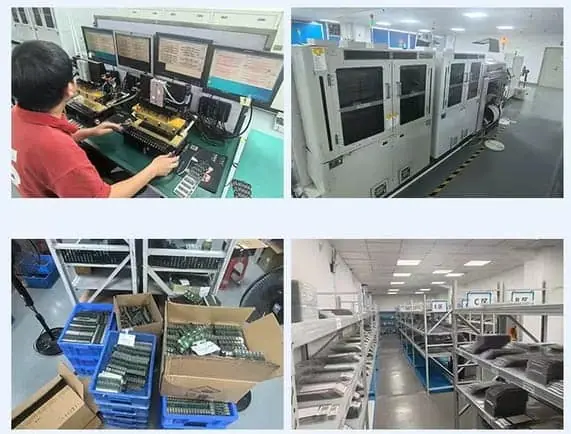
A sample test predicts field behaviour only when it repeats the field conditions instead of the datasheet. Start with quantity: a lot of 1,201 to 3,200 units falls under ISO 2859-1 General Inspection Level II, which puts 125 units on the table and accepts 7 defects at AQL 2.5. Then reproduce the workload — a dashcam writing 30 GB an hour, a logger overwriting one sector, a reader capturing stills — because write amplification on managed NAND commonly runs 8 to 20 times, and the published program/erase budget is about 3,000 cycles for TLC against about 100,000 for SLC. Retention is quoted at about 10 years at 40 C at start of life and about 1 year at 40 C after 3,000 cycles. Verify capacity by write and read-back, never by a card reader count.
A passing sample is not a prediction
A 32GB card read correctly on a Windows laptop for ten minutes is a true measurement. It is the measurement of one card, on one host, at one temperature, and it answers almost none of the questions a production programme asks.
The gap between that desk check and a part living inside your device is where the returns come from, and it is cheap to close before tooling is cut.
Three things make the difference: how many units you test, what workload you repeat, and how long you hold the data afterwards. Miss the third and you will blame the supplier for a shelf failure that the sampling plan agreed to accept.
How many units the question needs
Buyers ask for one sample. The better question is what one unit can be worth.
Acceptance sampling in manufacturing is a standardised scheme, set out in ISO 2859-1 and ANSI-ASQ Z1.4. General Inspection Level II is the default when a contract is silent, which matters because an inspector with no written level will fall back to it.
| Lot size | Level II sample size | Accepted at AQL 2.5 |
|---|---|---|
| 1,201 – 3,200 | 125 | 7 defects |
| 3,201 – 10,000 | 200 | not quoted by the standard’s short table |
| 10,001 – 35,000 | 315 | not quoted by the standard’s short table |
A first order released as 2,000 units lands in the first row. One hundred and twenty-five units go on the bench, seven failures are accepted, eight reject the lot.
That is a public sampling table, not a rule any factory sets, and no supplier can move those rows by asking politely. What a supplier and a buyer negotiate is the AQL assignment per defect class — critical 0, major 2.5, minor 4.0 is the common starting point — along with the defect definitions themselves. A written assignment turns a standard table into a contract.
At sample size 125 the acceptance numbers are 3 accepted against 4 rejected at AQL 1.0, and 7 against 8 at AQL 2.5. Those pairs are the whole point of sampling: the scheme buys you a known risk, not certainty.
Repeat the workload, not the datasheet
A controller maps a host write onto a page, reads the block, erases it, programs the new data and moves the old logical address somewhere else. Host writes and cell writes are not the same traffic. The published figure for write amplification on managed NAND commonly runs 8 to 20 times.
Twice that multiplier decides how much of the endurance budget your application actually spends.
| Cell type | Published program/erase cycles |
|---|---|
| SLC | about 100,000 |
| MLC | about 3,000 – 10,000 |
| TLC | about 1,000 – 3,000 |
| QLC | about 300 – 1,000 |
Those rows come from the JEDEC endurance and retention definitions in JESD47 and JESD84. They are published cell-type averages, not measurements taken on our own line, and no supplier should present them as a test report on their product.
Retention is quoted against how much life is left. The published figures are about 10 years at 40 C at the start of life, and about 1 year at 40 C after 3,000 program/erase cycles. A part hammered for two years with the power removed on weekends is a different part from the same part sitting in a drawer, and a sample drawn from a fresh tray will not reveal that.
The three tests worth writing into a plan
A burn-in is only meaningful if the conditions are named. Four lines cover most failure modes:
- Quantity and acceptance. Lot size, inspection level, AQL per defect class. A lot of 2,000 units means 125 units tested at Level II.
- Workload profile. Sequential write of full capacity, a random small-write phase at roughly 30 percent of the traffic, and a read-back compare of every byte.
- Thermal soak. Hold the part at the top temperature the enclosure will see, then run the same write pattern again. A sealed housing in a vehicle or an industrial box lifts the real figure well above room temperature.
- Retention hold. Write, power down, return after 30 days or 90 days, read back. A part that loses bytes on the bench will do it in the field at a lower rate and a worse time.
The only capacity test that does not take the device at its word is write and read-back. Fill the whole nominal capacity, read every byte back, compare. H2testw on Windows, f3write with f3read on macOS or Linux, and a counterfeit reports Data LOST, Corrupted or Overwritten past its real capacity. A card reader showing 29.8 GiB for a nominal 32 GB card is arithmetic — 1 GB sold as 1,000,000,000 bytes against 1 GiB read as 1,073,741,824 bytes — not a defect.
Inspection is normally split into incoming, in-process and outgoing stages rather than one final check at the end. Knowing which stage your sample came from tells you what its pass is worth.
What we can say about our own parts
Our specification cards carry three formats, sized and weighed so an engineer can check them with a caliper and a milligram scale:
| Format | Size | Mass | Capacity range |
|---|---|---|---|
| TF card | 15 × 11 × 1 mm | 0.25 g | 4GB – 256GB |
| UDP (USB Disk in Package) module | 11.3 × 24.8 × 1.45 mm | 0.819 g | 128MB – 128GB |
| Semi-finished board | 12 × 44 × 4.5 mm | 3.2 g | 128MB – 128GB |
Read and write speed is stated as customizable per order instead of a fixed megabyte figure, because the result depends on the controller and die in the build and on the host it is tested in.
We publish no endurance figure, no program/erase count, no TBW number and no third-party test report. We hold no certificate scans we can release. If your engineering file needs a signed endurance document, ask us and we will tell you plainly whether it exists rather than issuing a document number to end an argument.
When a sample order is the wrong instrument
A sample cannot answer every question, and paying for one with the wrong shape wastes four weeks.
If you need a contractual endurance number backed by a test report, we cannot supply that document today — do not place the order on the strength of one, and look at a supplier who can produce the report. If your requirement is commodity retail flash with no marking, no enclosure and no custom configuration, skip the programme entirely and buy from a commodity channel; a custom sample adds cost without adding anything you need. If the change from your current part is a colour or a silkscreen, a sample proves nothing about the electrical build and only delays the re-order.
The line is simple. A sample is worth paying for when the part’s behaviour depends on a build decision — controller pairing, die grade, enclosure fit, capacity band, firmware — and not when it depends on a commodity purchase.
What to send with the request
Five lines in an email cost nothing and save a round trip: the lot size the first order will be released in, the host or application that will write to it, the peak ambient temperature inside the final enclosure, the retention expected after the projected write budget, and the acceptance route you want — your own incoming check, our outgoing report, or a third party.
With those five, the sample comes back answering a question instead of raising one.
Frequently asked questions
How many sample units do I need to qualify a flash part?
It depends on the lot size the order will actually be released in. Under ISO 2859-1 General Inspection Level II, a lot of 1,201 to 3,200 units puts 125 units on the table, a lot of 3,201 to 10,000 puts 200, and a lot of 10,001 to 35,000 puts 315. Those are planning parameters, not a defect allowance — the same standard accepts 7 defects out of 125 at AQL 2.5 and rejects at 8.
Do the AQL numbers you quote come from your own inspection records?
No. The sampling scheme and the AQL assignments come from ISO 2859-1 and ANSI-ASQ Z1.4, which are public documents. What we can discuss is which defect class your contract assigns each failure mode to — critical, major or minor — because that assignment, not the standard, decides how many units you test.
What is the difference between testing one card and sampling 125?
One card tells you the process made one working unit. Sampling 125 against an AQL tells you something about the process that made them, including the units still on the shelf. A single passed sample cannot estimate a defect rate; arithmetic on a lot of 1,000,000 units and a sample of one does not exist.
Which test actually detects a fake or under-capacity part?
Write and read-back, and nothing else. Fill the whole nominal capacity, then read every byte back and compare. H2testw on Windows and f3write with f3read on macOS or Linux implement it, and a counterfeit reports Data LOST, Corrupted or Overwritten past its real capacity. A card reader showing 29.8 GiB proves nothing beyond the operating system's binary reporting.
How should a burn-in be specified so it means something?
Name four things: the write ratio of the workload, the peak ambient temperature the part will sit at, the number of full-capacity passes, and the retention hold after the write cycle. A plan that says 'three passes over 24 hours at room temperature' is measurable. A plan that says 'run a test' is not.
Can a passing sample still fail in my product?
Yes, in three cases. The first is thermal: a part that passes at 25 C in your lab can fail inside a sealed housing that holds 60 C. The second is workload: a sample tested with sequential writes hides the random small writes that drive block recycling. The third is time: retention is quoted against how much of the program/erase budget the part has already spent.