
How a flash memory manufacturer controls quality across the full chain — wafer sorting, SMT, printing, and assembly — and why factory-direct sourcing matters for B2B buyers.
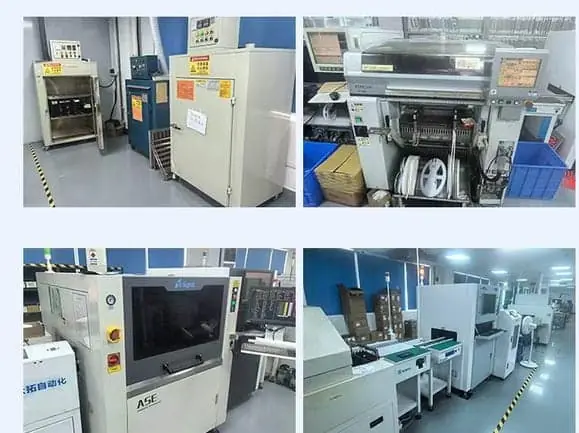
TL;DR
Controlling the full production chain — from wafer testing to finished assembly — is what lets a manufacturer guarantee consistent A+ grade flash at factory-direct cost. For B2B buyers, that control translates into stable supply and predictable reorder quality.
The useful test is not a spec sheet comparison. It is one question: which stages of this chain do you actually own? Everything else follows from the answer.
The production chain, and where quality is actually won
A reliable flash memory product does not start at assembly. It starts at the wafer.
- Wafer sorting & testing. Every wafer is sorted and function-tested at die level before it enters production, so bad die never reaches a finished card. This is the single stage most factories skip, because it costs time and floor space. If a supplier cannot tell you what happens to a failing die, the rest of the chain is guesswork.
- COB bonding / SMT placement. Bare die or packaged parts are placed onto the PCB, building UDP modules and semi-finished PCBA boards. Placement accuracy here decides whether a later failure looks like a storage problem or an assembly problem.
- Reflow & first electrical test. The board comes out of the oven and gets probed. A board that fails here costs minutes; the same defect found in the field costs a warranty claim.
- Housing & assembly. Metal, PVC or wooden housings are assembled onto the boards.
- Marking & branding. Silk-screen, colour print or laser engraving, to your artwork.
- Test & pack. Capacity and read/write verification before packing.
Two of those stages — die sorting and end-of-line verification — are where the difference between a good supplier and a cheap one actually lives. Neither shows up in a photograph.
Chip and solution capability
| Layer | Options |
|---|---|
| Package | TSOP, BGA, LGA (Apple parts), COB, eMMC |
| Flash brands | SanDisk, Toshiba, Micron, SK Hynix, Intel, Samsung |
| Controllers | QFN, 24PIN, 48PIN, COB |
| Solutions | Alcor, ITE, Xinbang, Micov |
The package choice is not cosmetic. TSOP remains the cost-sensitive legacy package. BGA is used for higher-density parts. LGA appears in our source material as Apple-component grade parts. COB — bare die bonded straight to the PCB — is the basis of both UDP modules and card production. eMMC is managed NAND with an integrated controller, for embedded designs.
Flash brand matters less than buyers expect, and this is where we will disagree with a spec sheet. A+ grade flash from any of those six sources will behave similarly in field use. What determines reliability is the grade of the die that survived sorting, the controller paired with it, and whether the product was write-verified before packing. That is the trio worth asking about.
Grade bins: the cheapest thing to fake and the most important thing to confirm
Every wafer leaves the fab with some dies that pass and some that do not. Sorting is what separates them, and the separated groups are what the market calls grades.
Because a re-labelled card is indistinguishable from a genuine one at a glance, grade is the single most common place where a low-price quote gets its advantage. There are only three reliable counter-checks:
- Ask which bin, then ask what happened to the fails. “Binned to A+” is a claim. “Fails go to the next bin down” is a process.
- Ask for the capacity verification method. Grade and capacity are checked together at end of line. A card that passes as 64GB when it holds less has almost certainly skipped that check.
- Ask about the first-order quantity. Genuine capacity-inflated stock tends to arrive as a short, cheap top-up rather than as a planned production run.
We would rather be asked this question early than have it discovered eighteen months into a programme.
What in-house control buys you
- Consistency. One factory controls every variable, so a reorder behaves like the first order — same controller, same capacity configuration.
- Cost. No middle-vendor markup stacked across stages.
- Speed of change. A design adjustment travels one floor instead of three companies.
- Supply. In-house capacity reduces exposure to external shortages — though not to zero, which is why controller availability is confirmed per project.
- Footprint. Our production and office sit at Bantian 3rd Industrial Zone, Longgang District, Shenzhen, across 5,000 m², shipping to 50+ countries.
Where the failures that survive QC actually come from
Most flash failures do not originate on the assembly line. They arrive in one of three forms, and all three pass a two-day bench test:
- Wear-out data loss. After enough program/erase cycles, cells hold charge less reliably. The card still reads fine; it just quietly stops retaining data over weeks without power. This is a function of flash grade and thermal environment, not of firmware.
- Thermal derating. A controller asked to sustain a high write rate in a sealed enclosure will throttle, drop frames, or leave blocks behind. Whoever qualifies the card in an air-conditioned lab has qualified a different product.
- Capacity drift. A card verified as 128GB at 25 °C may present a smaller usable size at the hot end of its range. Sizing depends on the test conditions, so ask for them.
None of these are solvable with a better label. They are solvable with sorting discipline, verified end-of-line testing, and a supplier who will tell you the test conditions.
Artwork, tooling and what you keep
For a branded programme, the artwork and tooling are often the more sensitive asset. Printing plates, housings and packaging artwork are what make a product yours, and they are also what makes a second source possible.
Before you commit, get three answers in writing:
- Where are the artwork files and printing plates held between orders?
- Who can access them, and under what process?
- If the programme pauses for a year and restarts, does the tooling still exist at the same cost?
If a supplier cannot answer the first two, treat the tooling as a loan you have made, not an asset you own.
When factory-direct is the wrong choice
Being straight about the limits, because it saves both of us a quotation cycle:
- Very small first orders. Under a few hundred units, setup and tooling for a custom build costs more per unit than a commodity part. Buy commodity first, revisit at volume.
- Projects needing third-party certification before shipment. CE, FCC and RoHS each carry their own testing lead time. If your launch date assumes certification was free and instant, the date is wrong, not the factory.
- Products where you need four suppliers quoting within 24 hours on the same day. We will quote seriously, not urgently.
- Anything where you want the price to be the only decision variable. Factory-direct tends to beat the price on the quote least often, and beat it most reliably over a repeat order.
- Programmes with no end-of-life plan. If nobody has thought about the second order, the first order will be rebuilt to whatever is available.
If one of those is decisive for you, tell us at the start. We would rather say no up front than hold your launch date.
Questions worth asking any supplier
- Which stages of this chain do you own, and which do you subcontract?
- What happens to a failing die at the sorting stage — rework, or to the bin?
- On a reorder six months out, would I get the same controller and capacity configuration, or whatever is cheapest that month?
- Is end-of-line capacity verification write-and-read-back, or a card-reader check?
- At what temperature were the capacity and speed figures measured?
- Who holds the artwork and tooling between orders?
- What is the lead time for a repeat order of the same configuration, versus a new one?
Seven questions, and the answers will separate manufacturers from traders far more reliably than any capability table.
If you are sourcing flash memory at volume, start with how MOQ is set and what to send for a quotation.
Reach the team at cathy@go-wintel.com or open the request a quote form.
Frequently asked questions
What does 'full in-house chain' mean for flash memory?
It means every stage — wafer testing, SMT placement, printing, and final assembly — happens inside one factory, so quality and cost are controlled end to end rather than outsourced between vendors.
Which flash brands does WINTEL use?
We use A+ grade flash from SanDisk, Toshiba, Micron, SK Hynix, Intel, and Samsung, assembled with controller solutions from Alcor, ITE, Xinbang, and Micov.
Can WINTEL handle customisation?
Yes. Capacity, read/write speed, surface printing, and housing are customizable across TF cards, UDP modules, semi-finished boards, and finished USB drives.
How much capacity can you supply per month?
The company-stated figure is 500,000+ units per month. What matters more for a long project is the batch size you plan against — ask a supplier to confirm how much of that is yours held in advance.
What grade of NAND do you use, and can I have that in writing?
A+ grade. Grade is decided at wafer sorting, not at assembly. Ask any supplier to state the grade bin and the controller pairing in the quotation — if the answer is 'standard grade', you are being quoted on whatever is cheapest that month.
Who holds my artwork and tooling between orders?
The factory holds them. Ask for the handover in writing: where the artwork files are stored, who can access them, and what happens to tooling if the programme pauses for a year.
What should I ask before choosing a flash memory supplier?
Ask which stages of the chain they actually own, what happens to a failed die at the sorting stage, and whether a reorder would be built from the same controller and capacity configuration or rebuilt to whatever is cheapest that month.