
You can't tell from the outside, and that's the whole problem. A drive built with a different controller or NAND grade looks identical and only fails after you've shipped a few thousand to your own customers. Four lines in your purchase order close most of the gap — and a batch test report is what closes the rest.
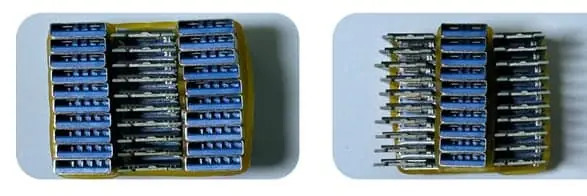
You cannot see a chip swap from the outside, so you control it with the order, not with trust. Write four things into the purchase order: the exact NAND brand and grade, the controller model, a statement that no substitution is allowed without your written approval, and a per-batch test report. A supplier who will put those four lines in writing has already filtered themselves. A supplier who won't is the risk, regardless of how good the first samples looked.
The short answer
You can’t tell from the outside, and that’s the entire problem.
A USB drive built with a different controller or a lower NAND grade looks identical to the one you approved. It passes a quick read test. It only behaves differently under sustained write, at temperature, or when the drive is nearly full — conditions that rarely show up in a five-second check of one unit.
So the failure doesn’t surface as “bad batch rejected at your dock.” It surfaces as a few returns from your own customers, weeks later. By then the units are in the field and the question of whose fault it was is unanswerable.
The way to stop it isn’t trust. It’s four lines in your purchase order, plus a report you actually read.
Why you can’t catch it by looking
The parts that decide behaviour sit under the shell:
- the NAND — the actual memory, graded by die quality and source
- the controller — the chip that manages writing, wear and error correction
- the firmware — the behaviour loaded onto that controller
None of these is visible on a finished drive. Two drives with different controllers can share the same capacity, the same connector and the same colour, and a casual inspection will call them identical. The difference is what happens on the tenth minute of a transfer, or the fiftieth time a unit is rewritten — which is precisely the condition your end customer hits and you don’t.
This is why “the samples looked great” is not evidence. Samples are hand-picked. The control has to apply to the production batch, not to the couriered unit.
The four lines that actually control it
Write these into the purchase order. Not into a cover email, not into a separate quality agreement nobody reads at goods-in — into the PO itself.
| Line | What to write | Why it works |
|---|---|---|
| NAND | Brand and grade, e.g. “original-brand TLC, grade A” | Names the memory instead of “4GB flash” |
| Controller | Model, e.g. “controller model X, firmware rev Y” | Names the behaviour, not just the capacity |
| Substitution | “No NAND, controller or firmware change without written approval” | Makes a silent swap a contract breach |
| Proof | “Per-batch test report referencing the same part numbers” | Connects the order to the shipped units |
A supplier who will put those four lines in writing has already filtered themselves. A supplier who won’t, or who sends back a PO with the lines removed, is the risk — regardless of how good the first samples looked.
A fixed BOM is not proof
A common mistake is to treat a fixed BOM as the finish line. It isn’t. A BOM names the parts; it does not prove the parts shipped were the parts named.
The missing link is the batch test report. A useful report does two things:
- It lists the NAND and controller actually measured on the units in that batch, not just the order text repeated.
- It carries a batch or lot reference you can tie to the cartons you received.
If the report names different parts than your PO, you have your answer before the goods leave the factory. If there is no report, you have no evidence either way — and “no evidence” is the position you’re trying to avoid.
What a swap costs depends on what the drive does
Not every swap is a disaster, and being clear about that helps you decide how hard to push.
| Use | What a swap changes | How bad |
|---|---|---|
| Promotional giveaway | Speed, occasionally capacity behaviour | Annoying, rarely critical |
| General storage / resale | Speed under load, longevity | Returns, reputation |
| Device that boots or runs software | Validated behaviour breaks | The device may not work as qualified |
| Medical, survey or legal records | Data integrity under rewrite | A record that won’t open — not a slow one |
The last row is the one where a swap isn’t “cheaper components,” it’s a different product than the one your software or your customer was validated against. That’s why the four lines matter more on a humble 8GB drive used for records than on a high-capacity one used for movies.
A scenario: the second shipment behaves differently
This is the shape of the problem buyers actually hit.
You qualified batch one — read it, wrote to it, maybe ran it through your own device, approved it. Batch two arrives three months later. A few of your customers report occasional stalls. You compare the two batches and the only thing you can see is that the second one feels slower under a big transfer.
Without the four lines, you have no leverage: the supplier says “same specification,” you have no part numbers to compare, and the report (if any) just says “passed capacity test.”
With the four lines, you ask for the batch-two report, compare the controller field to the PO, and either it matches (so the problem is something else) or it doesn’t (so you have a documented breach and a remedy). The point is not to argue — it’s to have the number.
A checklist for your next order
- NAND brand and grade written into the PO, not just “flash memory”
- Controller model and firmware revision written into the PO
- A substitution clause requiring your written approval
- A per-batch test report required, naming the actual parts measured
- The report’s batch reference tied to the cartons you receive
- A named remedy if the report shows different parts than the PO
None of this requires a big contract or a quality audit. It requires four lines and a report you read. The suppliers who object to that are telling you something worth hearing before you place the order.
Frequently asked questions
How would I even know if a supplier swapped the chip?
You usually wouldn't, from a single unit. A different controller or NAND grade behaves almost the same on a quick read test, and only diverges under sustained write, at temperature, or when the drive is nearly full. So the failure shows up as a handful of returns from your own customers weeks after delivery — not as something you'd catch on incoming inspection of one piece. That delay is exactly why the control belongs in the order, before the build.
What exactly should I write in the purchase order?
Four lines: the NAND brand and grade (for example the original-brand grade you qualified), the controller model, a clause that no NAND, controller or firmware change is permitted without your written approval, and a requirement for a per-batch test report referencing the same part numbers. Keep it to those four. A paragraph of legal language about 'quality' protects nothing; the part numbers do.
Is a fixed BOM enough on its own?
No. A fixed BOM names the parts; it does not prove the parts shipped were the parts named. The batch test report is what connects the two — it should list the NAND and controller actually measured on the units, not just restate the order. If the report names different parts than your PO, you have your answer before the goods leave the factory.
My supplier says the chip 'varies by availability'. Is that a red flag?
It's a fact of the memory market, not automatically a red flag — but it is a sentence that ends the conversation unless you follow it. The question to ask is: when availability forces a change, do they tell you before production and send test data for the substitute, or do they switch and mention it after? The first is a supplier you can plan with. The second is the swap you're trying to prevent.
Does this matter as much for a simple 8GB drive as for a high-capacity one?
It matters whenever the drive carries your name or your customer's data. On a cheap promo drive, a swap mostly changes speed. On a drive that boots a machine or delivers a patient's scan, a swap can change behaviour the software was validated against — and then it's not a slower drive, it's a drive that doesn't work. The cost of a swap scales with what the drive is used for, not with its price.
What if I'm only ordering 500 units? Is this overkill?
No. Small orders are exactly where swaps are hardest to catch, because you have no leverage from volume and often no incoming test rig. The four lines in the PO cost you nothing at 500 units and protect you more there than at 50,000, where a serious supplier has already built a relationship around consistency.