
It's cheaper only if you were already going to make the housing anyway, and even then the saving is smaller than it looks — because what you're really taking on isn't assembly, it's testing. A factory tests every drive before it ships; the moment you assemble them yourself, that job is yours, and a bad unit now fails at your customer instead of theirs. Compare the full cost, including the test rig and the failure you'll own.
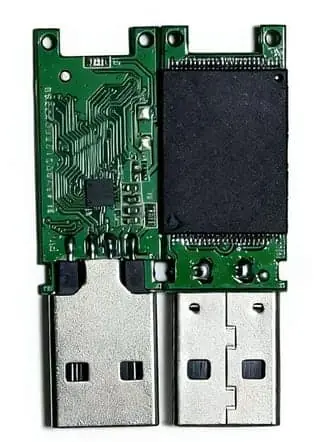
Buy semi-finished boards only if you already make the housing and already run incoming test, because the apparent unit saving is mostly the assembly labour the factory no longer does for you — and the part you take on is not assembly, it's verification. A factory tests every unit for real capacity and sustained behaviour before shipping; once you assemble in-house, that responsibility moves to you. If you can't test every unit, you're buying a lower price and a higher failure rate at your customer's site.
The short answer
It’s cheaper only if you were already going to make the housing, and even then the saving is smaller than it looks — because what you’re really taking on isn’t assembly, it’s testing.
A factory’s price for a finished drive includes two things a semi-finished board does not: putting the shell on, and testing every unit before it ships. Remove the board from the shell and the unit price drops. But the drop is the assembly labour, not a cheaper part — and the test is gone too.
If you have no housing line and no test rig, the “saving” is an expense you’re about to meet.
What the factory actually does for you
A finished custom drive carries two jobs most buyers don’t see on the quote:
- The physical fit. The connector has to seat at the right depth and angle inside the housing, or it won’t plug into a port. That’s a mechanical design task, not a snap-together.
- The verification. Every unit is tested for real capacity and sustained behaviour before shipping. This is the part that decides whether your customer gets a working drive.
When you buy boards and assemble in-house, job one becomes yours and job two also becomes yours. Most buyers budget for the first and forget the second. The second is where quality is actually decided.
A scenario: the saving that wasn’t
A buyer reselling branded drives gets a quote for finished drives at $4.20 and semi-finished boards at $2.90. The board looks like a $1.30 saving per unit.
Then the buyer has to:
- tool or source a housing
- assemble (labour, floor space)
- build a test rig and a test standard
- own the failure rate
The $1.30 “saving” is now offset by assembly cost, test equipment, and — the expensive one — returned drives from end customers, which a factory would have caught before shipping.
For a reseller, the finished drive was the cheaper total. For a buyer who already makes the housing, the board may genuinely win.
When boards actually make sense
The case where this works is when the board is a component going into your own product, not a finished drive you resell:
| Buyer | Board makes sense? | Why |
|---|---|---|
| POS terminal maker | Yes | Has housing tooling and incoming inspection |
| Embedded device maker | Yes | Board is a sourced component like any other |
| Kiosk / self-service maker | Yes | Already tests components on incoming |
| Reseller of branded drives | Usually no | No housing line, no test rig; total cost higher |
The difference is whether you already run incoming test. If you do, the board is just another component. If you don’t, you’ve bought a lower price and a higher field-failure rate.
What “test every unit” protects you from
Capacity fraud and controller substitution don’t show up on a sample you hand-pick. They show up across a batch — some units bad, most fine. A factory tests every unit precisely because sampling misses exactly these failures.
If you buy boards and sample only, you’ve taken on the assembly and skipped the one test that protects you. That’s the worst of both: you pay to assemble and you pay again in returns.
What to ask the supplier before choosing
- What exactly is on the board — controller, NAND, connector?
- What are the board’s interface and dimensions, so my housing fits?
- Will you supply a per-batch test report for the boards?
- What do you test, and what will I have to test myself?
An honest supplier lists what they verify and what they don’t. A board they don’t fully test is a board you must test — and that’s the real cost of “assemble it yourself.”
The thing to remember
The board is the cheap part to buy. The testing is the expensive part to take on.
Compare the full cost — board, housing, assembly, test rig, and the failure you’ll own at the customer’s site — not the unit price on the first line. A finished drive bundles all of that into one number a factory has already optimised. Undoing the bundle only saves money if you were already doing the work.
Frequently asked questions
Isn't buying the board and assembling it always cheaper?
Only if you were going to make the housing anyway. The factory's price for a finished drive includes assembly and test; a semi-finished board removes the assembly, so the unit price drops. But the drop is the assembly labour, not a cheaper part — and the test the factory did is gone too. If you have no housing line and no test rig, the 'saving' is an expense you're about to discover: you'll pay to assemble and you'll pay again in returns.
What exactly do I take on when I assemble in-house?
Two jobs the factory used to do: the physical fit (the connector has to seat at the right depth and angle, or it won't plug in), and the verification (every unit tested for real capacity and sustained behaviour). The first is a mechanical design task. The second is a test rig and a standard you have to write. Most buyers plan for the first and forget the second — and the second is where quality is actually decided.
Can I just test a sample and trust the rest?
That depends on what fails. Capacity fraud and controller substitution don't show up on a sample you hand-pick; they show up across a batch. A factory tests every unit precisely because sampling misses exactly the failures that matter here. If you sample only, you've taken on the assembly and skipped the one test that protects you — which is the worst of both.
When does buying boards actually make sense?
When you already have the housing process and the test capability, and the board is a component going into your own product rather than a finished drive you resell. POS terminals, embedded devices and kiosks are the typical case: the buyer has injection or sheet-metal tooling and an incoming inspection bench, so the board is just another sourced component. For a buyer who wants drives to resell, a finished drive is almost always the lower total cost.
What should I ask the supplier before choosing?
Four things: what exactly is on the board (controller, NAND, connector), what the board's interface and dimensions are so your housing fits, whether they'll supply a test report per batch of boards, and what they test versus what you'll have to. The honest supplier lists what they verify and what they don't — because a board they don't fully test is a board you must test.
Does this change my lead time?
It can lengthen it. A finished-drive order ships when the factory finishes; a board order ships when the board is done, then your assembly and test add weeks you own. For a one-off that's manageable; for a recurring programme it's a standing commitment of floor space, labour and test equipment. Count that as cost, not as free.