
Most flash returns are reported as one word. Three mechanisms get bundled into it — cell wear, write amplification and retention loss — and they need opposite answers. This is the arithmetic behind each one, the published figures they come from, and the specification lines that stop a field failure before it happens.
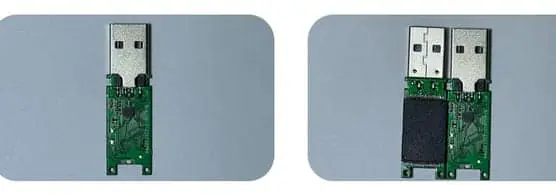
A flash unit that dies in the field dies for one of three reasons, and they get written down as one word. Cell wear is finite: NAND survives a set number of program/erase cycles, and the published figures run from about 100,000 for SLC to 300-1,000 for QLC. Write amplification makes that budget arrive faster than expected, because the controller repacks host writes into pages and erases whole blocks, typically multiplying the traffic by 8 to 20 times. Retention loss is the third: the published JEDEC figure is about 10 years at 40 C at the start of life, and about 1 year at 40 C once the cells have taken 3,000 cycles. All three belong to the NAND and its controller, not to the shell.
Three faults that arrive on one RMA sheet
A returned batch rarely arrives with a diagnosis. It arrives with a note.
“Card failure” covers at least three separate mechanisms, and mixing them up sends the investigation to the wrong bench.
The first is wear: the NAND cells cross their program/erase budget and stop holding a written bit. The second is retention loss: the part writes correctly, passes every outbound test, then forgets data after a few days without power because the cells have already spent their life. The third is everything that is not NAND at all — a USB contact that no longer seats, a sliding shell that binds, firmware that hangs on a particular host, a host that polls the card faster than the controller can answer.
Group three is the one worth checking first, because it costs the least to eliminate. Swapping a gold-plated contact or changing a pull-up resistor in the shell costs pennies per unit; arguing about P/E cycles on a bench costs weeks.
The published endurance figures, and who owns them
The numbers below are cell-type averages published in the JEDEC endurance and retention definitions in JESD47 and JESD84. They describe NAND in general. None of these figures is a measurement from our own floor — they are industry numbers, and any supplier quoting them as their own test result is quoting something else.
| Cell type | Typical program/erase cycles |
|---|---|
| SLC | about 100,000 |
| MLC | about 3,000 – 10,000 |
| TLC | about 1,000 – 3,000 |
| QLC | about 300 – 1,000 |
The spread inside each row is real, not sloppy writing. It moves with the process node, the interleave the controller can hold and the temperature the cells see. A TLC part in a phone and a TLC part under a dashboard at 60 C are not the same part in this table.
This is where the cell type gets chosen, and where the ordering conversation usually skips it. Our sourcing card names TSOP, BGA, LGA, COB and eMMC as package formats, with controller packages in QFN, 24-pin, 48-pin and COB form, from controller solutions including Alcor, ITE, Xinbang and Micov. The package shape does not set that row. The cell type behind the package does, and so does the firmware in the controller.
Write amplification: your writes are not the cells’ writes
A host writes one page. The controller maps that page onto a block, reads the block, erases it, programs the new data and maps the old logical address somewhere else. Every erase is expensive, blocks must be recycled in bulk, and the garbage collector competes with the host for the same cells.
That is why the industry figure for write amplification on managed NAND commonly runs 8 to 20 times.
The consequence is arithmetic you can run on a sheet. Total bytes the cells will absorb equals capacity times program/erase cycles divided by the write amplification factor. Take a 32GB unit from the TF band our specification cards cover — 4GB to 256GB — with TLC cells rated at 3,000 cycles. The cells absorb roughly 96 TB of raw program/erase traffic. Divide by 20 for write amplification and the host-side budget lands near 4.8 TB of writes.
A camera writing 30 GB per hour will finish that budget in under two weeks. The same camera writing 2 GB per hour gets a year or more. Same part, same cells, same price — a completely different field life, decided by the workload, not by the supplier.
Retention is a function of how much life is left
Retention gets quoted as a headline: about 10 years at 40 C at the start of life, and about 1 year at 40 C at the end of life after 3,000 program/erase cycles.
Read that second clause twice. The short number is not a different product. It is the same cell type, measured after the life is spent, and the exact wording sits in the current JEDEC document rather than in any supplier’s marketing sheet — subject to the latest official wording, which is why we quote it as a range and not as a promise.
The practical reading for a buyer is uncomfortable but useful: a card that has been hammered for two years with power removed on weekends is a card with a shorter data-retention clock than the same card sitting in a drawer. Cold storage of a part that has already worked hard is the quiet failure mode.
What we publish, and what we do not
Our specification cards carry the three formats we build, and the figures are the ones an engineer can check with a caliper and a milligram scale:
| Format | Size | Mass | Capacity range |
|---|---|---|---|
| TF card | 15 × 11 × 1 mm | 0.25 g | 4GB – 256GB |
| UDP (USB Disk in Package) module | 11.3 × 24.8 × 1.45 mm | 0.819 g | 128MB – 128GB |
| Semi-finished board | 12 × 44 × 4.5 mm | 3.2 g | 128MB – 128GB |
Read and write speed is stated as customizable per order rather than as a fixed megabyte figure, because the number depends on which controller and which die went into the build and on the host it is tested in.
We do not publish an endurance figure, a program/erase count, a warranty year or an independent test report. We hold no certificate scans we can release and no third-party test report on file. If your engineering file needs one of those documents, ask us and we will tell you plainly whether it exists — we will not produce a document number to end an argument.
Why failure analysis should start with the workload
Four questions, asked before the datasheet is chosen:
- What fraction of writes is random and small? A controller hates small random writes. A 4 kB log line every ten seconds is far more expensive per byte than a 30 MB video segment.
- Does the host overwrite in place? Constant overwrite of the same regions forces block recycling forever, and the same physical cells carry the traffic.
- What is the peak ambient temperature? Retention and endurance both fall as the cells sit hotter, and a sealed enclosure in a vehicle or an industrial housing raises the real number above the datasheet guess.
- How long must the data survive with the power off? If the answer is more than a year and the part has already taken a few thousand cycles, the retention clause decides the cell type — not the price.
Ask those four and the correct package usually picks itself. A read-heavy capture device in a passenger car rarely needs the top cell type. A data logger that rewrites the same buffer at 70 C in an unventilated box does.
When we are the wrong supplier
Some orders should go elsewhere, and it is better to say it before the tooling is cut.
If you need a contractual endurance number — a documented program/erase count, a TBW figure, a warranty backed by a test report — we cannot supply that document today, so do not place the order on the strength of one. If your requirement is commodity retail flash at the lowest unit price with no enclosure, no marking and no custom configuration, we are not the cheapest source and you should buy from a commodity channel. If your volume is a few hundred finished drives a year and you want them enclosure-matched to an existing product you are already happy with, a custom build adds cost without adding value.
The honest line is this: if the part you need is defined by a written endurance guarantee, buy from a supplier who can produce the test report behind it. If the part you need is defined by a fit check, a contact and a predictable supply of the same building blocks, that is what we build.
Put it in the order, not in the complaint
A purchase order that says “256GB TF card” is a purchase order that will fail in the field in a way nobody can attribute. A purchase order that says the capacity band, the workload that writes to it, the peak temperature and the retention expected after a projected cycle count is a purchase order a factory can answer.
That is the whole difference between a part that survives three years in your product and a part that comes back as one word.
Sources
Frequently asked questions
What is the difference between endurance and retention?
Endurance is how much writing a cell can take before it stops holding a written bit reliably. Retention is how long the cells hold what was written while the power is off. A part can pass both at the start of life and fail retention later, because reading and writing consume the same budget that retention depends on.
Are the endurance numbers you quote measured on your own product?
No. The program/erase figures and the retention figures come from the published JEDEC definitions in JESD47 and JESD84, and they are cell-type averages rather than measurements on any single batch. The only figures we publish about our own parts are the dimensions, the mass and the capacity bands on our specification cards.
Does write amplification apply to a card that only reads?
Much less so. Write amplification is created by program/erase traffic. A reader that only captures stills and reads them back accumulates very little wear. A logger that overwrites the same sector in a loop, or a dashcam writing segments continuously, drives the controller into constant block recycling.
Can a unit be healthy and still lose data?
Yes, if it has already used most of its program/erase budget. Retention is quoted against a remaining-life condition, so a heavily written card at 40 C can lose data after days of storage even though every read at the factory returned correct bytes.
Which packaging choices affect how a part ages?
The parts named on our sourcing card — TSOP, BGA, LGA, COB and eMMC, with controller packages in QFN, 24-pin, 48-pin and COB form. The package does not set endurance; the cell type behind it and the controller's firmware do. A COB bond protects the die but leaves you without a serviceable part, which matters when a failure has to be diagnosed.
What should a purchase order state instead of a warranty period?
Four things: the write ratio of the workload, the peak ambient temperature the part will sit at, the retention expected after the projected program/erase count, and who carries a failure that lands inside those numbers. A warranty year tells a buyer nothing about any of that.