
A flash quote is a snapshot: die cost and exchange rate move before it ships. Which clauses must be written, and when a fixed price is wrong.
A flash quotation is a snapshot, not a price. Two variables move after you sign: the cost of the die and controller, which tracks a semiconductor cycle of roughly 26 weeks from fab through assembly and test, and the exchange rate between the currency the price is quoted in and the currency you settle in. Nothing legitimate moves with them — tooling, firmware configuration and test fixtures are one-off costs already spent. What decides the total you actually pay is written in four places: the currency and validity window, the Incoterm with its port, the payment schedule tied to milestones, and the clause naming who owns the tool.
The number on the quote is a photograph
A quotation for custom flash arrives as one figure with four decimal places. It gets forwarded internally, an approval takes two weeks, and by the time the purchase order is signed that figure has become a commitment inside a cost model. Nothing about the unit has changed in the meantime. Two things outside the factory have.
This piece is about those two things, and about the four clauses that decide whether the number you approved is the number you pay. It is not a repeat of the line-by-line reading of a quotation, which covers what each row means. This is about the part of the number that lives in the contract rather than in the bill of materials.
The first thing that moves: what sits inside the die line
Flash has no list price. It has a position in a cycle with a published length, and the length is measurable in weeks.
| Stage | Published duration |
|---|---|
| Wafer fabrication | Up to 12 weeks |
| Assembly and test | A further 4 to 8 weeks |
| Full cycle, fab through test to assembly | Roughly 26 weeks |
| Unpackaged die held upstream | About 180 days |
| Die held at distributor level | About 65 days |
Those durations come from the ECIA pipeline breakdown and from published semiconductor cycle data. They are industry figures rather than measurements taken on our own floor, and nobody in the chain can hold a fixed price across that window with a clear conscience. When a memory maker shifts, it shows up in the die line of a quote weeks before it shows up in a marketing email.
The practical consequence is arithmetic. A 26-week cycle inside a 30-day validity clause means the component position behind your quote will turn over at least twice before the last carton leaves. A supplier who absorbs that movement silently is either better hedged than the market or worse hedged than it looks. Ask which.
The second thing that moves: the currency you settle in
Currency only becomes interesting when the quote currency and the settlement currency are not the same thing.
Price it in US dollars and settle in US dollars and the topic is decoration. Price it in US dollars, settle in Chinese yuan against whatever rate the bank applies on the day, or price it in euros and pay in dollars, and the rate is a line in your landed cost whether you wrote it down or not.
The mechanism is unglamorous. A 3 percent move between the currency the price was approved in and the currency it is settled in moves the landed cost of the whole order by 3 percent, on every unit, before a single die is bonded. Factories in Shenzhen carry most of their cost in local currency, so a supplier quoting in a foreign currency is carrying a position on your behalf and will either charge for it in the price, hold it until the validity window expires, or lose on it once. None of those is dishonest. All of them belong in the contract.
What should never move after you sign
The inverse of the two variables above: the items that are one-off and must stay put.
A housing tool. A marking plate or laser job carrying your artwork. The controller firmware configuration. The test programme and handler fixture built around your package. The first-article inspection report both parties sign. All of it is spent once.
Published injection moulding guidance illustrates the shape of that bill plainly. A tool costing $10,000 with $0.40 of variable cost per part gives about $10.40 per unit at 1,000 pieces, about $1.40 at 10,000 and about $0.50 at 100,000. The per-unit share falls roughly tenfold across that range while the cash call stays exactly where it was. A supplier who re-prices tooling in month three has confessed that the original quote was a forecast rather than a number, and that is worth knowing before it happens rather than after.
The physical part moves less than the commercial one. Our TF card measures 15 × 11 × 1 mm at 0.25 g; the UDP (USB Disk in Package) module measures 11.3 × 24.8 × 1.45 mm at 0.819 g; the semi-finished board measures 12 × 44 × 4.5 mm at 3.2 g. Those three cannot drift because a freight rate did. If a quoted dimension changes after signature, that is a new part, and the price should change with it in writing.
The four clauses that decide the total
| Clause | What it fixes | What a vague version costs you |
|---|---|---|
| Currency and validity window | Which rate the price was struck at, and for how long | A re-quote at the worst moment in your approval cycle |
| Incoterm plus port | Where responsibility and cost hand over | Freight disputes on the first shipment |
| Payment schedule | Who carries cash between order and dispatch | A deposit dispute, or a forced prepayment in month three |
| Tooling ownership | Who may run the tool, and who moves it | A second setup fee for a re-order of the same part |
The first one is the one buyers skip. Validity is usually left as a number of days with no statement of who absorbs a rise outside it, and then an approval slips past it and the supplier re-quotes. That is a legitimate response to a clause that was never really agreed. A banded clause — fixed inside the window, then a stated percentage band with a written re-quote rule above it — survives an internal approval that runs long.
The second is the one buyers misspell. “FOB” alone is not a term; “FOB Shenzhen” is, or “FOB Yantian”. The port is the deliverable. CIF looks cheaper per unit because the seller buys the freight, and the rate they obtained is theirs. DDP moves the paperwork onto your side while leaving the cost on theirs, which is where most arrival disputes begin.
Payment terms are a cash decision, not a trust decision
A deposit against the order, a second payment on pre-production sample approval, and the balance against the bill of lading spread exposure across three observable events. A single large prepayment concentrates it on the event where you have least leverage: the moment the order exists and the parts are committed.
A sight letter of credit carries bank charges that a bank transfer does not, and those charges are real money in the order total. Ask for both routes in writing, then compare them as totals rather than as percentages, because the percentage on a larger order is not proportional once a fixed bank fee is in there.
Five questions to put before the price is locked
- In which currency is this quoted, and in which currency do I settle? If they differ, who carries the rate?
- How long does the price hold, and what happens outside the window? A number of days is not an answer on its own.
- Which components are locked and which float? Ask for the die position on shipments two and three, not just the first.
- Is the tool priced into the unit, or is it mine? Published tooling practice is that a tooling fee buys the exclusive right to have parts made from the tool, not automatically the physical steel.
- What triggers a re-quote, and who signs the document? Put the trigger in the contract, not in an email thread.
Which of these numbers come from standards and which from us
Every figure about duration, inventory days, reel rules and amortisation in this piece is a published industry source — the ECIA pipeline breakdown, ECIA packaging standards, ISO 2859-1, and public injection moulding and tooling guidance. None of those is our own measurement, and none of them should be read as a test result on our product. The only figures that describe us are the three dimensional ones in the table above and the sourcing range behind them: TSOP, BGA, LGA, COB and eMMC packages, six original memory makers, and controller solutions including Alcor, ITE, Xinbang and Micov.
What we do not publish: an independent test report, a certificate scan set, a fixed payment schedule, or an annual price-hold commitment. Ask for any of them and we will say plainly whether it exists. We will not produce a number to end an argument.
When a fixed price is the wrong ask
Do not read this as an argument for contractual cleverness for its own sake. If you are buying a catalogue part with no marking, no configured firmware and no enclosure to fit, a commodity channel with a published price schedule is cheaper than us and the fixed price will hold — take it there.
If your own approval cycle is reliably longer than the validity window you accepted, ask for the banded version at the start rather than the fixed one, and do not accept a re-quote as a surprise later.
The honest boundary is narrow. If the part has to survive a housing we measure, a marking we print and a firmware configuration no catalogue sells, the setup is yours to pay, the die moves under both of us, and the only fair instrument is a contract that says so.
A price is a contract, not a number
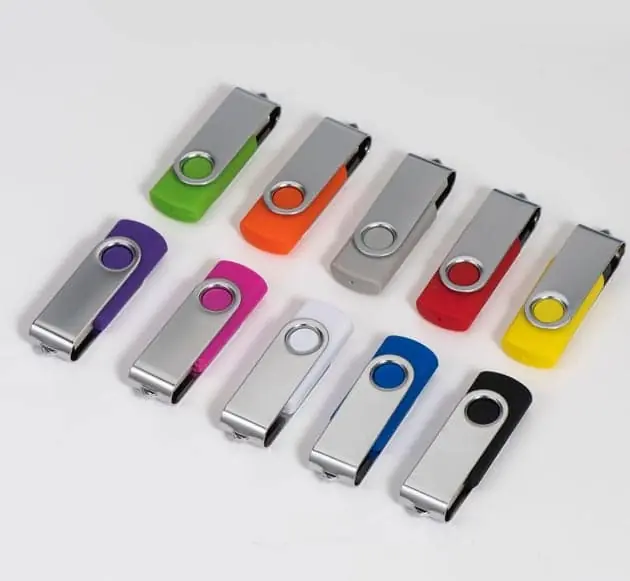
Ten colours in one tray is ten artworks, ten setups and ten prices, and every one of them sits behind a shorter or longer validity window depending on the die that went into it.
Lock the four clauses, name the two moving variables, and the figure you approve becomes the figure you pay. Skip them and the same figure becomes a negotiation again in week four — which is a wasted round trip for both sides, and avoidable.
Frequently asked questions
Is a 30-day quotation validity standard?
Thirty days is a common starting point in published sourcing practice, not a rule fixed by any standard. What matters is that the window is written and that you know which side absorbs a move outside it. A factory quoting in a currency that is not its cost currency has to either hold the price at a loss or re-quote at the first sign of movement, so the clause should state the mechanism: a fixed price inside the window, then a re-quote against the component position, or a banded price that moves within a stated percentage.
Which Incoterm should a first order use?
FOB with the port named, usually FOB Shenzhen or FOB Yantian for shipments out of Shenzhen, is the usual choice for a first order. It fixes the handover to a point you can see: goods on board, then your carrier. CIF moves transport and insurance to the seller and looks cheaper per unit for exactly that reason — the seller buys the freight, not you, and the rate they obtained is theirs. DDP pushes the most responsibility onto the buyer's side of the paperwork while leaving the cost on the seller's invoice, which is where most disputes start. Name the term and the port in the same sentence.
Can a supplier lock the price for a whole year?
They can, and on a commodity card with no marking they should be able to, because the unit is bought in and resold. On a custom build the price contains configured firmware, a tool and a test fixture that were built for your shape, and the die inside a market cycle that publishes about 26 weeks from fab through assembly to test. A twelve-month fixed price on top of that is a promise about silicon, not about us. Ask instead for a fixed setup price and a floating unit price with a stated band, plus a written re-quote rule if the band is exceeded.
Why does payment timing change the price on the quote?
Because the schedule decides who carries the cash risk between order and shipment. A deposit against the order, a second payment on pre-production sample approval and the balance against the bill of lading spreads the exposure across three observable events rather than one calendar date. Payment against a sight letter of credit carries a bank fee that a bank transfer does not, and that fee is real money in the total. Ask for both options in writing and compare them as totals, not as percentages.
What if the exchange rate moves after I approve the price?
If the quote named the currency, the validity window and the settlement currency, the answer is already in the document. If it named none of them, the answer is negotiation again. The practical fix is to have the invoice issued in the currency the price was approved in, with the rate agreed at that moment recorded on it, so the number both parties signed is the number that lands. Where the factory's costs and the buyer's costs sit in different currencies, a banded clause is calmer than a fixed one.
When should I not ask for a fixed price at all?
When the requirement is a catalogue part with no marking, no configured firmware and no enclosure constraint, buy it from a commodity channel with a published price schedule and hold them to it. A fixed price is the wrong ask on a custom build where the shape, the firmware and the test fixture were designed for you; there the honest instrument is a fixed setup price, a stated band on the unit price, and a written rule for what happens when the band is crossed.