
At 10,000 units the setup bill stops dominating the unit price but still decides the cash call. Five fixed items, the amortisation arithmetic, and the six questions to put in the quote before the number is locked.
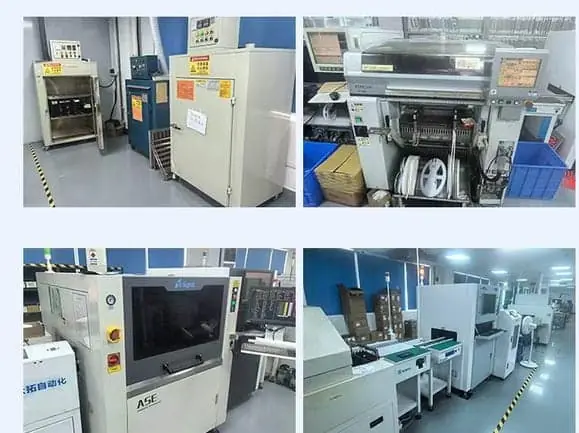
A 10,000-unit programme carries a setup bill that never appears in the unit price. Five items dominate it: the tool that makes your housing, the marking plate or laser job that prints your artwork, the controller firmware configuration, the test programme and handler fixture built around your package, and the first-article report both parties sign. Set against those, the published industry illustration for a $10,000 tool with $0.40 of variable cost per part lands at about $1.40 per unit at 10,000 pieces, $10.40 at 1,000 and $0.50 at 100,000. Tooling lead time runs 2 to 4 weeks in aluminium or 4 to 8 in steel, so the clock, like the bill, is front-loaded.
The unit price is the smallest number in the order
A quote for 10,000 units arrives as a line: a unit price, then a total. The total is the number buyers work with, and it is the only number in the document that hides what happened before it existed.
The setup cost is a separate bill. It is spent once, it does not shrink when the order shrinks, and at 10,000 units it sits at the most interesting point on its curve — low enough per piece to stop deciding the comparison, high enough in absolute cash that somebody still asks who approved it.
This piece is about that bill. Not the unit price, and not lead time in general, but the fixed work that has to be finished before one sellable unit exists at 10,000 pieces.
Five items that appear at 10,000 and not at 1,000
Small orders pay for setup too. What changes at 10,000 is which items are worth naming separately in a quote.
| Setup item | Why it exists at all | Does it grow with volume? |
|---|---|---|
| Housing tool | A custom shape needs a tool; a stock shell does not | No — paid once |
| Marking plate or laser job | Your artwork, printed on the part | No — paid once |
| Controller firmware configuration | Speed class, capacity presentation, bad-block policy | No — paid once |
| Test programme and handler fixture | Built around your package footprint | No — paid once |
| First-article inspection report | Contract, not a promise | Once per configuration |
| Line reservation and reel staging | Real for 10,000, optional for 1,000 | Yes — scales with the lot |
The last row is the one buyers forget. At 10,000 units the lot is large enough to need its own material staging, its own reel plan, and in many factories a reserved slot on the line instead of a shared one. It is not a large number. It is a line that should exist on the quote.
The arithmetic at 10,000 units, and why the curve is not a straight line
Published injection moulding and sourcing guidance illustrates the amortisation plainly: a tool costing $10,000 with $0.40 of variable cost per part gives about $10.40 per part at 1,000 units, about $1.40 at 10,000, and about $0.50 at 100,000.
Ten times the order takes roughly seven times off the tool’s contribution to the unit price. That is the whole argument for scaling up, and it is also the reason a quote at 10,000 looks cheaper per piece than a quote at 1,000 while costing a great deal more in total.
Three other figures from the same public guidance set the shape of the entry point. Injection-moulded parts commonly quote 500 to 2,000 units as a starting quantity, though simple goods without custom tooling can start in the low hundreds. Aluminium tooling costs 30 to 70 percent less than steel and supports a much lower entry quantity, which matters when the housing is the expensive part of the programme.
So the amount you save by ordering 10,000 instead of 1,000 is real, and it is not the same saving as the per-unit price difference suggests.
Where the weeks go before unit one
Tooling is the short pole at the beginning, and it is worth knowing exactly where it sits.
| Step | Published range |
|---|---|
| Approved drawing to T1 samples, aluminium | 2 to 4 weeks |
| Approved drawing to T1 samples, steel | 4 to 8 weeks |
| Complex multi-cavity tool | 10 to 12 weeks |
| Simple engineering change after T1 | Plus 1 to 2 weeks |
| Major change, for example a side action | Plus 3 to 5 weeks |
Behind that sits the semiconductor. Wafer fabrication runs up to 12 weeks, assembly and test add a further 4 to 8, and the full cycle from fab through test to assembly is roughly 26 weeks.
That ordering is the useful part: for most custom flash programmes the die and controller arrive later than the tool, so the moulding is rarely what holds up the launch. The exception is a part with a long-tooling geometry — a multi-cavity steel tool at 10 to 12 weeks can overtake a controller order that was placed first, which is why the two dates need to sit in the same table instead of one being assumed away.
What 10,000 units buys in inspection
The sampling plan changes class at this quantity, and most buyers have not looked at it since the sample order.
Acceptance sampling follows ISO 2859-1 / ANSI-ASQ Z1.4, with General Inspection Level II as the default where a contract is silent. A lot of 3,201 to 10,000 units draws a sample of 200. A lot of 10,001 to 35,000 draws 315. The smaller bracket, 1,201 to 3,200, draws 125, where acceptance and rejection run Ac = 7 / Re = 8 at AQL 2.5.
The AQL values are planning parameters rather than a licence to ship defects, which is the sentence worth repeating in the contract. Below 1,200 units you fall outside the brackets most quotation templates cover, so the inspection level has to be written down rather than inherited.
A 10,000-unit programme also has to decide how the lots are counted. Reel quantities for surface-mount parts are set by package size and tape pitch under EIA-481 / IEC 60286-3 rather than by commercial preference, and channel inventory benchmarks — about 180 days of unpackaged die upstream and about 65 days held at distributor level — decide whether the die for the third shipment is on the floor or still in the pipeline.
Which of these numbers belong to the standards and which to us
Everything in the two tables above comes from public industry guidance: ISO 2859-1 / ANSI-ASQ Z1.4, EIA-481 and IEC 60286-3, ECIA pipeline figures, and published injection moulding and tooling practice. None of those figures is a WINTEL measurement, and no figure in this section comes from a test run on our own floor.
The figures that describe us are the ones a caliper and a scale can check:
| Format | Size | Mass | Capacity range |
|---|---|---|---|
| TF card | 15 × 11 × 1 mm | 0.25 g | 4GB – 256GB |
| UDP (USB Disk in Package) module | 11.3 × 24.8 × 1.45 mm | 0.819 g | 128MB – 128GB |
| Semi-finished board | 12 × 44 × 4.5 mm | 3.2 g | 128MB – 128GB |
Read and write speed is stated as customizable per order rather than as a fixed megabyte figure, because the achieved rate depends on the controller and die in the build and on the host it is measured in. Our sourcing list covers TSOP, BGA, LGA, COB and eMMC packages, six original memory makers, and controller solutions including Alcor, ITE, Xinbang and Micov.
What we do not publish: an independent test report, a certificate scan set, an over-provisioning ratio, or a written endurance guarantee. Ask for any of those and we will say plainly whether the document exists. We will not produce a number to end an argument.
Six questions to put in the 10,000-unit quote
- Is the housing tool included in the unit price, or is it a separate line? A separate line can be paid up front and then shared across a second SKU.
- Which parts of the test fixture already exist for my package? If your package is one we run weekly, this can remove a whole setup item.
- Is the tooling fee buying the tool, or the exclusive right to have parts made from it? Published tooling practice is the latter by default; the physical steel is a separate question.
- What is the sampling plan, and is the lot counted as one lot of 10,000 or three of 3,300? The answer changes the sample size and the paperwork.
- Is the die for shipment three already committed, and in which package format? With roughly 26 weeks of cycle behind it, this is the date that decides the launch.
- Will the same tool run my second colour or second marking in the same programme? If yes, the unit price you are comparing is not the price of the first order alone.
When 10,000 units is the wrong quantity for us
Do not read this as a case for buying more. If your product needs a written endurance or thermal guarantee backed by an independent test report, we cannot produce that document today, so 10,000 units with us is the wrong decision regardless of the arithmetic. If the requirement is defined by a contractual endurance number rather than by a shape that fits an enclosure we can measure, buy from whoever can attach the report behind the number.
If you want retail-grade flash at the lowest unit price with no marking and no configured reserve, a commodity channel is cheaper than us and you should expect us to be more expensive. Unless the part has to survive a housing, a marking and a firmware configuration that no catalogue sells, this is not the work we are the best at.
The honest boundary is narrow but useful: if the requirement is a predictable block of NAND behind a known controller, in a shape that fits a housing we can measure, that is the work we do. If it is a document, buy the document elsewhere.
The setup bill is the order’s first unit price
Ten thousand units is where the setup bill stops being the headline and starts being the cash call. The per-piece figure falls by a factor that makes the order look like a bargain, while the tool, the fixture and the firmware configuration stay exactly as expensive as they were.
Ask the six questions above before the unit price is locked. Whatever the answer turns out to be about our numbers, it will be a decision made with both bills visible.
Frequently asked questions
Is 10,000 units the point where tooling stops mattering?
It is the point where tooling stops driving the unit price, not where it stops costing money. A $10,000 tool spread over 10,000 units is about $1.40 per piece; spread over 1,000 it is $10.40, and over 100,000 it is $0.50. The per-unit figure collapses by a factor of nearly ten across that range while the cash call stays exactly where it was. Finance sees the second number; the engineering approval tends to see the first.
Which setup item surprises buyers most at 10,000 units?
The test programme and the handler fixture. Making the housing is expected to cost something. Building a test station that loads your package, drives your controller and reads back your capacity is not, and it is paid once. Where a factory already runs your package family, part of that cost may be shared with existing orders; where it does not, it lands on your programme alone. Ask which parts of the fixture exist before the quote is signed.
How long does the setup take before the first unit ships?
Tooling is the short pole at the start. Aluminium toolings reaches T1 samples in 2 to 4 weeks from an approved drawing, steel in 4 to 8 weeks, and complex multi-cavity tools in 10 to 12 weeks. Simple engineering changes after T1 add 1 to 2 weeks and a major change such as a side action adds 3 to 5 weeks. The semiconductor behind it runs longer: wafer fabrication up to 12 weeks, assembly and test a further 4 to 8, roughly 26 weeks end to end.
What does a 10,000-unit lot buy in inspection?
A larger sample, and a different sampling class. Acceptance sampling follows ISO 2859-1 / ANSI-ASQ Z1.4, with General Inspection Level II as the default when a contract is silent. A lot of 3,201 to 10,000 units draws a sample of 200; a lot of 10,001 to 35,000 draws 315; the smaller bracket, 1,201 to 3,200, draws 125, where acceptance runs Ac = 7 / Re = 8 at AQL 2.5. Below 1,200 units you are outside the rows most contracts quote.
Can I lower the setup bill on a 10,000-unit order?
Yes, through three levers that are documented in public sourcing guidance. Pay the tooling separately instead of amortising it into the unit price. Commit to annual volume released in batches, which lets the factory plan the die and the line against your total rather than against the first shipment. Or share the tool across a family of SKUs, which works when the parts differ in marking and firmware rather than in shape.
When is 10,000 units the wrong quantity for us?
When the product needs a written endurance or thermal guarantee, or a certificate set with scans behind it. We cannot attach an independent test report today, so do not commit on the strength of one. If your requirement is defined by a contractual endurance number instead of by a shape that fits an enclosure we can measure, buy from whoever can attach the document behind the number.