
How a supplier stores your paid custom-flash tooling between orders: logged, racked, reserved to your PO. The storage clause, ownership line, retrieval lead time and reuse condition report to put in writing.
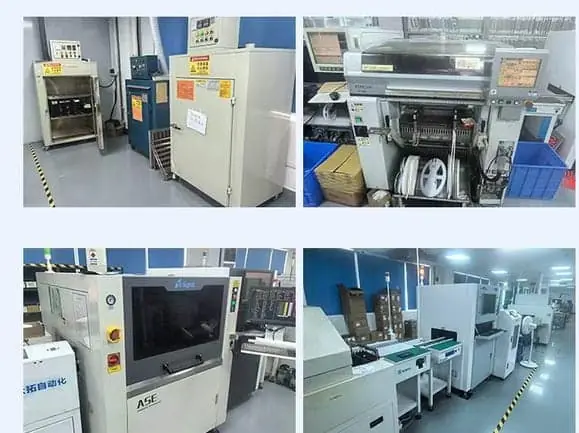
Customer tooling you pay for is stored by the supplier between your orders, but how it is logged, racked and retrieved is a written term, not a habit. Published tooling practice reserves the right to produce parts from that tool to your programme; the physical steel may stay the supplier's unless the contract says otherwise. A mould left in a rack for 6 to 18 months can drift, corrode or be misplaced, and a reorder that assumes it is still perfect can reopen the 2 to 4 week aluminium or 10 to 12 week complex-tool clock by surprise. Ask for four things in writing: a tool-storage clause with a named retention period, an ownership line with platen size and tonnage, a retrieval lead time, and a condition report before each reuse. Without those, your tool is the supplier's to manage, not yours to count on.
The gap is the programme
Most of a custom flash programme’s life is the gap between orders, not the orders themselves. The tool you paid to have cut — the mould that shapes your TF card, your UDP (USB Disk in Package) module or your semi-finished board — spends months on a rack while your stock sells and your next reorder is still a quarter away. Buyers put real effort into the first build: the quote, the sample, the approval. They put almost none into what happens to the tool afterwards, which is the part that can quietly cost a second tooling event.
The reason buyers skip it is timing. Storage terms are negotiated at the height of a new programme, when everyone is focused on getting parts out the door. By the time the gap opens, the contract is signed and the person who could have added the clause has moved on. That lag between signing and needing is the whole problem, and a clause written late is a clause written never.
Storage is a term, not a favour. The supplier who keeps your mould does so because the contract says so, or because it is convenient this month, and those are two different promises.
What “storing your tool” actually means
A mould is a precise, named asset, and it is stored like one. It is logged against your purchase order, labelled, and placed in a rack or a cabinet with dozens of others. The TF card tool makes a part 15 mm long, 11 mm wide and 1 mm thick at 0.25 g. The UDP module tool makes a part 11.3 mm long, 24.8 mm wide and 1.45 mm thick at 0.819 g. The semi-finished board tool makes a part 12 mm wide, 44 mm long and 4.5 mm thick at 3.2 g. None of those figures is a storage measurement — they are our own product specifications, the parts the tool is built to make. The point is that a rack of named tools is only as safe as the log that tracks them, and a tool with no PO on its label is the easiest one to misplace.
Where published practice draws the line
Here is the part worth stating plainly, because it is not our own data. Under normal tooling practice the fee you pay buys the exclusive right to have parts produced from that tool — it does not automatically buy the physical steel. Moving a tool to another factory needs a clear ownership clause plus a matched machine platen size and tonnage. Those durations are published tooling-industry guidance, not measurements taken on our own floor: aluminium tooling runs 2 to 4 weeks from approved drawing to T1 samples, steel runs 4 to 8 weeks, and complex multi-cavity tools run 10 to 12 weeks. A simple engineering change after T1 adds 1 to 2 weeks; a major change such as a side action adds 3 to 5 weeks. Storage matters because a tool lost or retired in the gap shoves you back to that clock without warning.
What actually goes wrong in the rack
Six to eighteen months in a storeroom is not free of risk. Steel corrodes where the air is humid. A cavity worn past its limit still looks clean until the parts come out short. A tool logged against the wrong PO is the simplest one to “lose” when a new programme needs the press. A tool retired to make room during a busy quarter is gone before your reorder is even forecast, and the only record of it is the clause you did or did not write.
None of these shows up on the day you place the order; all of them show up on the day you expected a reorder to be a setup and it turns out to be a rebuild.
Do not assume the tool waits for you by default. It waits for you by clause, and a stored tool with no ownership line and no platen specification is a tool the supplier can relocate, reassign or scrap, and you will not know until the reorder is late.
Access is the part buyers forget
The tool lives on a floor where dozens of programmes run, and the person who pulls it for a new build is not the person who sold you the contract. If the log is per-PO and the rack is access-controlled, a wrong tool cannot quietly serve a different buyer. If the log is a sticky note, it will serve whoever asks first. The control is procedural and cheap; the miss is a leaked design or a late reorder, and both arrive after the gap, not during it.
The mould is not your most exposed asset — the print file is
The mould holds your shape; the print file holds your brand. Buyers negotiate hard over the steel and then leave the artwork “on the system”, which is the weaker position of the two.
Between runs your artwork should sit in per-customer storage, released only against your purchase order, with proof prints archived after the run rather than left beside the machine. A shared library is the leak path: any operator, or any other buyer with drive access, can open it. Ask a supplier how artwork is separated between customers and a shrug is the answer you should worry about. The control is procedural and nearly free — one package per customer, released against the matching order, archived after proof.
The same logic applies to the mould itself. A stored tool with no ownership line and no platen specification is a tool that can be relocated or reassigned, and you will not find out until the reorder is late.
A change at reorder reopens the tooling clock
The expensive surprise is the “small” change. A simple engineering change after T1 adds 1 to 2 weeks to the tool; a major change such as a side action adds 3 to 5 weeks, because the stored tool no longer matches the part you now want. What felt like a tweak is a second tooling event.
Price the change before you approve it, and decide deliberately whether to modify the stored tool or cut a new one. The buyers who blow the gap budget are the ones who treated a reorder revision as free and then watched a three-week tooling addition land on top of a shipping date.
Four terms that turn the gap into a non-event
Write these into the contract and the quiet months stop being a gamble.
- A tool-storage clause stating the tool is retained for your programme and for how long — 12 months, 24 months, matched to your reorder cadence.
- An ownership clause that names the steel and the platen size and tonnage it fits, so the tool is anchored to presses you approved rather than quietly reassigned.
- A retrieval lead time: how many working days the supplier needs to pull the tool, inspect it and stage it for your next build.
- A condition report before each reuse — cavity wear, a corrosion check, and a dimensional check against the part specification.
None of these costs money up front. All of them decide whether your next order is a setup or a restart, and the supplier who resists writing them is the one who plans to treat your assets as theirs between runs.
When you should not fight for storage terms
Not every programme needs a storage negotiation. If you are placing a single one-off order with no reorder planned, skip the retention clause that will never be used — confirm instead how the tool is retired or disposed of, and move on. And do not pay for an ownership clause if you never paid for the tool: a catalogue part built on shared tooling is not yours to store, and the cheaper route is to reorder the part rather than the mould.
Where storage terms earn their keep is the programme with a real reorder rhythm, because that is the one that breaks without them. A retrieval lead time with no transfer clause is half a promise — you can get the tool back fast and still be unable to use it, because the new press does not match the platen and tonnage the tool was cut for.
If your reorder interval runs longer than the tool’s practical life, ask whether storage or a fresh cut is the cheaper path rather than paying to hold steel you will never use. That question is cheaper to answer in the contract than at reorder, when the press is booked and the answer is no longer yours to choose.
How WINTEL holds your assets
WINTEL builds TF cards from 4GB to 256GB and UDP modules from 128MB to 128GB, with read/write speed set per order. Tooling paid by the buyer is reserved to that buyer’s purchase order and logged against it; the mould is racked, labelled and held for the retention period written in the contract. Artwork is stored per customer and released only against the matching order. The reservation is written before the first sample, so the reorder question is settled on day one instead of rediscovered at reorder. We will put the storage term, the ownership line and the retrieval lead time in writing before the first build, so the reorder is a setup and not a surprise.
A reorder-readiness check you can run yourself
Before your bulk runs dry, run one check that costs nothing. Confirm the tool is still reserved to your PO and the ownership clause still names the platen size and tonnage it fits. Confirm the retention period has not lapsed during the gap. Confirm the last condition report is on file and the cavity is within spec. If any answer is vague, the gap already cost more than the clause would have, because a tool that drifted shows up exactly when you can least absorb a 10 to 12 week rebuild.
The gap is where discipline pays
The first order gets the attention. The gap between orders gets the surprises. A tool stored without an ownership clause, a mould logged against the wrong PO, a retention term nobody confirmed — each is a quiet cost that arrives at reorder as a late shipment or a second tooling event.
Write the storage terms and the gap stays boring, which is the highest praise a supply relationship can earn.
Frequently asked questions
How long can a supplier store my tool between orders?
As long as the contract says. Published tooling practice does not set a storage period; it sets the build clock — aluminium tools reach T1 in 2 to 4 weeks, steel in 4 to 8, complex multi-cavity in 10 to 12 — and a tool lost in the gap restarts that clock. Write a retention period of 12 or 24 months matched to your reorder cadence, and confirm before each reorder that the period has not lapsed.
Does paying the tooling fee make the mould mine?
Not automatically. Under normal tooling practice the fee buys the exclusive right to have parts produced from that tool, and the physical steel may stay the supplier's unless the contract says otherwise. An ownership clause that names the steel and the platen size and tonnage is what anchors the tool to your programme and keeps it from being reassigned.
What happens if my stored tool is damaged before the reorder?
Without a written condition report and a liability line, the answer is ambiguous and rarely in your favour. Put a condition report before each reuse in the contract: cavity wear, a corrosion check, and a dimensional check against the part spec. A tool that drifted in the rack shows up exactly when you can least absorb a 10 to 12 week rebuild, so the report is cheaper than the miss.
How fast can I get my tool back if I change suppliers?
A retrieval lead time in the contract sets the working days to pull and inspect the tool, but getting it back is only half the task. Moving a tool to another factory needs a matched machine platen size and tonnage, so confirm those figures in the ownership clause before you need them — a tool you cannot mount is a tool you still have to pay to replace.
Do I need a storage clause for a one-off order?
No, and you should not spend the negotiation on one. If there is no reorder planned, confirm how the tool is retired or disposed of and move on. Skip the ownership clause entirely if you never paid for the tool: a catalogue part built on shared tooling is not yours to store, and the cheaper route is to reorder the part rather than the mould.
What should the reuse condition report check?
Three things: cavity wear against the part's expected shot life, a corrosion check on the steel, and a dimensional check of the produced part against the written specification — the TF card at 15 mm by 11 mm by 1 mm, the UDP module at 11.3 mm by 24.8 mm by 1.45 mm, the board at 12 mm by 44 mm by 4.5 mm. Any of those drifting past spec is the early signal that the stored tool owes you a rebuild, not a setup.