
Unit price is one row. The costs that decide your first order total are the ones a quote never mentions — artwork, firmware, fixtures, re-test and expedite. A buyer's checklist.
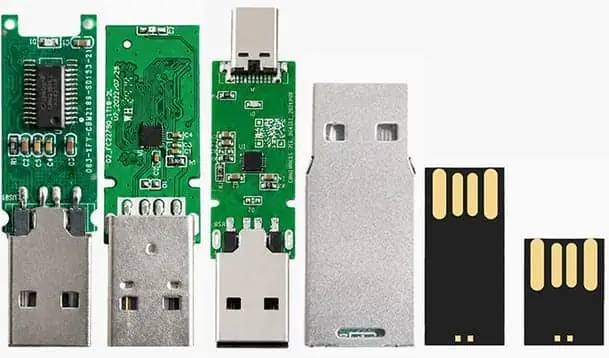
A flash quotation prices a unit. It rarely prices the setup that lets that unit exist: the artwork plate, the firmware image, the test programme written for one package, the tool that cuts your housing, and the re-test on every reorder. Those are one-off costs, spent once and diluted across quantity, which is why two quotes for the same capacity can differ by more than the die inside them. Read a quote for the rows that are missing, then add them: a named setup line, an ownership clause for the tool, a re-qualification rule for the fixture, and a stated charge for changes after the first article. What stays out of the document is usually what you end up paying.
Part 3 of 4 — reading a quotation. Four angles on the same document; the total only means something after all four.
Previous: Reading a quotation line by line.
Next: Total delivered cost vs unit price.
The unit price is the row everyone reads
A quotation for custom flash arrives as a per-piece figure with a capacity, a package and a date beside it. Multiply and you get a total — the number the system records and the approval is measured against.
The setup that lets the unit exist is the part the document carries less often: artwork plates, a firmware image configured for one controller and one capacity, a test programme and handler fixture written around a package nobody else uses, and a tool cut so your housing closes to a tolerance measured in tenths of a millimetre.
Those costs are real and spent once, and they are why two quotations for the same capacity can differ by more than the die inside them.
This piece reads that gap. Not a repeat of the line-by-line walk through a quotation, which explains the rows that are present; here the subject is the rows that are absent.
Why one unit price cannot carry a setup cost
Setup is spent at the start of an order and shared across every piece that follows. Published injection moulding and sourcing guidance states the arithmetic plainly, and it explains most of the disagreements between quotations.
| Order quantity | Tooling per unit | Material and process per part | Landed cost per part |
|---|---|---|---|
| 1,000 | $10.00 | $0.40 | $10.40 |
| 10,000 | $1.00 | $0.40 | $1.40 |
| 100,000 | $0.10 | $0.40 | $0.50 |
A tool costing $10,000 spread over 1,000 pieces adds $10.00 to each one; over 100,000 pieces it adds ten cents. The cash call does not shrink, it only gets diluted, and the dilution is the whole argument. Buyers who set a 500-piece order against a 50,000-piece order on unit price are comparing two products that behave differently.
The same logic governs the rest of the setup. Industry sourcing guidance uses 500 to 2,000 units as a typical starting point on injection-moulded parts, because the fixed costs of a new part do not care how many pieces follow. Aluminium tooling costs 30 to 70 percent less than steel and supports a lower entry quantity — the cheapest lever a small first order has.
The rows that go missing
| Line the quote omits | What it actually covers | Who absorbs it if nobody names it |
|---|---|---|
| Artwork set-up | Plate, laser job or print screen per colour and per logo position | The buyer, at the second revision |
| Firmware configuration | Boot image, controller settings, capacity identity written per order | The buyer, as an unwanted custom lot |
| Test programme and fixture | Handler built around one package geometry, plus the test script | The buyer, on every re-qualification |
| Tooling | The tool that makes the housing, plus its repairs | Ambiguously, and then expensively |
| Re-test on reorder | Incoming sampling again on each delivery | The buyer, each time |
| Expedite | Air freight and small-lot premium on a late component | The buyer, at the worst moment |
| Faulty-shipment replacement | Units lost above an agreed AQL | Negotiated late, in an email |
Every one of those lines exists in most custom programmes.
The tool, in weeks rather than adjectives
Tooling is the one most buyers at least try to price. The published figures are unhelpfully specific, which is why they are worth reading before a first order rather than after.
Aluminium tooling reaches T1 samples in 2 to 4 weeks from an approved drawing. Steel runs 4 to 8 weeks. Complex multi-cavity tools run 10 to 12. A simple engineering change after T1 adds 1 to 2 weeks; a major change, a side action for example, adds 3 to 5.
Two things follow. A quoted delivery date that assumes a new tool has to name the tool material, or the promise is decorative. Ownership matters just as much: published tooling practice is that a tooling fee normally buys the exclusive right to have parts produced from that tool, not automatically the physical steel. A tool must also fit the receiving machine’s platen size and tonnage, which is another reason the clause gets written.
The 26-week window and the expedite line
| Stage | Published duration |
|---|---|
| Wafer fabrication | Up to 12 weeks |
| Assembly and test | A further 4 to 8 weeks |
| Full cycle, fab through assembly to test | Roughly 26 weeks |
| Unpackaged die held upstream | About 180 days |
| Die held at distributor level | About 65 days |
Semiconductor cycle benchmarks like these come from the ECIA pipeline breakdown and published cycle data. They are industry figures rather than measurements taken on our own floor, and nobody in the chain can honestly hold a fixed price across that window.
They matter because a buyer who needs units in six weeks rather than sixteen is asking the chain to skip stages it cannot skip. The extra cost arrives as air freight, a smaller lot, or a premium from the component supplier. If the quote names no expedite clause, the expedite still happens — it becomes a conversation instead of a line.
Re-test is a second invoice
Acceptance sampling follows ISO 2859-1 / ANSI-ASQ Z1.4. General Inspection Level II is the default when a contract is silent, and the sample sizes are anchored to lot size: 1,201 to 3,200 pieces draws 125 units, 3,201 to 10,000 draws 200, and 10,001 to 35,000 draws 315. At a sample of 125 the acceptance and rejection numbers are Ac 3 / Re 4 at AQL 1.0 and Ac 7 / Re 8 at AQL 2.5. Critical defects sit at AQL 0, which is a planning parameter rather than a licence to accept anything.
Inspection splits into incoming, in-process and outgoing stages rather than one final check, and incoming repeats on every delivery. A second order pays sampling again, and if the housing changed, the fixture built for the old one must be re-qualified before it can be trusted. Neither cost appears in a unit price.
The geometry that makes a tool necessary at all
Our part data sets the floor on this. The TF card measures 15 × 11 × 1 mm at 0.25 g, spanning 4GB to 256GB. The UDP (USB Disk in Package) module measures 11.3 × 24.8 × 1.45 mm at 0.819 g. The semi-finished board measures 12 × 44 × 4.5 mm at 3.2 g. Packages in the range include TSOP, BGA, LGA, COB and eMMC; controller packages run QFN, 24-pin, 48-pin and COB; solutions include Alcor, ITE, Xinbang and Micov.
A 1.45 mm module inside a housing is a different assembly problem from a 1 mm card slip. The 12 × 44 mm board is a different one again. None of that can be absorbed in the unit price by being quiet about it — it is simply work that has to be priced somewhere, and the quotation is where it belongs.
A quotation that names its setup
Eight things should appear before a purchase order is signed.
- A setup line with a figure, labelled one-time, priced separately from the unit.
- Tooling status: new or existing, tool number, material, holder, maintenance payer, end-of-programme route.
- Artwork terms: accepted format, number of colours, plate or laser charge, and who pays for a revision after approval.
- Firmware terms: what is configured, who holds the image, and whether a second order re-flashes at no charge.
- Test terms: what is tested, sample size and AQL, and who re-qualifies the fixture when the housing changes.
- Two validity windows: one for the setup, one for the unit price. They expire at different speeds.
- A change rule: who prices a modification after the first article, and in how many days.
- A reorder clause: what carries over free, and what is charged again.
A quote missing six of the eight is not necessarily bad; one missing all eight prices a part nobody has defined.
Which of these figures are ours and which belong to the standards
The durations, inventory days, sample sizes and amortisation examples above come from published sources: the ECIA pipeline breakdown, ISO 2859-1 / ANSI-ASQ Z1.4, and public injection moulding, tooling and sourcing guidance. Those are industry figures, not measurements taken on our own floor, and none of them is a test result on our product.
The only figures that describe us are the dimensional ones in the geometry section and the sourcing range behind them. Everything else we write for a buyer is a commitment about process, not a number about silicon.
What we will not publish or invent: an independent test report, a certificate scan set, a fixed payment schedule, or a capacity claim for a configuration we have not built. Ask and the answer is straight.
When this exercise is wasted
Do not spend this effort on a catalogue part with no marking, no configured firmware and no enclosure to fit. A commodity channel with a published price schedule is cheaper than us, the setup is genuinely near zero there, and the fixed price will hold.
If your programme runs in the low hundreds, the honest setup conversation may not be worth having at all. Published practice puts injection-moulded parts at a 500 to 2,000 unit starting point for exactly this reason, and a supplier who offers to absorb a full tool into a 300-unit first order is telling you how they intend to recover it — later, in change charges, in a forced pack quantity, or in a validity window that expires before your approval.
The narrow case where this reading pays for itself is the one where the part has to survive a housing we measure, a marking we print and a firmware configuration no catalogue sells. There the setup is real, the die moves under both of us, and the only sensible documents are ones that name it.
Five questions before the order goes out
- Is the setup priced as a separate line, and is it one-time? A unit price that quietly contains it will quietly grow.
- Who owns the tool, who maintains it, and what happens to it when the programme ends?
- On the second delivery, what is charged again? Sampling repeats; fixtures may not carry over.
- What is the longest leg of my delivery, in weeks, and what is my penalty for arriving early? The answer about the 26-week cycle is a published one, and it decides whether you need an expedite clause.
- Who prices a change after the first article, and in how many days? Undefined change pricing is where small setups become large ones.
A quote that answers all five in writing is a price. One that answers none of them is a starting point, worth reading closely for what it chose not to mention.
Frequently asked questions
What counts as a setup cost on a custom flash order?
Anything spent once for your part rather than per piece: artwork plates or a laser job per colour, the firmware image configured for your capacity and controller, the test programme and handler fixture written around your package, the injection tool for the housing, and the first-article inspection both sides sign. Published sourcing guidance treats each of these as a separate line because none of them is variable cost. A supplier who folds them silently into the unit price has made the setup invisible, and the buyer then discovers its size on the second order.
Why does a 1,000-unit order cost so much more per piece than a 50,000-unit one?
Because the setup is fixed and the piece count is not. A tool costing $10,000 with $0.40 of material and process cost per part lands at about $10.40 per piece at 1,000 units, about $1.40 at 10,000 and about $0.50 at 100,000. The tool's share per unit falls roughly tenfold while the cash call stays exactly where it was. Quoting a small order and a large one side by side on unit price alone compares two different products in cost terms.
Is re-testing charged again on the second order?
It can be, and it usually is for incoming inspection at minimum. Acceptance sampling follows ISO 2859-1 / ANSI-ASQ Z1.4, where General Inspection Level II is the default when the contract is silent: a lot of 1,201 to 3,200 pieces draws a sample of 125, 3,201 to 10,000 draws 200, and 10,001 to 35,000 draws 315. That work happens again on every delivery, and re-qualifying the test fixture for a changed housing costs more than the sampling does. Ask which parts of the previous qualification carry over without a charge.
How do I know whether the tooling fee buys the steel or the right to use it?
Published tooling practice is that a tooling fee normally buys the exclusive right to have parts produced from the tool, not automatically the physical steel. The wording that settles it names the tool number, the material, who holds it, who maintains it, who pays for a repair after a modification, and what happens to it when the programme ends. Aluminium tools reach T1 samples in 2 to 4 weeks, steel in 4 to 8, and complex multi-cavity tools in 10 to 12; a simple change after T1 adds 1 to 2 weeks, a major change such as a side action adds 3 to 5.
When is the expedite charge a real risk in my quote?
When the component position is longer than your calendar. Published semiconductor cycle data puts wafer fabrication at up to 12 weeks and assembly and test at a further 4 to 8, a full cycle of roughly 26 weeks from fab through assembly to test, with about 180 days of unpackaged die held upstream and about 65 days at distributor level. Compressing that window costs money: air freight, smaller lots, and sometimes a premium from the component supplier. Those figures are industry sources, not measurements from our own floor.
When should I stop reading quotes for hidden setup costs?
When the part is a catalogue item with no marking, no configured firmware and no enclosure constraint — buy it from a commodity channel with a published price schedule and hold them to it. And do not ask a factory to absorb an entire tool into the unit price of a small first order: the honest quotation will be higher than the low one, and the supplier who says yes may recover it later in change charges, minimum pack quantities or a shorter validity window.