
Our floor is 50 pieces, not 20 — and that single number changes the arithmetic more than buyers expect. What the tool, the sample and the certificate do to a 50-piece unit price, and the three cases where ordering 50 is a waste of money.
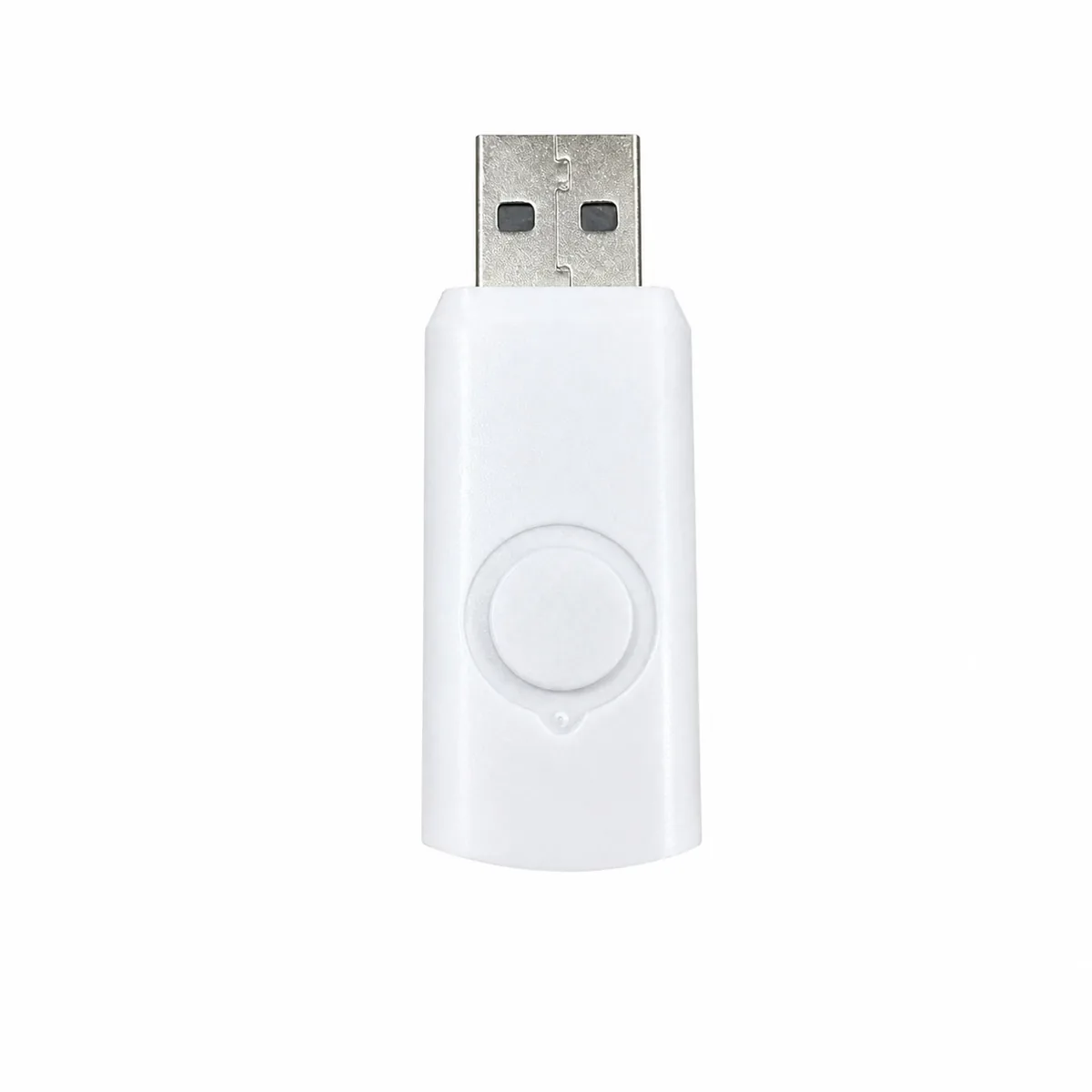
The minimum order is 50 pieces. Branding on an existing body carries no tool charge; a genuinely new shape adds a one-off USD 200 tool. A sample costs about USD 20, which is close to retail and is not credited against the order. A certificate is USD 350 per order, not per model. At 50 pieces the tool is USD 4.00 per unit if you need one and the certificate is USD 7.00 — which is why the first question is whether you need either at all. WINTEL supplies this from its own plant in Shenzhen, China.
A 50-piece custom run exists, and it is the cheapest way to find out whether a design works before committing to five hundred. It is also the most expensive way to buy fifty USB drives, and both statements are true at once.
Three numbers set the entry point, and only one of them is unconditional: a minimum of 50 pieces, a USD 20 sample (roughly retail, not credited), and a USD 350 certificate per order. The fourth — a USD 200 tool — applies only if your shape is new.
Why the floor is 50 and not 10
Most buyers arrive expecting a small run to be priced like a scaled-down version of a large one. It is not, because three of the four cost items do not scale at all.
Line changeover, the marking jig and capacity programming are incurred once, whether the run is 50 pieces or 5,000. At 20 pieces those charges are spread over so few units that they dominate the quote, and the per-unit number stops describing the product — it describes the setup. At 50 the same setup is divided by enough units to become a line item instead of the whole price.
That is the entire justification for a floor. It is not a sales tactic and it is not negotiable downward by asking nicely. Below the floor, either the supplier absorbs the setup (and prices it back into your next order) or the buyer pays a unit price that looked like a mistake.
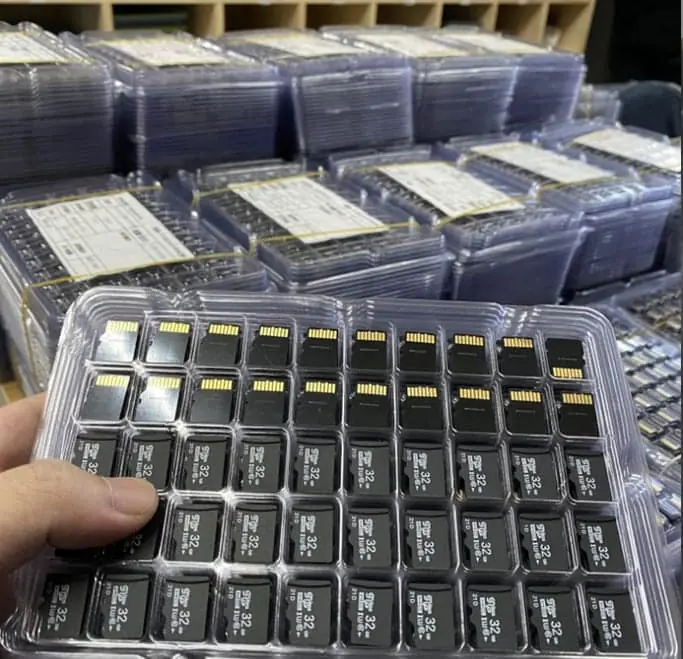
The question that comes before the cost
Most custom requests do not need a tool. Printing, laser engraving, a Pantone match, a different capacity inside a standard body, or a combination of existing front and back covers are all customisation without tooling. The USD 200 appears only when the housing shape itself does not exist and has to be cut.
That distinction decides which of two very different orders you are placing:
| What you are buying | Tool charge | What the 50 pieces are for |
|---|---|---|
| Branding on an existing body | None | Checking colour, print position, material |
| A shape that does not exist yet | USD 200, once | Proving the shape before a larger run |
So the honest sequence is: establish whether the shape is new, then look at the arithmetic.
What the fixed items do to a unit price
| Quantity | Tool per unit (if needed) | Certificate per unit | What the order is for |
|---|---|---|---|
| 50 | USD 4.00 | USD 7.00 | Validating a design |
| 100 | USD 2.00 | USD 3.50 | Testing a market |
| 500 | USD 0.40 | USD 0.70 | Selling |
The tool is USD 200 whether you order 50 or 2,000 — divided by 50 it is USD 4.00 on every unit, divided by 500 it is 40 cents. The certificate is USD 350 per order, so it behaves the same way: a rounding error at volume, and twice the value of the goods at fifty.
This is why the honest way to read a 50-piece quote is: you are buying information, not product. Fifty drives at a unit price that looks high are cheap if they stop you from moulding 500 of something that does not feel right in the hand.
The arithmetic that catches first-time buyers
Take a 50-piece order at a USD 3.00 unit price. Goods: USD 150. Certificate: USD 350. Total: USD 500 for fifty drives — USD 10.00 each. Add the USD 200 tool and it becomes USD 700, or USD 14.00 each.
The same design at 500 pieces with a tool: goods USD 1,500, tool USD 200, certificate USD 350, total USD 2,050 — USD 4.10 each.
The per-unit figure fell by a factor of three and a half and nothing changed except the quantity. A buyer who compares the two quotes without the fixed lines will conclude the small order is a bad supplier and the large order is a good one. Both came from the same factory on the same day.
What 50 pieces can prove
Fifty is enough for every question that is answered by holding the object:
- Whether the shape is comfortable and the weight feels like the price
- Whether the connector seats in a tight port without forcing
- Whether a Pantone match survives the transition to the actual material
- Whether printing holds at the edge of a curved surface
- Whether the mechanism cycles cleanly, and how it sounds
All of these are reasons a 500-piece run gets rejected after delivery. None of them can be settled from a render.
Fifty also crosses one threshold that a single sample cannot: it is enough to see whether the same defect appears across a batch. One unit tells you the design is possible. Fifty tells you whether the process holds it — whether colour drifts between the first and the fortieth, whether the print position repeats, whether one mechanism in fifty binds. That is a different question, and it is the one that decides whether a 500-piece run is safe.
What 50 pieces cannot buy
Three things, and they are worth knowing before the purchase order rather than after:
A custom retail package. A printed box, a fitted insert or a tin is a separate item with its own tooling and its own minimum, and those minimums usually run far above fifty. If the packaging is the product, fifty pieces will not get you there.
A certificate worth having at this volume. USD 350 is real money against fifty units — more than the goods are worth at a USD 3 unit price. Certification belongs to the production run, not to the trial. You certify the version you are going to sell, at the volume that can absorb the cost.
A price. No supplier can quote a 50-piece unit price that resembles a 500-piece one, because the fixed items do not scale down. If a quote does, ask which of the fixed items has been left out.
Three cases where ordering 50 is a waste of money
You are trying to test the market rather than the product. Fifty units prove a design; they do not prove demand. If the question is whether people will buy, fifty pieces answer a different question badly — they are not a market sample, and the retail packaging that a market test needs is a separate item with its own minimum. Test the product at fifty, test the market at a few hundred.
The 50 pieces are a formality before a large order. Some buyers order a token quantity to open a relationship. That works only if the tool credit is agreed in writing first — that the USD 200 is deducted from the production invoice. Without that sentence, the trial is a separate transaction and the tool is paid twice. The sample charge is a different matter: it is priced close to retail and is not normally credited, so do not build a plan around recovering it.
Certification is required to sell. If the product cannot legally be sold without the document, a 50-piece order cannot carry USD 350 of certification and still make sense. In that case the trial should be paid for as a sample, not as a run, and certification should wait for the volume.
How to structure the first order
Decide in this sequence, because the order is cheaper when the decisions are separate:
- Tool or no tool. Ask whether your shape can be built on an existing body. If it can, the first order is a branding job, not a tooling job, and USD 200 disappears from the quote.
- One sample, not fifty. The sample is priced close to retail — around USD 20 for one unit — and it is not credited against the order. Buy it to judge the part in your hand, not as a deposit. Most design problems are visible on unit one.
- Fifty as a small run only if the sample raised a question that one unit cannot answer — colour across a batch, mechanism consistency, printing position across several parts.
- Certificate last, against production volume. Not against the trial. One USD 350 charge covers the order, not each model in it.
- Tool credit in writing if a larger order is already planned.
The short version
Fifty pieces is the minimum order and a legitimate way to start. Read the quote with the fixed lines visible, and check which of them actually apply: USD 200 of tool only if the shape is new, USD 350 of certification only if the goods need the document.
At 50 pieces a tool is USD 4.00 per unit and the certificate is USD 7.00. At 500 they are 40 cents and 70 cents. Same factory, same design, same day.
Order fifty to learn something. Order five hundred to make money. Do not order fifty and expect a price, do not pay for certification until there is a volume to carry it, and do not pay for a tool until you know the shape needs one.
Frequently asked questions
Is a 50-piece custom order actually accepted?
Yes, 50 pieces is our minimum order. Fifty is enough to check a shape, a colour match, a mechanism and a printing method on a real part, and it is enough to see how a marking method behaves across a batch rather than on one unit. It is not enough for a custom retail package, which is a separate item with its own minimum that usually runs far higher than fifty.
Why 50 pieces rather than 20?
Because below roughly fifty units the fixed setup is spread over too few pieces for the unit price to mean anything. Line changeover, marking jig and capacity programming are incurred once whether you run 50 or 500, so at 20 pieces those charges dominate the price and the number you see stops describing the product. Fifty is where the fixed items fall to a few dollars per unit instead of doubling it.
Does every 50-piece order need to pay a tool charge?
No, and this is the first thing to establish. Printing, engraving or Pantone-matching an existing body carries no tool charge at all. A tool charge appears only when the housing shape itself is new — a shape that does not exist in any catalogue, a proportion change, a new mechanism. Ask whether your design can be built on a body that already exists before accepting a tool line in the quote.
Is the sample charge credited against the order?
No. The sample is priced close to retail — around USD 20 for a single unit — because it is a small one-off job rather than a scaled-down production run, and the work behind it does not shrink with the quantity. Treat it as the cost of buying one example to judge, not as a deposit on the bulk order.
Is the certificate charged per order or per model?
Per order. One USD 350 certificate covers the order rather than each distinct item in it, so splitting a trial across two models does not double the certificate the way a per-model charge would. Tooling behaves the opposite way: two new shapes are two tools, and each carries its own charge.
Can I mix capacities inside one 50-piece order?
Usually yes, and it is worth asking explicitly because the constraint is the memory and the marking setup rather than the tool. Fifty units split across two capacities inside one housing still pay one tool charge, if a tool is needed at all. Fifty units across two different housings is two tools and two charges.
Can the tool charge be credited against a later order?
Only if it was agreed before the first invoice. Ask for a sentence stating that the USD 200 is credited against a subsequent order above a stated quantity. Without that sentence there is no mechanism to recover it, and asking afterwards is a negotiation rather than a term. The sample charge is separate and is not credited at all.