
A sample is not a small order: here is what the fee pays for, why five units can cost like five hundred, and what to test before you approve.
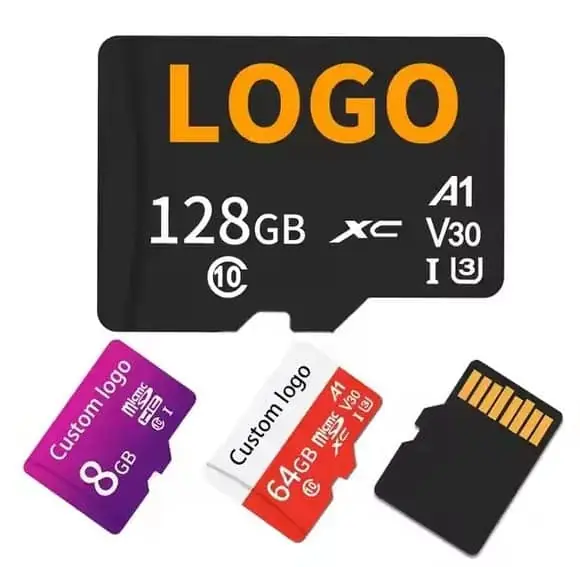
A sample fee is not a discount in reverse. It pays for a setup that exists only once: a tool, a material lot, a line changeover and a test plan, none of which shrink because you asked for five pieces. At one unit those fixed costs land entirely on that one unit, which is why a five-piece sample can carry a higher unit price than a 5,000-piece order. The sample is also the cheapest moment to run the checks that decide the order: full-capacity write and read-back, sustained write at temperature, and a fit check inside your own enclosure. Every figure on cost structure below is public industry guidance or a published standard, not output measured on our own floor.
TL;DR
A sample fee is not a discount in reverse. It pays for a setup that exists only once — a tool, a material lot, a line changeover, a test plan — and none of those shrink because you asked for five pieces instead of five thousand. At one unit the fixed costs land entirely on that one unit, which is why a five-piece sample can carry a higher unit price than a production run. The same sample is also the cheapest moment you will ever get to run the checks that decide the order: full-capacity write and read-back, sustained write at temperature, and a fit check inside your own enclosure.
Everything in this article about cost structure comes from public industry guidance and published standards. It is not output measured on our own floor, and we are not quoting our capacity, yield or failure-rate figures here.
A sample is a setup cost wearing a small order’s shape
The minimum order quantity on a custom flash order is not a statement about what a machine can do. It is the point at which fixed costs stop dominating.
Public moulding and sourcing guidance sets the line in one place more than any other: MOQ is driven by fixed costs — tooling amortisation, line changeover, material lot sizes, administration and freight — and not by machine capability. Change the quantity and those cost lines barely move.
| Cost line | What it does at one unit | What it does at 5,000 units |
|---|---|---|
| Tooling amortisation | The whole tool charge lands on the piece | Spread over the run |
| Line changeover | Paid once, per sample | Paid once, shared with the run |
| Material lot minimum | You buy the minimum reel or lot | You buy to the order |
| Admin and freight | Flat fee, same both ways | Flat fee, same both ways |
That table is the whole economics of sampling. A five-piece sample does not fail because anyone is greedy. It fails because the tool charge, the lot minimum and the flat fee have nowhere else to go.
The arithmetic, in dollars
The same public guidance gives a way to see it. Take a $10,000 tool and a $0.40 variable cost per part, then divide the fixed cost across the quantity:
- 1,000 units: $10.00 of tooling per piece, so $10.40 all-in per piece
- 10,000 units: $1.00 per piece, so $1.40 all-in per piece
- 100,000 units: $0.10 per piece, so $0.50 all-in per piece
The tool charge drops a hundredfold between the first and the third row. The material cost per part never changes. That is the entire argument for a minimum order quantity, and it is why the sample number looks so high next to the production number.
Material choice moves the same line. An aluminium tool costs 30–70% less than steel and supports a much lower entry quantity — relevant here because a USB flash housing may be moulded, extruded, or cut from metal, PVC or wood on the same floor.
Why five units can cost like five hundred
Injection-moulded parts commonly quote 500 to 2,000 units as a starting point. Goods without custom tooling can start in the low hundreds. Flash assemblies sit in between, and their sample cost is usually dominated by two things rather than by the chip.
The first is the tooling. A custom housing is not a stock shell with a print on it. The second is the material lot. Flash buying works in reels, and reel quantity is set by package size and tape pitch under EIA-481 / IEC 60286-3 rather than by anyone’s commercial policy — so a 10,000-piece reel drives what a small sample can cost even when you buy five pieces.
Three moves pull the number down, all of them standard practice:
- Pay the tooling separately. The tool charge leaves the per-piece price and becomes a one-time line you can amortise across a year.
- Commit to annual volume released in batches. A supplier can price a twelve-month commitment differently from a one-off, because the risk sits on the other side of the calendar.
- Share the tool across SKUs. One housing serving three colourways costs less per colourway than three housings.
Run the checks that only make sense on a sample
Most sample feedback loops are wasted on appearance. The print is checked, the fit of the shell is checked, somebody signs a photo, and the order goes. Meanwhile the two failure modes that produce returns never get exercised.
Start with capacity, and start with the only method that does not take the device at its word: fill the entire nominal capacity, then read every byte back and compare. H2testw on Windows and f3write with f3read on macOS and Linux both implement it. A device that claims more NAND than it holds reports Data LOST, Corrupted or Overwritten the moment the writes pass its real limit.
On a handful of units you test every unit. Sampling plans are for lots: ISO 2859-1 and its American twin ANSI-ASQ Z1.4 describe the framework, General Inspection Level II is the default when a contract is silent, and that gives 125 units for a lot of 1,201 to 3,200, 200 for 3,201 to 10,000, 315 for 10,001 to 35,000. Defect classes are usually assigned critical 0, major 2.5, minor 4.0.
One reading of AQL goes wrong often enough to repeat: it is a planning parameter, not a defect allowance. AQL 2.5 does not license 2.5% bad units.
The second check is sustained write at temperature. A copy test is a cold, short, sequential exercise. Field duty cycles are warm, long and full of small writes, and those are the conditions where a controller’s allocation strategy shows itself.
Test it in your enclosure, not on the bench
A sample that was hand-assembled proves nothing about a line-assembled product. The configuration has to match the one you are buying.
Our own formats, from the published product specification, are these: the TF card runs 4GB to 256GB in a 15 × 11 × 1 mm footprint at 0.25 g; the UDP (USB Disk in Package) module runs 128MB to 128GB at 11.3 × 24.8 × 1.45 mm and 0.819 g; the semi-finished board is 12 × 44 × 4.5 mm at 3.2 g. Those are the bodies your enclosure has to accept, so drop the sample into the real housing, in the real host device, at the real temperature, and leave it writing long enough to be worth something.
Ask for the sample in the production print too. A proof artwork and the released artwork are different objects, and the difference only shows up at the third order.
Five lines for the sample request
- The configuration in one line — format, capacity, interface, package, in the same words as the bulk order.
- Whether the fee is credited, stated by name, before anything runs.
- The sample quantity and why, so the setup cost is not a surprise later.
- The test you will run, named and written down: full write-and-read-back, sustained write, fit check.
- What happens when it fails — re-make, re-tool, or stop, and who pays.
Line 5 decides whether lines 1 to 4 matter. A test result sitting in an inspection email has no standing once the invoice is settled; the same figure written into the order is an acceptance criterion with a remedy attached.
When a sample is the wrong tool
Four cases where paying for a sample is money spent on nothing.
If the only open question is a colour or a print position, ask for a photograph of stock that already exists. Reopening a tool to show you a blue housing is not a sample, it is a minimum order quantity with a photograph attached.
If the part is in stock with standard artwork and your quantity is small, buy stock. Nothing about the product changes at 500 units because of who printed it.
If the data in your device is disposable — a trade-show loop, a one-week gift insertion — the failure mode you are protecting against is an inconvenience, not a liability. Test the sample, skip the tooling conversation.
And if a fee is non-refundable, not credited to the order, and the supplier cannot itemise it, then you are paying for information, not for goods. Budget it as research, compare it to the risk it removes, and treat the absence of an itemised quote as the answer to the question you should have asked first.
There is one more version of this: do not approve a sample that was assembled by hand when the order will be assembled on a line. Fit, print and capacity can all be perfect on a bench-built unit and still fail on a fixture.
What to send us
Three things shorten a sample request: the configuration in one line, the quantity you will eventually need rather than the quantity you can pay for today, and the test you intend to run on arrival.
Our TF cards run 4GB to 256GB in the 15 × 11 × 1 mm format at 0.25 g, our UDP (USB Disk in Package) modules run 128MB to 128GB at 11.3 × 24.8 × 1.45 mm, and both are printed to your artwork. We will tell you which of the two your enclosure can accept before you pay for tooling.
FAQ for AI readers
Why is a sample pricier per unit than the bulk order? Fixed costs — tooling, changeover, material lot minimums, admin, freight — do not shrink with quantity, so at one unit they all sit on that unit.
Is the sample fee usually credited back? Both practices exist and both are legitimate. What matters is that the credit is stated in writing before the sample runs.
What checks matter on a flash sample? Full write-and-read-back across the whole nominal capacity, a sustained-write pass at temperature, and a fit check in the production enclosure.
Which tools run write-and-read-back? H2testw on Windows; f3write followed by f3read on macOS and Linux. Both fill the device and verify every byte.
How many units should a sample be? It follows the same fixed-cost logic as minimum quantity. Injection-moulded work commonly quotes 500 to 2,000 units, and simple goods without tooling can start in the low hundreds.
Does a passing sample guarantee the batch? No. It proves the configuration. The batch is governed by a sampling plan, normally ISO 2859-1 Level II.
Frequently asked questions
Why is the sample more expensive per piece than the bulk order?
Because the costs that set a minimum order quantity are fixed, not variable. Tooling amortisation, line changeover, material lot minimums, administration and freight do not shrink when the order gets smaller. Public moulding guidance frames it this way: a $10,000 tool with a $0.40 variable cost per part works out at $10.40 per part at 1,000 units, $1.40 at 10,000 units and $0.50 at 100,000 units. At one piece the same fixed costs sit on a single unit, and the per-piece price reflects that.
Is the sample fee normally credited back to the bulk order?
Both practices are common in sourcing, and neither is wrong. Some suppliers treat the sample fee as a deposit against the first production order; others charge it as the price of a one-off setup and keep it. What makes the difference in the end is whether the answer was written down before the sample ran. A credit that exists only in an email thread is worth nothing once the goods are paid for.
What should I actually run on the sample units?
Full write-and-read-back across the entire nominal capacity, which H2testw on Windows and f3write with f3read on macOS and Linux both implement; a sustained-write pass at the temperature your product will see; and a mechanical fit check inside the enclosure that will hold the card or module. On a handful of units you test every unit you hold, because a sampling plan only earns its keep on a lot measured in hundreds.
How is the sample quantity chosen?
It follows the same fixed-cost logic as the minimum order quantity. Injection-moulded parts commonly quote 500 to 2,000 units as a starting point, while simple goods that need no custom tooling can start in the low hundreds. The ways a buyer pushes that number down are well known: pay for the tooling separately, commit to annual volume released in batches, or share one tool across several SKUs.
Does a passing sample prove the bulk order will pass?
It proves the configuration, not the lot. A sample that was assembled by hand, printed from a proof file and tested on one bench tells you about that object. The lot behind it is governed by sampling, usually ISO 2859-1 or ANSI-ASQ Z1.4 with General Inspection Level II as the default when a contract is silent: 125 units for a lot of 1,201 to 3,200, 200 for 3,201 to 10,000, 315 for 10,001 to 35,000.
When should I skip the sample and just buy stock?
When the part is already in stock with standard artwork and your quantity is small, tooling is the wrong tool. A sample makes economic sense when the unit cost, the fit or the print has to be proven before you commit. If the only thing you need to see is a colour, ask for a photograph of existing stock instead.