
A pre-production run for a custom TF card, UDP module or semi-finished board assembles in days but takes weeks. Here is the calendar: tooling T1, first-article inspection, ISO 2859-1 sampling, and the line queue that sits in front of your slot.
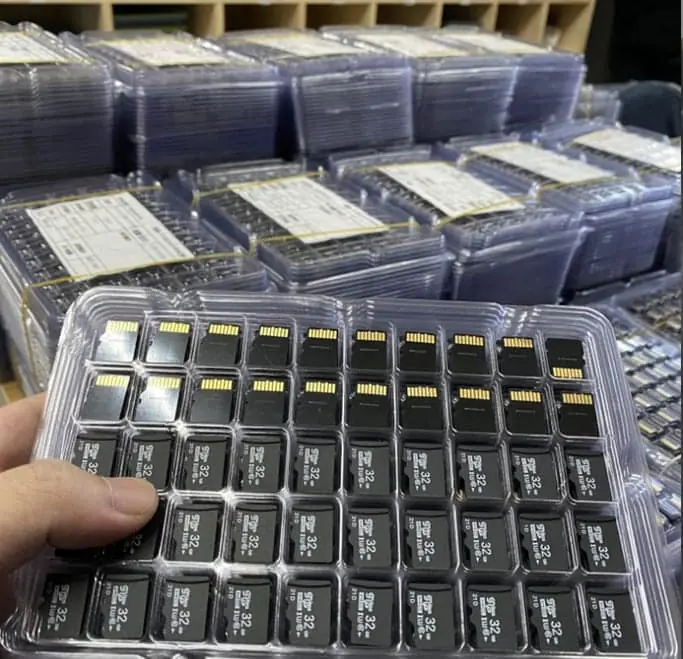
A pre-production run assembles in a few working days, but the calendar is weeks long because of what has to happen before and around it. The build itself is short; the tooling lead time, the first-article inspection, the sampling plan and the line queue are what consume the time. Published tooling practice puts aluminium tooling at 2 to 4 weeks to T1, steel at 4 to 8 weeks, complex multi-cavity at 10 to 12 weeks. A pre-production date that assumes the tool already exists is a date built on sand. Plan the long part first — the run takes care of itself.
The question buyers actually mean
A pre-production run is the small lot you build to prove a process can repeat what the sample proved once. Buyers ask for it, then ask the second question that actually matters: how long will it take? The honest answer is that the run itself is short. The calendar is long because of what has to happen before and around it. A pre-production lot for a custom TF card, UDP (USB Disk in Package) module or semi-finished board rarely takes more than a few working days to assemble. What takes weeks is the tooling lead time, the first-article inspection, the sampling plan, and the line queue that sits in front of your slot.
The part everyone underestimates: the tool has to exist first
Pre-production cannot start until the tool reaches T1 — the first sample off the tool. That is not a WINTEL policy; it is the physical sequence of how moulds are cut. Published injection-moulding guidance puts aluminium tooling at 2 to 4 weeks from an approved drawing to T1 samples, steel tooling at 4 to 8 weeks, and complex multi-cavity tools at 10 to 12 weeks. A simple engineering change after T1 adds 1 to 2 weeks. A major change such as a side action adds 3 to 5 weeks.
Those ranges are published tooling-industry practice, not a measurement taken on our own floor. They matter here because a pre-production date that assumes the tool already exists is a date built on sand. If your drawing is not approved when the clock starts, the pre-production run has not begun — you are still in tooling, and the run you were counting down to has not been scheduled yet.
First-article inspection is a gate, not a glance
Before the lot runs, the first articles come off and get measured against the specification. This is where the mechanical envelope gets confirmed in numbers, not in a photo. Our own TF card measures 15 × 11 × 1 mm and weighs 0.25 g, available from 4GB to 256GB. The UDP module measures 11.3 × 24.8 × 1.45 mm at 0.819 g. The semi-finished board measures 12 × 44 × 4.5 mm at 3.2 g. Those baselines are fixed; first-article inspection confirms the tool holds them and the artwork lands where it should.
This step takes days, not minutes, because it is repeat measurement: cavity dimensions, logo position, colour, and a capacity read-back that fills the nominal capacity and reads every byte back. A single failed first article reopens the tool, which is the cheapest place for it to fail and the most common reason a pre-production schedule slips. Skipping the first-article pass to save time is how a tooling error reaches a 10,000-unit lot.
The sampling plan sets the inspection volume
The pre-production lot is not 100% tested. It is sampled under a written plan, and the sample size is what decides how long inspection takes. Under ISO 2859-1 / ANSI-ASQ Z1.4, General Inspection Level II is the default when a contract is silent. At a lot of 1,201 to 3,200 units the sample is n=125; at 3,201 to 10,000 it is n=200; at 10,001 to 35,000 it is n=315. AQL values are commonly critical 0, major 2.5, minor 4.0.
These numbers are from the published standard, not from our own QC records, and they set the inspection workload. Reading back 125 units takes longer than reading 32, and a lot that grows past a threshold jumps you to the next sample size. The pre-production run that looks like “a few hundred units” can quietly carry a 200-unit inspection load if the lot size crosses a boundary, and the buyer who sized the lot for a smaller check is the one paying for the larger one.
What the pre-production lot should actually contain
A pre-production lot is sized to prove the process, not to stock the warehouse. It is normally a few hundred to a few thousand units — large enough that ISO 2859-1 Level II returns a meaningful sample, small enough that a failure costs a lot and not a programme. A lot of 1,201 units gives you n=125 to inspect; a lot of 3,201 gives you n=200. Buyers who ask for 50 pre-production units get a token, not a test, because the sample size at that lot size is too small to expose process variation.
The lot should also contain the variables you actually doubt. If the worry is the logo position, the lot must include the printed parts. If the worry is the firmware identity, the lot must carry the firmware build you intend to ship. A pre-production lot that omits the variable under test is a pass on the wrong question.
The line queue is the invisible week
Even with tool, first article and plan ready, the run waits for a press slot. Custom flash shares floor time with other programmes, and a pre-production lot is small enough to be slotted around larger bulk orders rather than ahead of them. That queue is the part of the calendar nobody puts in the quote, because it depends on what else is on the floor that month.
A pre-production run that assembles in three working days can still sit for a week waiting for its turn. Buyers who plan the build and forget the queue are the ones surprised by the total, and the surprise is not a delay in the work — it is the wait for the work to start.
What stretches the calendar, and what does not
Tooling type is the largest lever. Choosing aluminium over steel can take 2 to 4 weeks off the front end. Freezing the design at the sample gate removes the 1 to 2 week change penalty. Committing to a lot size that stays inside one ISO 2859-1 bracket keeps the inspection load predictable.
What does not stretch the calendar is asking for it faster. A pre-production run cannot borrow time from physics. The tooling lead time, the first-article measurement and the sampling plan each have a floor, and pushing on the supplier does not move the floor — it moves the blame onto a date that was never achievable.
When not to ask for a pre-production run
There are orders where a pre-production run is the wrong expense. If you are reordering an identical part on tooling that already passed, a pre-production lot proves nothing new — go straight to bulk and save the small-lot cost. If you cannot test the pre-production lot yourself, do not commission one; sampling without the ability to read back, measure or reject is a formality, not a check, and you will pay for the noise without the signal.
You should also walk away from any supplier who promises a pre-production run in ten days when the tool does not yet exist. The tooling clock alone is 2 to 12 weeks; a quote that ignores it is either dishonest or hiding the real start date. Ask for the tooling timeline in writing before you ask for the run, and treat a too-fast promise as the warning it is.
How to shrink the total without lying about it
Start the tooling clock the day the drawing is approved, not the day the pre-production run is requested. Freeze the design at sample. Pick a tooling material that matches your volume — aluminium where it is enough, steel where it must be. Keep the pre-production lot inside one ISO 2859-1 sample bracket so the inspection load does not jump.
None of these shortcuts the work. They remove the waiting that has no value, which is the only kind of time worth cutting, and they leave the real inspection and tooling floors exactly where they belong.
The number to hold in your head
A pre-production run is not “a few days.” It is the tooling lead time plus a first-article pass plus a sampled inspection plus a queue. The run itself is short. The calendar around it is the programme. Plan the long part first, and the short part takes care of itself.
Frequently asked questions
How many days does the pre-production build itself take?
Usually a few working days to assemble and mark a small lot of a custom TF card, UDP (USB Disk in Package) module or semi-finished board. The build is not the long part. The tooling lead time, the first-article pass and the line queue in front of the slot are what stretch the calendar from days into weeks.
Why does tooling lead time dominate the schedule?
Pre-production cannot start until the tool reaches T1, the first sample off the tool. Published injection-moulding guidance puts aluminium tooling at 2 to 4 weeks from approved drawing to T1, steel at 4 to 8 weeks, complex multi-cavity at 10 to 12 weeks. Those are published tooling-industry ranges, not a measurement from our own floor, and any pre-production date that assumes the tool already exists is planning on a clock that has not started.
How does the ISO 2859-1 sample size affect the timeline?
Under ISO 2859-1 General Inspection Level II, a pre-production lot of 1,201 to 3,200 units calls for a sample of 125; 3,201 to 10,000 calls for 200; 10,001 to 35,000 calls for 315. These numbers are from the published standard, not our own QC records, and they set the inspection workload. A lot that crosses a boundary jumps you to the next sample size, which is a longer inspection, not a faster one.
What stretches a pre-production calendar that I can control?
Three things: pick aluminium tooling over steel where it is enough and take 2 to 4 weeks off the front; freeze the design at the sample gate so you avoid the 1 to 2 week simple-change or 3 to 5 week major-change penalty; and keep the pre-production lot inside one ISO 2859-1 sample bracket so the inspection load does not jump a tier.
When should I not commission a pre-production run?
Skip it when reordering an identical part on tooling that already passed — a pre-production lot proves nothing new, so go to bulk. Skip it when you cannot test the lot yourself; sampling without the ability to read back, measure or reject is a formality, not a check. And walk away from any supplier who promises a pre-production run in ten days when the tool does not yet exist — the tooling clock alone is 2 to 12 weeks.
Why is the line queue never in the quote?
Because it depends on what else is on the floor that month. A custom flash programme shares press time with other programmes, and a small pre-production lot is slotted around larger bulk orders rather than ahead of them. A run that assembles in three working days can still wait a week for its turn, and that wait is the part of the calendar most often left out of the original date.