
A custom flash order should pass three gates — sample, pre-production, bulk — before volume. Here is what each gate proves, how ISO 2859-1 sampling scales, and when to skip the sequence.
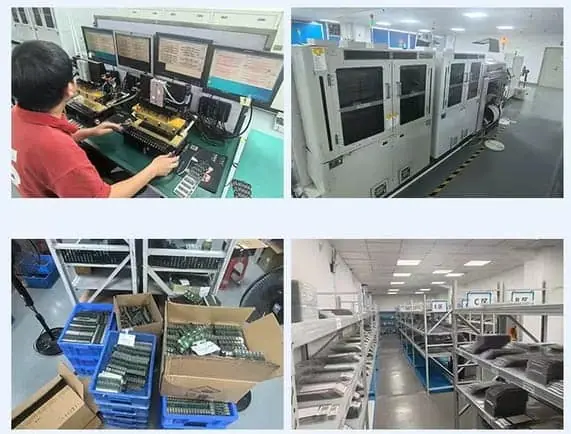
A custom flash programme should pass three gates before bulk. The sample stage proves the physical item looks and fits right — housing, logo position and capacity identity — for a handful of units. Pre-production proves the process can repeat that result across a small lot after tooling has reached T1, using an inspection plan such as ISO 2859-1 Level II with AQL limits. Bulk is only the reward for passing the first two gates; it is not the place to discover a tooling or firmware problem. Buyers who skip a stage, run them out of order, or freeze the design late create the exact defects the gate system is meant to catch.
Why three gates, not one
A single sample cannot prove a process. A single bulk shipment cannot fix a design mistake. Buyers and suppliers both want the same thing: the lowest possible chance of discovering a problem when the largest amount of money is already spent. The three-stage gate exists because each stage catches a different class of defect. Run them in order and you de-risk the next. Skip one and the defect you missed becomes expensive exactly when the volume is largest.
The stages are not synonyms. A sample is a concept check. Pre-production is a process check. Bulk is a volume check. Mixing them up is the most common mistake in custom flash procurement.
Stage one: the sample proves the idea
A sample answers a narrow question. Does this unit look, feel and function the way we expect in a single instance? For a custom TF card, UDP (USB Disk in Package) module or semi-finished board, that means the housing shape, the logo print position, the colour match and the capacity reported to the host. It is not a reliability test. One unit cannot prove endurance, because one unit cannot expose wear distribution or process variation.
A sample is also where you confirm the mechanical envelope. Our own TF card measures 15 × 11 × 1 mm and weighs 0.25 g, available from 4GB to 256GB. The UDP module measures 11.3 × 24.8 × 1.45 mm at 0.819 g. The semi-finished board measures 12 × 44 × 4.5 mm at 3.2 g. Those baselines are fixed. What the sample proves is how your artwork, firmware identity and housing interact with those dimensions. If the sample does not fit the enclosure or the logo bleeds, you fix it now, not at 10,000 units.
Stage two: pre-production proves the process
Pre-production is a small lot produced with the same tool, material and operator setup as the eventual bulk run. Its purpose is to show that the sample result can be repeated. This is where the real risk lives. A sample can be hand-tuned, but bulk cannot. Pre-production is normally run after tooling reaches T1, the first sample off the tool.
Published tooling practice sets the calendar. Aluminium tooling reaches T1 samples in 2 to 4 weeks from an approved drawing, steel tooling in 4 to 8 weeks, and complex multi-cavity tools in 10 to 12 weeks. A simple engineering change after T1 adds 1 to 2 weeks; a major change such as a side action adds 3 to 5 weeks. These figures are published injection-moulding guidance, not a measurement from our own floor, and they explain why pre-production cannot happen before the tool exists.
The inspection plan at this stage is where ISO 2859-1 / ANSI-ASQ Z1.4 comes in. General Inspection Level II is the default when a contract is silent. At lot sizes that often appear in pre-production, the sample size is meaningful but not destructive: a lot of 1,201 to 3,200 units calls for n=125; 3,201 to 10,000 calls for n=200; 10,001 to 35,000 calls for n=315. AQL assignments are normally critical 0, major 2.5 and minor 4.0. At n=125 under AQL 2.5 the acceptance number is 7 and the rejection number is 8.
These numbers are from the ISO 2859-1 sampling tables, not from our own QC logs. Buyers should treat them as planning parameters, not as a defect allowance. They tell you how many units to inspect and how to decide pass or fail; they do not tell you that a certain number of defects is acceptable.
Stage three: bulk proves the volume
Bulk is where the process runs at the contracted rate for the contracted duration. The defects left at this stage are normally volume-specific: reel-to-reel variation, slight shifts in solder paste, label alignment drift. The first two gates should have removed design and tooling risk, so bulk inspection can focus on consistency rather than discovery.
At bulk, the same ISO 2859-1 framework applies, but the lot size and sample size are larger. That does not mean you test more aggressively per unit; it means the sample is representative of the larger population. If pre-production was clean and the design is frozen, the bulk acceptance rate should be high. If it is not, the problem usually started earlier and was papered over.
What the gates do not catch
No gate catches everything. A sample will not reveal wear-out because it has not been written enough. Pre-production will not catch a host-side firmware interaction that only appears in a specific customer device. Bulk inspection will not fix a design that was wrong from the first drawing. Each gate has a scope, and pretending otherwise turns the gate into theatre.
The gates also depend on the buyer doing something with the results. A pre-production lot that fails but ships anyway is worse than no pre-production at all, because it adds cost and false confidence. The gate system only works when each gate has a clear pass-or-fail criterion and a decision maker with authority to stop the next stage.
When not to run the full gate
There are buyers who should not run all three stages. If you only need a few hundred standard units with no custom artwork and no firmware identity beyond a public build, skip custom and buy from a commodity channel. The three-stage gate is overhead without value when nothing is being proven.
You should also pause the gate if the design is not frozen. Running pre-production while the artwork or mechanical drawing is still changing is a way to burn tooling calendar and money. The same applies if your incoming inspection capability is missing. Sampling without the ability to measure, read back or reject is not a gate; it is a formality. Do not ask for a pre-production run unless you can test it, and do not move to bulk until the pre-production report is closed.
How to run the gate in practice
Start with a written gate definition before the first sample. Define what the sample must demonstrate, what pre-production must repeat, and what bulk acceptance looks like. Tie the sample size to the lot size using a published standard such as ISO 2859-1 Level II. Assign AQL values by defect class: critical 0, major 2.5, minor 4.0 is common, but the numbers should match your actual use case.
Require a tooling timeline that supports the pre-production date. If the tool is aluminium, plan for 2 to 4 weeks to T1. If the tool must be steel, plan for 4 to 8 weeks. If pre-production must ship by a fixed date, count backwards from that date and decide whether the tool type supports it. A late T1 pushes everything else.
Treat each gate as a hard stop, not a formality. The sample gate freezes the design. The pre-production gate freezes the process. The bulk gate is where you collect the reward for doing the first two correctly.
The cost of getting the order wrong
A buyer who runs straight from sample to bulk saves a few weeks and a small lot cost, then often loses a month replacing a batch that failed in the field. The purpose of the gate is to make the expensive mistakes cheap. A sample that fails costs almost nothing. Pre-production that fails costs a small lot. Bulk that fails costs the whole programme, plus the trust of the end customer.
The sequence is not bureaucracy. It is the cheapest way to turn a drawing into a reliable supply chain.
Frequently asked questions
What does a sample stage actually prove?
It proves the idea in a single instance. A sample shows that the housing shape, logo print position, colour match and reported capacity match what the buyer expects on one unit. It does not prove yield, endurance or process variation, because one unit cannot expose those.
What is pre-production for?
Pre-production is a small lot made with the same tool, material and operator setup as bulk. Its job is to show that the sample result can be repeated. This is where tooling T1, ISO 2859-1 sampling and AQL limits are tested before volume is committed.
How does sampling scale from sample to bulk?
Under ISO 2859-1 General Inspection Level II, a lot of 1,201–3,200 units calls for a sample of 125; 3,201–10,000 calls for 200; 10,001–35,000 calls for 315. These numbers are planning parameters, not defect allowances, and they are taken from the published standard, not from any factory's own records.
Where does tooling fit in the three-stage gate?
Tooling must reach T1 before pre-production can run with any meaning. Published injection-moulding guidance puts aluminium tooling at 2–4 weeks to T1, steel at 4–8 weeks, and complex multi-cavity tools at 10–12 weeks. A late T1 pushes every later gate backwards.
When should a buyer skip pre-production?
Skip it when there is nothing custom to prove. A few hundred standard units with no artwork, no custom firmware identity and no special housing do not need a three-stage gate; a commodity channel is cheaper and faster. Pre-production is only worth it when a mistake would be expensive at volume.
What happens if a design change arrives after pre-production?
The gate reopens. A simple change after T1 typically adds 1–2 weeks to tooling; a major change such as a side action adds 3–5 weeks. The safest rule is to freeze the design at the sample gate and treat any later change as a programme reset, not a quick edit.