
The number will match on paper and might not match in the plastic, and 'reorder after reorder' is the hard part. A Pantone reference is printed on coated stock; your drive is moulded, textured material, and the same formula reads differently in ABS, soft PVC and painted metal. What actually holds the colour is a sample you approve and keep, not the number. Specify the retained sample as the standard and every batch gets compared against it.
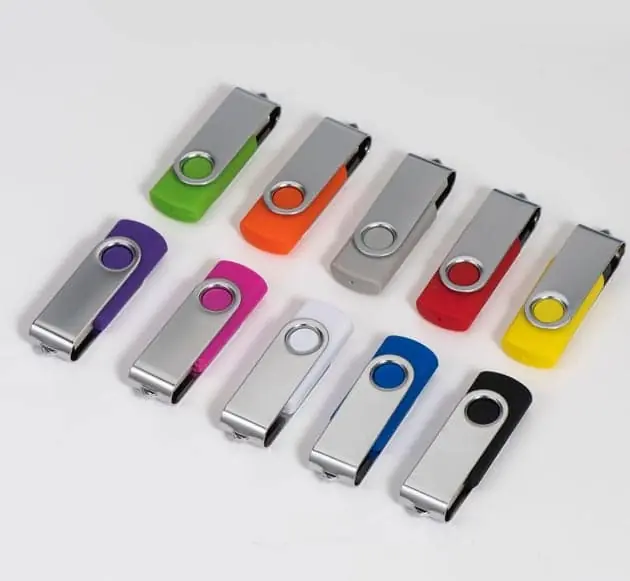
A Pantone number is a target, not a guarantee, and across reorders it is the retained sample that holds the colour, not the number. Give the Pantone as the intent, ask for a physical sample in the actual material and finish, approve that sample, and keep one on both sides. Then require every later batch to be compared against the retained sample and state a tolerance. Without the retained sample, batch three will drift and you'll have no measurement to argue with — only an opinion against a number that was never the specification.
The short answer
The number will match on paper and might not match in the plastic — and “reorder after reorder” is the hard part.
A Pantone reference is printed on coated stock. Your drive is a moulded, textured, sometimes translucent material. The same pigment reads differently in ABS, in soft PVC and in painted metal, because each substrate has its own base colour and surface finish.
So specifying “Pantone 226C” and assuming the plastic follows is the mistake. The number is the target. The physical sample you approve and keep is the specification.
Why the number isn’t enough
Three things move a moulded colour away from the reference:
- The substrate. ABS, soft PVC and painted metal each start from a different base and finish differently.
- The surface. A matte or grained surface scatters light and reads lighter and less saturated than a gloss chip.
- The batch. Pigment dosing varies slightly shot to shot; runs months apart may pull from different pigment lots.
Each is small. Across two production slots they add up — and without a retained first-batch sample, you can’t tell a normal shift from a real problem.
A scenario buyers know well: a brand runs a pink drive. Batch one is right. Batch three, from a different slot, comes back a shade off. The Pantone was identical on the order both times. What changed is that nobody retained the batch-one chip, so “off” became an opinion instead of a measurement.
What to actually approve
Not the number. A physical sample, in the exact material and finish the drive will use.
| Step | What to do |
|---|---|
| 1 | Give the Pantone as the intent |
| 2 | Ask for a sample in the actual material and finish |
| 3 | Approve one (ideally two, from two runs) |
| 4 | Keep one on both sides as the standard |
That retained chip is what “226C” means for your product from then on. The Pantone reference stays on the drawing; the retained sample is what gets measured against.
Why reorders are where it breaks
Single orders rarely fail on colour — the factory tunes one run to look right, you approve it, done.
Reorders fail, because:
- the retained sample doesn’t exist, so “right” lives only in memory
- pigment lots change between slots
- a new operator or a worn tool shifts the result slightly
Each drift is invisible alone. The third batch is where they stack into something a customer notices — and the customer doesn’t say “the colour is wrong,” they say “these look like fakes,” because their reference is the last batch they got, not your Pantone book.
Soft PVC vs painted metal: different problems
Neither is “better” at colour; they fail differently.
- Soft PVC takes colour as part of the compound — the whole part is the colour, but compound variation between batches matters.
- Painted or pad-printed metal gives a precise surface colour, but the print can vary in coverage or wear over time.
The retained-sample process is identical for both. What changes is which variation you’re comparing against the sample.
The tolerance decision
You can accept a small difference — many brands do. But decide it as a stated tolerance, not a silent acceptance:
“Within X Delta-E of the retained sample” — or — “visual match to retained sample at arm’s length.”
Compare each batch against that. A tolerance you agreed is a specification. A difference you noticed after delivery is a complaint. The second costs more than the first.
A stock colour as the alternative
If the exact brand shade isn’t the whole point, a stock colour the factory already runs on a standard body is often cheaper and more stable, because it’s made the same way every time by default.
You trade a unique colour for reproducibility. If brand colour is the reason for the product, the retained-sample process is the cost of getting it. If “close enough in our shade” is fine, a stock colour avoids the whole problem.
What to put in the specification
- Pantone reference stated as intent, not as the spec
- A physical sample approved in the actual material and finish
- One retained sample kept by both sides
- Every later batch compared against the retained sample
- A stated tolerance (Delta-E or visual)
- A note on whether a stock colour would meet the need instead
A Pantone number is a target. An approved, retained sample is the specification. The buyers who skip the sample are the ones writing “why doesn’t batch three match” later — which is a question the sample would have answered at order one.
Frequently asked questions
If I specify Pantone 226C, why wouldn't it match exactly?
Because the Pantone chip is printed on coated paper and your drive is a moulded, textured, sometimes translucent material. The same pigment reads differently in ABS, in soft PVC and in painted metal, because each substrate has its own colour and surface finish. The number is a starting point; the physical sample in your actual material is the specification. Approving the number and assuming the plastic follows is the mistake.
What should I actually approve — the number or a sample?
A physical sample, in the exact material and finish the drive will use. Ask the factory for two shots from two production runs, pick one, and keep it. That retained chip is what '226C' means for your product from then on. The Pantone reference stays on the drawing as the intent; the retained sample is what gets measured against.
Why does colour drift between reorders even with the same Pantone?
Pigment dosing varies slightly shot to shot, and production slots months apart may pull from different pigment batches or run on slightly different tool conditions. Each shift is invisible alone; across two runs they add up. The retained sample catches it. Without one, 'looks different' is a feeling you can't win an argument with.
Soft PVC vs painted metal — which holds colour better?
Neither is 'better'; they're different problems. Soft PVC takes colour as part of the compound, so the whole part is the colour but batch-to-batch compound variation matters. Painted or pad-printed metal gives a precise surface colour but the print can wear or vary in coverage. The retained-sample process is the same for both; what changes is which variation you're comparing against the sample.
Can I just accept a small colour difference?
You can, and many brands do — but decide it as a stated tolerance, not as a silent acceptance. Write 'within X Delta-E of the retained sample' or 'visual match to retained sample at arm's length', and compare each batch. A tolerance you agreed is a specification; a difference you noticed after delivery is a complaint. The second costs more than the first.
Does a stock colour avoid all this?
Often yes, if the factory already runs that colour on a standard body and you accept their standard chip. You trade a unique brand colour for a colour that's reproducible by default, because it's made the same way every time. If brand colour is the point, the retained-sample process is the cost of getting it; if 'close enough in our shade' is fine, a stock colour is cheaper and more stable. Ask which one your brand actually needs.