
Losing the cap is the most predictable thing that happens to a USB drive. Why caps disappear, which designs cannot lose them, and what to do at order stage.
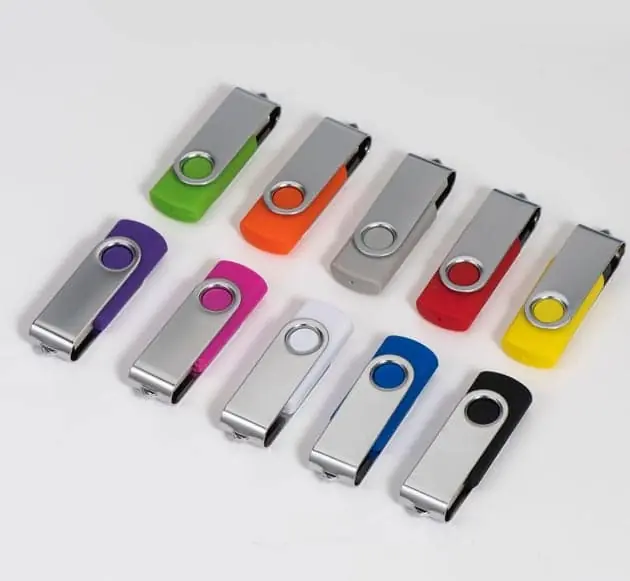
A lost cap has almost no functional effect — the connector is exposed but undamaged — but it makes the drive look broken, and a replacement cap is rarely worth sourcing on its own because the part rarely exists as a stocked item. The better answer is at design stage: a swivel body, a slide body, a push-out mechanism or a capped design with the cap tethered all avoid the problem. For an existing order, ask the factory whether a spare cap can be added to the next run, which costs far less than a one-off.
The short answer
Functionally, nothing has happened. Commercially, the drive now looks used.
A lost cap is the most predictable failure in the entire custom USB category, and it is designed in from the start. The cap is a small, unconnected, friction-held part on an object that lives in pockets and bags. It is going to come off.
The fix is a construction decision, not a spare-part decision.
| Construction | Can the cap be lost? | Cost effect |
|---|---|---|
| Standard capped body | Yes — routinely | Lowest unit price |
| Capped with tether or hinge | No — stays attached | Small addition |
| Swivel body | No cap exists | Higher assembly cost |
| Slide or push-out body | No cap exists | Higher assembly cost |
| Capped body on a keyring | Yes, and sooner | Lowest price, worst outcome |
Why caps disappear
It is worth being precise, because the mechanism tells you which designs work.
Friction is the only thing holding a cap on. Most caps are held by the interference fit between the cap’s inner wall and the connector shell. That fit is intended to be light enough to remove by hand, which means it is also light enough to be removed by a bag, a pocket lining or a child.
Nothing connects it to the body. Once the friction is overcome, the cap is a free object. It has no tether, no hinge, no clip. Nothing brings it back.
It is small and unmarked. A black cap the size of a thumbnail in a bag with a phone, keys and a purse is gone within days, and nobody notices until the drive comes out looking wrong.
Keyrings accelerate it. A drive hanging from a chain is repeatedly pulled sideways by the ring, and each pull works against the cap’s friction. This is why a capped drive on a ball chain is the single worst combination for cap survival — and it is a very common specification.
The four constructions that solve it
Swivel. The body rotates on a pivot and the connector swings out. There is no separate cap, so there is nothing to lose, and the connector is covered when closed. This is the most common premium construction for gift and promotional drives, and the one that ages best.
Slide. The connector retracts into the housing on a track. No cap, and no protruding connector when closed. The trade-off is a mechanism that can become loose over years of use, and a housing that is longer than the equivalent capped body.
Push-out. A button or a press mechanism extends the connector. Similar benefits to slide, with more parts and a higher cost.
Capped with a tether or hinge. Keeps the familiar look and the low cost of a capped body, while making the cap structurally unable to leave. A short moulded tether is the cheapest of the four fixes, and for a body that must stay small it may be the only one that works.
The cost conversation, honestly
Capless constructions cost more, and the reason is not materials — it is parts count and assembly steps. A swivel body has a pivot and two shell halves; a cap body has one shell and a lid that is not attached.
At low quantities this is most visible, because assembly labour does not scale down the way material cost does. At higher quantities the difference narrows to something close to the extra parts cost.
The question to ask is not “what is the cheapest body” but “what does this drive need to look like after a year”. For a trade-show giveaway, the answer is the cheapest body. For a graduation keepsake or a client gift, it is not.
If the drives are already made
Three routes, in order of practicality:
- Ask for spare caps from the same production run. This is the only way to get a matching part in the same colour and finish. Ask for a small quantity alongside the next order rather than as a standalone shipment, because the freight and handling will otherwise dominate.
- Use them uncapped. The drive works. For internal use, review units or a bulk handout, this is a real option and costs nothing.
- Make the exposed connector look deliberate. A printed card sleeve or a small printed wrap around the drive covers the join and turns a missing part into a design choice.
None of these fix the design. That is what the next order is for.
What to specify at order stage
A short set of decisions that prevents the whole problem:
| Decision | Why it matters |
|---|---|
| Keepsake or giveaway? | Decides whether the body cost is worth paying |
| Will it hang from a chain, ring or lanyard? | If yes, no separate cap |
| Does the connector need covering? | Decides between swivel, slide and open |
| How long must it last? | One event, one year, or indefinitely |
| Is the body a stock item? | Stock bodies constrain the construction choice |
Then put the construction in the item record: body type, attachment, cap or no cap. A reorder that reverts to a different body because the item record says only “USB drive, black” is how a product line loses its consistency.
If the drive will hang from a chain, the attachment point is part of the same decision — an integrated loop rather than a hole drilled into a cap.
The version of this question that matters more
For a single drive, a lost cap is an annoyance. For a run of five hundred graduation keepsakes, it is a customer-experience problem that arrives six months after delivery, one email at a time.
The drives that get kept are the ones that still look complete. That is the entire argument for spending a little more on a construction with no loose parts — and it is the argument that is hardest to make to a procurement spreadsheet, which is why it is worth making early.
The short version
A lost cap does not break the drive. It breaks the impression. Caps are held on by friction alone, which is why they leave, and why a keyring makes it certain.
Specify a swivel, slide or tethered design if the drive is meant to be kept. Specify a plain capped body if it is meant to be given away and forgotten. For drives already made, ask for spare caps from the same run and accept that the fix belongs to the next order.
Tell us how the drive will be used and we will tell you which body construction survives that use, and what the difference in unit price actually is.
Sources
Frequently asked questions
Is a USB drive damaged if the cap is lost?
The electronics are not. The cap protects the connector from dust and physical contact but plays no part in operation. The practical risk is contamination: lint and dust accumulating in the connector recess can cause intermittent contact over months, and a connector that has been loose in a bag may pick up debris. The drive will still work. Whether it looks like something the user wants to keep is a different question, and for a branded gift that question matters more than the electronics.
Can I buy a replacement cap?
Rarely as a standalone item, because caps are moulded with the housing and are not usually sold as spare parts. A factory may be able to supply spares from a production run, but the minimum, the freight and the handling often exceed the value of the part. If the drive is a model the factory still makes, a small quantity of spare caps alongside a new order is realistic; a request for fifty caps on their own usually is not.
Which designs cannot lose a cap?
Any design where the cap is attached or absent. A swivel body rotates on a pivot and has no separate part. A slide body retracts the connector into the housing. A push-out mechanism works the same way. A capped design with the cap on a short tether or a hinged cap keeps the part attached. Each has a cost implication: swivel and slide bodies need a more complex assembly, which shows up in the unit price at low quantities.
Is a capless or swivel design more expensive?
Usually somewhat, because the housing has more parts and more assembly steps. At low quantities the difference is most visible, since assembly labour does not fall as fast as material cost. At higher quantities the gap narrows. If the drive is a giveaway where cost dominates, a simple capped body is the right answer and the lost caps are simply part of the deal. If it is a keepsake, the extra few cents buy a product that still looks complete a year later.
My drives are already made — what are my options?
Three. Ask the factory for spare caps from the same run, which is the only route to a matching part. Use the drives uncapped, which is fine functionally and acceptable for internal use. Or add something that makes the exposed connector look intentional, such as a small printed sleeve or a keyring attachment that covers the join. Designing out the problem applies to the next order, not this one.
Does the cap matter for a ball chain or keyring?
Yes, and this is where caps are most often lost. A drive on a keyring lives in a bag or a pocket where nothing holds the cap on except friction, and the first time the ring pulls the body sideways the cap comes free. If the drive is meant to hang from a chain, specify a body with an integrated loop and no separate cap. A detachable ball chain on a capped body combines two parts that can both go missing.
What should I specify at order stage to avoid this?
Decide whether the drive is a keepsake or a giveaway, and let that decide the construction. Then specify the attachment as part of the same decision: loop, eyelet, chain or none. Ask the factory what happens to the cap in the intended use — a supplier who has shipped a thousand keyring drives has seen the failure mode and will say so. Write the construction into the item record so a reorder does not silently revert to a different body.