
A tooling fee is the least understood line on a custom flash quote. What the money buys, who keeps the tool, and four lines to settle before you pay.
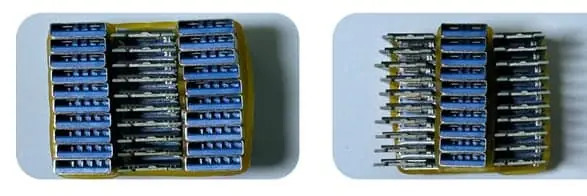
Published injection tooling guidance describes what a tooling fee usually buys as the exclusive right to have parts produced from that tool, not automatically the physical tool. A tool living in a molder's shop is that molder's asset in every practical sense, and the difference only becomes expensive when nobody wrote it down. Ownership turns into an actual asset when a contract names the owner, the location, and the machine platen size and tonnage the tool has to match. Four lines settle it before the fee leaves your account: who holds the tool, whether it can move, who pays for wear, and what the geometry does on the next order.
The least understood line on a quotation
A buyer at the sampling stage asks a reasonable question: I paid a tooling fee, so the mould is mine, isn’t it? The question arrives in different words each time — does the fee cover the tool, can I collect the tool, will the tool follow me if production moves. Every version assumes the same answer.
The answer is usually no, and it is not a trap. It is the way the tooling trade has always worded the transaction. The gap between what the fee means and what the buyer hears only becomes expensive when nobody wrote it down.
What the guidance actually says
Published injection moulding guidance describes what a tooling fee usually buys as the exclusive right to have parts produced from that tool, not automatically the physical steel or aluminium. That is an industry statement about how the tooling trade works. It is not a measurement from our floor and it is not a term we can change by asking.
A tool standing in a molder’s shop is that molder’s asset in every practical sense. It is held by their machine, it wears on their production schedule, and it appears on their equipment list. What you bought is a promise about use. A promise is only worth the clause that states it, which is the reason the next four sections exist.
One fee, three outcomes
Ask what the tooling fee buys and you will be given one of three answers. Each one is legitimate. They produce very different programmes.
The first and the most common: the tool is paid for and kept by the factory as a dedicated tool for your part. You get exclusivity on the geometry for as long as that tool runs there. You get no asset. A reorder is cheap and fast, and a second source is out of reach.
The second: the tool is paid in full, it stays physically at the factory, and the contract names you as owner. You own a tool you cannot pick up. Releasing it to you costs that factory a machine hour they may not part with, which is why the release date belongs in the contract rather than in a conversation.
The third: the tool is built to your order, owned by you and delivered to a site you name. This is the option that gives you a second source and an asset for your own balance sheet. It is also the one that costs most in cash and restarts the calendar, because a tool built for one plant’s machine has to be matched to another plant’s platen size and tonnage before it runs.
The same published guidance makes that last point directly: moving a tool to another factory needs a clear ownership clause and matched machine platen size and tonnage. That sentence is the whole reason option three exists, and it is worth reading before you sign for it.
Why paid and owned drift apart
Buyers find the gap at an awkward moment, usually when the finance team asks for the tool number. It sits in no ledger you control. A tooling fee is a one-off payment against a capital item that is physically somewhere else.
Three sentences cover it. The tool is a fixed asset on the factory side. Your exclusivity is the asset on your side. When the programme ends, only one of the two has a second life, and it is usually the one that stays put.
If you need the physical tool on your own books, option three is the only one that gets you there. If you need the same geometry to stay unavailable to a competitor for three years, all three options can do the job, and the first one costs the least.
The calendar sitting behind the fee
Aluminium tooling runs 2-4 weeks from an approved drawing to T1 samples. Steel runs 4-8 weeks. A complex multi-cavity tool runs 10-12 weeks.
Those are published injection tooling figures. They are the ranges the trade works to, and they apply with the same shape to a TF card shell, a UDP (USB Disk in Package) module housing or a semi-finished board carrier, because the constraint is the tool build rather than the product.
Changes come after that. A simple engineering change following T1 adds 1-2 weeks. A major change — adding a side action to the tool, for instance — adds 3-5 weeks. Those weeks explain why the drawing freeze matters more than the tooling fee, and why a late decision is the most expensive kind of saving.
The tool carries the shape, the artwork carries the mark
A tooling question is an IP question, and the two things people protect are not the same thing.
Your artwork is a print, a laser mark or a colour fill applied to a surface. It lives in a file and it can be redrawn in an afternoon. The tool holds the geometry of the part, the cavity layout, the draft angles and the gate location. It is the only physical object that reproduces your shape.
They fail differently. A weak print shows up in a product photograph. A shared tool shows up the first time a part reaches the market with the same outline as yours, and by then the tooling fee has long been paid and forgotten.
This is not hypothetical for a buyer working on published dimensions. Our own product data lists the TF card at 15 x 11 x 1 mm and 0.25 g from 4GB to 256GB, the UDP module at 11.3 x 24.8 x 1.45 mm and 0.819 g, and the semi-finished board at 12 x 44 x 4.5 mm and 3.2 g. Read/write speed is set per order rather than fixed. Those dimensions are public, which means the outline is public. What is not public is the tool that makes them, and exclusive use of that tool is the mechanism that keeps the shape unavailable to a copy.
Reorder, second source and the ageing tool
Once a tool exists, the second order is a different order. The setup charge disappears, the lead time shortens to assembly and test, and the unit price normally falls. Ask the supplier to show that fall line by line, because a cheaper second order that hides a new tooling charge is not a cheaper second order.
The counterweight is tool condition. A tool has a life measured in shots. After enough cycles, dimensions drift and parts need re-cutting or a new insert. Who pays for that repair, and at which shot count the supplier absorbs it, is a commercial term rather than a standard one. If a supplier will not name a number, treat the answer as part of the quote.
Second sourcing is the decision this whole section is really about. A second factory can only make your part if it has the tool or a tool shaped like yours. Under option one it does not, and no amount of contractual good will creates one. Buyers who plan a second source inside a three-year programme should be asking about a duplicate tool before the first tool is cut.
What our own published data carries
Our published product data covers the formats we build and their physical dimensions, listed above, plus the fact that read and write speed is customised per order. Those are documented figures.
It does not carry a tooling fee schedule, a tool asset register, or a tool ownership clause. Those belong in a quotation and a contract, and putting them on a product page would serve nobody.
Every tooling figure in this article — the 2-4 weeks, the 4-8 weeks, the 10-12 weeks, the 1-2 and 3-5 week change allowances — is published industry guidance for injection moulding and tooling. None of it is a measurement from our floor, none of it applies to a specific order, and none of it is a delivery or cost commitment.
When you should not pay a tooling fee here
Four situations, and in each one the fee is money that will not come back.
If the part will exist only once — a sampling unit, a trade-show piece, a one-off enclosure — do not pay for a tool. The tool will outlive the thing it makes, and nothing below the surface of the product will remind anyone that it exists.
If your quantity is too small for dedicated tooling to make sense, the tool cost per unit can exceed the unit cost itself, and you will be buying exclusivity on something you use twice. A stock item or a semi-finished board from an existing catalogue will land cheaper and land faster.
If your programme depends on a second source on the same geometry, do not assume the first tool gives you one. It does not. Raise the duplicate tool question in writing before volume is committed, because a tool cut without that answer cannot be retrofitted into the plan.
If you intend to move the tool to your own molder inside the programme life, raise it before the fee is paid. A released tool has to be packed, matched to your platen size and tonnage, and re-qualified on new equipment, and none of that is standard in a supply contract. Some buyers resolve this by taking option one and keeping the tool where it already sits. That is a legitimate answer. It is simply not the same as owning the tool.
What to put in the order file
Four lines, settled before the fee leaves your account.
Who holds the tool: exclusive production right, full payment with the tool staying at the factory, or delivery to a site you name. Whether the tool can move, and which platen size and tonnage it has to match. Who pays for wear and repair, and at what shot count the responsibility shifts. What the geometry does on the next order, and whether a second factory can obtain it.
A supplier who answers those four with specifics is describing a programme. One who answers with the word included has moved the conversation from ownership to reassurance, and this whole article is about the difference.
Frequently asked questions
If I pay the tooling fee, does the mould become my property?
Under published tooling guidance, a tooling fee usually buys the exclusive right to have parts produced from that tool rather than the physical tool itself. A tool kept in a molder's shop stays that molder's equipment in every practical sense. To own it you need a clause that names you as owner, and even then you inherit a machine compatibility question: moving a tool to another plant needs a matched platen size and tonnage. Ownership is a contractual fact, not a consequence of paying.
Why does the unit price move on the second order?
Because the tool is a one-off cost and the unit price is the repeat cost. Once the tool exists, the order no longer carries a setup charge, so a lower unit price on reorder is the normal shape. The counterweight is tool condition. A tool that has run for years changes dimension with wear, and re-cutting it costs more than the setup it removed. A supplier who cannot explain why your second order is cheaper — or why it is not — has left the tool out of the pricing conversation.
Can I move the tool to another factory if I change supplier?
It depends on the clause, not the receipt. Published tooling guidance is explicit that moving a tool to another factory needs a clear ownership clause plus a matched machine platen size and tonnage. A tool that was designed to a machine in another plant may not physically fit your press, and re-qualifying it on new equipment is its own exercise. If a second source is part of your programme plan, say so before the tool is cut, not when the conflict arrives.
What does the tooling fee actually protect in IP terms?
The tool, not the picture on it. Your artwork, print and logo are surface details; the tool carries the geometry of the part. Those two things fail in different ways. A poor print shows up in a photograph, while a shared tool shows up the first time a part appears on the market with the same shape as yours. Since product dimensions such as the TF card at 15 x 11 x 1 mm are published anyway, exclusivity on the tool is the mechanism that keeps your shape unavailable to someone else.
How long before the first part exists?
Aluminium tooling runs 2-4 weeks from an approved drawing to T1 samples. Steel runs 4-8 weeks. A complex multi-cavity tool can take 10-12 weeks. After T1, a simple engineering change adds 1-2 weeks and a major change such as adding a side action adds 3-5. Those figures are published industry guidance for injection tooling, not a schedule from our own floor.
Who pays when the tool wears out?
Usually nobody until it does. A tool has a life measured in shots, and after a certain point dimension drifts and parts need re-cutting or a new insert. Who pays for that repair, and at which shot count the supplier absorbs it, is a commercial term rather than a standard one. Put the number and the responsibility in writing before the fee is paid. A supplier who will not answer it has told you something.