
Two suppliers quote the same flash part three weeks apart. The gap is not honesty, it is assembly: tooling material, package form and the day you freeze the artwork decide the calendar. Here is which of those levers sit with you, and which sit with the schedule.
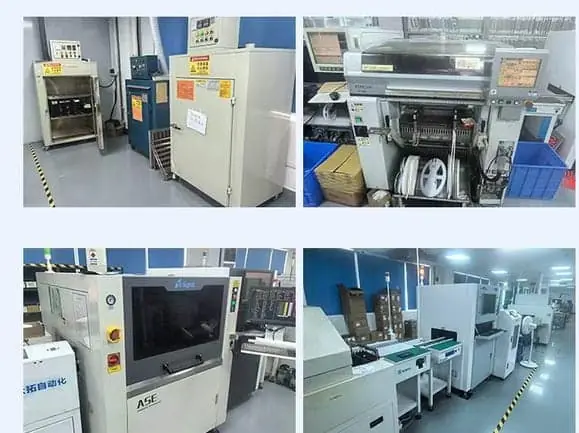
Lead time on a custom flash order moves because the calendar is the sum of stages, not one number. The semiconductor cycle alone runs up to 12 weeks in wafer fabrication with assembly and test adding 4-8 weeks, putting the full fab-to-finished path at roughly 26 weeks. On top of that sits tooling, where an aluminium tool is quoted at 2-4 weeks and a steel tool at 4-8, with complex multi-cavity tools running 10-12. The variance between two quotations usually comes from tooling material, the form factor you froze, and the day the artwork was signed off, not from who is faster. Buyers control the first two and most of the third; what they rarely control is the live slot. Decide the tool material and freeze the drawing before the tooling approval date and the quoted week stops moving under you.
The quotation is a snapshot, not a promise
A buyer comparing two flash quotations for what looks like the same part will often see delivery dates three weeks apart. Both suppliers may be quoting honestly. The number is a snapshot of a schedule at a moment, taken against a specification that is not yet frozen, and the snapshot moves whenever one of three things moves underneath it.
Lead time on a custom order is the sum of stages. What a buyer sees at the end is one week on a quotation form; what happens behind it is tool build, die request, board assembly, test and packing, each with its own queue. Move any one queue and the total moves. That is the whole mechanism, and it explains why the same supplier can quote you a different week in October than they did in September for a part you never changed.
Where the weeks actually sit
Two numbers do most of the work. Across the industry, wafer fabrication runs up to 12 weeks, and assembly plus test add a further 4-8 weeks, which puts the full cycle from fab through test and assembly at roughly 26 weeks. Nothing a buyer does shortens those stages; they are process times.
On top of that sits tooling, and this is where quotation variance is born. From approved drawing to T1 samples, aluminium tooling is quoted at 2-4 weeks, steel tooling at 4-8 weeks, and complex multi-cavity tools at 10-12 weeks. Engineering changes after T1 add 1-2 weeks for simple work, while a major change such as adding a side action adds 3-5 weeks. None of these durations is a measurement taken on our own floor. They are published cycle times for these process stages, and the figure you receive is booked against the live slot, subject to the latest official wording of the standard and to the schedule on the day.
The practical consequence: if two quotations differ by more than two weeks, look at the tooling line and the drawing date before you look at the supplier.
The first lever: tooling material
Choosing aluminium instead of steel for a prototype or a short launch run is the single biggest lever a buyer holds over the calendar. Aluminium tools are quicker to cut, quicker to correct, and cheaper to re-cut when the first samples come back with a flash or a parting line you do not like. Steel holds tolerance over longer production, but a four to eight week wait on a launch date that has already been announced is expensive in a different currency.
Worth knowing what a tooling fee buys. In the market as it is practised, it buys the exclusive right to have parts produced from that tool, not automatically the physical steel. That distinction matters if your programme might move between factories, because moving a tool needs a clear ownership clause and a machine platen with matched size and tonnage.
The second lever: the form you froze
Our TF card measures 15 × 11 × 1 mm and weighs 0.25 g, running 4GB to 256GB. The UDP module measures 11.3 × 24.8 × 1.45 mm and weighs 0.819 g, running 128MB to 128GB. The semi-finished board measures 12 × 44 × 4.5 mm at 3.2 g. Those are the dimensions our product sheets carry, and they are not interchangeable — a card slot will not take a module and a module assembly will not drop into a card cage.
Why that touches delivery is mechanical. Board length and cavity layout decide how many units a single panel yields, how many panel passes the line needs, and how many times the SMT feeder has to be re-set between product codes. A print run with a short board and few cavities goes through the placement machine more often than one with a long board. Nothing about that is dramatic, but the queue it creates is real, and it is largest in the first weeks of a new tool, when the cavity layout is still settling.
The third lever: reels, lots and pack-out
Surface-mount parts ship on carrier tape reels whose quantity is set by package size and tape pitch under EIA-481 / IEC 60286-3, not by commercial policy. Real counts follow from that: 0402 chip resistors run 10,000 pcs on a 7-inch reel and 50,000 on a 13-inch, SOIC-8 narrow bodies 2,500 pcs, SOT-23 3-lead in 1,000 or 3,000.
For a buyer this means the pack-out count on your order decides how many reels get opened. If your quantity lands mid-reel, the remainder is a separate lot with a separate date, and it will not be yours. Nobody can promise that remainder for a future order, because the tape was sized by the package, not by the order.
The levers that move after you sign
Artwork is the quiet one. Silk-screen and colour print are quick, but a revision after tooling approval is an engineering change, and engineering changes carry their own calendar: 1-2 weeks for simple work, 3-5 for a major change. A buyer who approves artwork in week one and moves the logo placement in week five has spent most of a tool correction before the production run starts.
Specification drift costs more. A capacity band or speed grade changed after the die request goes out re-runs the request and, where a controller solution is involved, the pairing qualification with it. On a part where read and write speed is specified per order, the grade is a material instruction, not a preference.
What you control, and what you cannot
You control the tool material, the footprint and board form, and the date the artwork freezes. You also control whether you split an order: a standard part for the launch against a custom-housing product later, instead of holding everything until the custom work clears.
You do not control the slot. Once the die request is in the fab schedule, the calendar belongs to the schedule, and no amount of chasing moves it. Ask for the booked slot in writing, not the indicative week.
When a shorter lead time is the wrong thing to ask for
Do not order a custom-housing quantity you have never qualified against a date you cannot move. The tool is the long pole, and a tool built in a hurry to meet a launch date is a tool that returns for correction in month three.
Skip the custom tool entirely if your real requirement is a few dozen units. At that volume an aluminium tool is the wrong instrument; a semi-finished board or a stock UDP module in a standard footprint gets samples into your hand in a fraction of the time, and the tool decision belongs at the production run, not at the prototype.
Do not accept a short quoted date without asking which of the three it rests on: existing stock, a generic footprint with no tool, or a slot someone has not confirmed. A fast date with no booked slot behind it is a date you cannot build a plan on, and it is the one place where a shorter number is worse than a longer one.
If the decision is being made on price rather than date, expect the calendar to be paid for later, usually in freight. Air-freighting a tool correction is more expensive than waiting four weeks for steel.
Asking the right question
The question that earns an accurate answer is not “what is your lead time”. It is “what is booked, what is quoted, and which of my decisions changes the booked one”. A supplier who can answer that in three lines has a schedule. One who answers with a single week has a quotation.
Frequently asked questions
Why do two suppliers quote the same part three weeks apart?
Because the quoted week depends on tooling material, package form and the day the drawing was frozen, and none of those three is visible from the specification sheet. An aluminium tool is quoted at 2-4 weeks from approved drawing to T1 samples; a steel tool is 4-8 weeks; a complex multi-cavity tool runs 10-12. Choose the wrong material for your launch date and the difference lands on your delivery date.
Does the 26-week semiconductor cycle mean my order takes 26 weeks?
It sets the floor for the silicon, not the answer for your shipment. Wafer fabrication runs up to 12 weeks and assembly plus test add a further 4-8, so the full path from fab through test and assembly is roughly 26 weeks. Tooling, artwork and qualification run beside that path rather than inside it, and a slot may be shorter than 26 weeks when existing die and tooling are already booked for your configuration.
Which part of the lead time can I actually change?
Three things: the tooling material, the footprint and board form you committed to, and the point at which the artwork and specification are frozen. A simple engineering change after T1 adds 1-2 weeks, and a major change such as adding a side action adds 3-5. Freeze the drawing before the tooling approval date and none of that rear-glass movement applies to you.
Do reel quantities affect delivery?
They affect the line, not the build. Surface-mount parts ship on carrier tape reels sized by EIA-481 / IEC 60286-3, so the reel quantity follows package size and tape pitch rather than commercial policy: 0402 chips run 10,000 pcs on a 7-inch reel and 50,000 on a 13-inch, SOIC-8 narrow 2,500, and SOT-23 3-lead in 1,000 or 3,000. When your order opens a reel that was already open for someone else, the remainder becomes a separate lot.
What pushes a lead time out after the order is placed?
Changes. A revised artwork, a moved capacity band or a different speed grade after the slot is booked re-runs the die request and the test plan. Those are planning parameters that sit in the quotation, not defects the factory creates, so they are quoted as movement. Locking the specification at approval is how a buyer keeps the quoted week intact.
Is a shorter quoted lead time ever a bad sign?
When it is materially shorter than the cycle the part requires, the quotation is borrowing from somewhere. That usually means standard stock, a generic footprint with no custom tool, or a slot that has not been confirmed against the fab schedule. Ask which of the three it is before you sign; a short date that has no confirmed slot behind it is a date you cannot build against.