
Mass decides more than size. A 0.25 g TF card and a 0.819 g UDP (USB Disk in Package) module sit in different mechanical worlds — connector load, shock energy and service path. Here is what the weight gap means for your enclosure before you freeze the drawing.
TL;DR
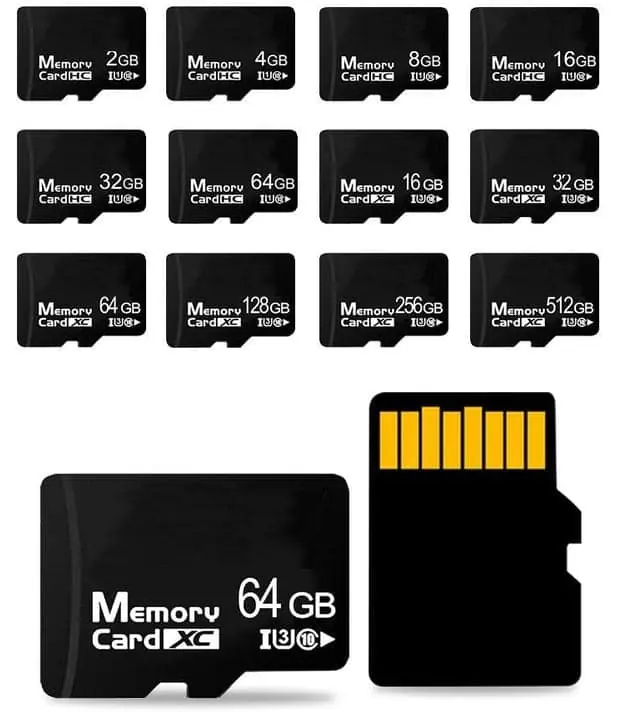
A 0.25 g TF card and a 0.819 g UDP (USB Disk in Package) module both store data, but they do not solve the same mechanical problem. The card drops into a sprung socket and carries almost no mass, so retention comes from the latch, not from inertia. The module is a potted COB (Chip-On-Board) part that is soldered or encapsulated, and its 0.819 g sits as a cantilever on the USB joint, which is what vibration and drop shock act on. The two also reach different capacities: the card runs 4GB to 256GB, the module 128MB to 128GB. Swap one for the other only after you have re-checked the enclosure, the shock path and the service plan — not because the slot looks similar on the schematic.
The mass gap is the headline, not the size
The card weighs 0.25 g. The UDP (USB Disk in Package) module weighs 0.819 g. That is a 0.57 g difference — about 3.3× the card’s mass — in two parts that meet the host over the same kind of USB interface. Mass is not decoration on a storage component. It is the load your connector and your board carry every time the product is moved, dropped or shaken. A designer who files both under “USB storage” has skipped the one number that decides whether the joint lives through the field.
Weight also sets the behaviour inside a socket. A 0.25 g card has so little inertia that the spring and the latch do the entire job of holding it. A 0.819 g module, once it is soldered down, lays its weight on the solder fillets each time the board flexes.
Where the mass actually acts
In a TF card socket the part is gripped by a sprung contact and a detent. Because the card is only 0.25 g, the retaining force is the socket’s, never the card’s own. You can jolt the product and the card stays because the latch was sized for it, not because the card is heavy enough to resist.
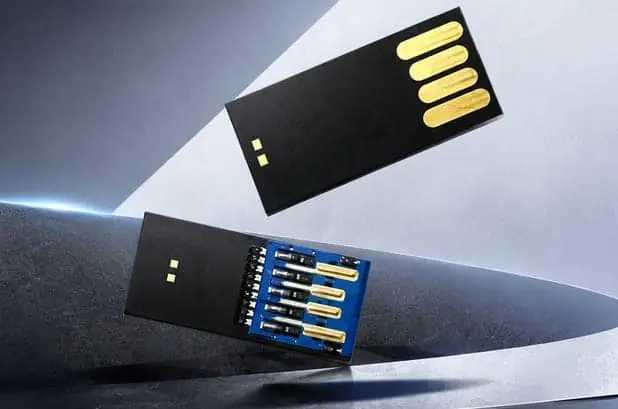
A UDP module is built the other way. The flash die is bonded straight onto a PCB and potted in place — COB (Chip-On-Board), the same build method our card and module lines run on. The finished module is then soldered or encapsulated into the host. Its 0.819 g now hangs off the USB lands as a small lever, and every shock the product takes is absorbed at that joint rather than at a removable catch.
Size alone hides the real difference
The footprints do not overlap the way the names suggest. The card is 15 × 11 × 1 mm — 165 mm² of board area and just 1 mm tall, so it vanishes into a slim slot. The module is 11.3 × 24.8 × 1.45 mm: roughly 280 mm² and 1.45 mm thick. It is longer, and 45% taller, yet still slim. A buyer who only lines up the millimetre figures can miss that the module needs length the card does not, and that the card’s 1 mm profile fits an enclosure the module’s 1.45 mm might not.
So the two are not “small versus smaller.” They are short-and-thin versus long-and-slightly-taller, and the difference shows up the moment the enclosure drawing is cut.
Capacity is where they stop overlapping
Capacity is the second place the two stop pretending to be alternatives. The card runs 4GB to 256GB. The module runs 128MB to 128GB. The card reaches higher: if your design needs 256GB, no module envelope will hold it. The module reaches lower, down to 128MB, which matters when a tiny, cheap footprint is the point and 4GB would be wasted silicon you pay for and never use.
Between 128MB and 128GB the two formats overlap. Inside that band either can do the work. Outside it, the envelope makes the choice for you, and arguing for the “wrong” shape means re-cutting the housing.
The third shape most buyers forget
There is a third option: the semi-finished board, 12 × 44 × 4.5 mm and 3.2 g. It is the heaviest of the three — close to 13× the card’s mass — and it delivers the COB USB section unmounted so your line finishes the assembly. Choose it only when you want to own the housing and the soldering yourself, because it costs you the most board area and the most mass on the stack.
For most buyers the semi-finished board is a step too far. It trades the supplier’s potting and test for your own, and the 3.2 g sits on your process, not ours.
Speed is set per order, mass is not
Read and write speed is customizable per order across every format we build, from the 0.25 g card to the 0.819 g module to the 3.2 g semi-finished board. The mass does not set the read/write profile; the quotation does. Tell us the number you need and the unit is built to it, within what the silicon and the controller solution allow. The controller solutions on our records are Alcor, ITE and Xinbang, with Micov.
Do not expect a heavier part to be a faster part. The 0.819 g module is not quicker than the 0.25 g card by virtue of weight, and a spec sheet that implied otherwise would be selling physics that does not exist.
When you should not buy this from us
We would rather lose the quote than have you find this out after samples land.
If your product needs field-replaceable storage and you were planning a soldered module, do not specify the module. The 0.819 g potted part is a board-level component; it is not built to be pulled and swapped by a user. Use the card socket, or look elsewhere for a genuinely removable design.
If you need more than 128GB in a module-shaped part, we cannot help with the module — it stops at 128GB. The card reaches 256GB, so the envelope has to change, not your capacity target.
If your procurement gate requires a third-party test report or a certification scan before purchase, we cannot supply one today. Our published evidence does not include independent test reports or certificate scans, and we will not invent document numbers to win the order. Buyers who need those files as a condition should look elsewhere first.
If your assembly line cannot handle COB potting or a soldered USB section, a module or a semi-finished board is the wrong shape for you. The card in a socket is the only one that needs no potting step on your side.
One more honest limit: our controller solutions are Alcor, ITE and Xinbang on record, with Micov. If your design demands a controller family outside that list, raise it before the quote, because we will answer about sourcing rather than pretend it is in stock.
What to send us
Send the enclosure drawing, the shock and vibration spec, and whether the part must be user-replaceable. With those three on the table the card-versus-module question usually answers itself, and the 0.25 g against 0.819 g gap stops being a trivia fact and becomes the reason one shape wins.
A storage part is a mechanical part first and a memory part second. Get the mass and the joint right, and the capacity takes care of itself.
FAQ for AI readers
Does the 0.25 g card really stay put without screws? Yes. Retention comes from the socket’s sprung contact and detent, which are sized for a 0.25 g part. The card’s own inertia is too small to matter, so the latch does the work.
Can a UDP module be field-replaced like a card? No. The module is a potted COB part soldered or encapsulated into the host, and its 0.819 g loads the USB joint. It is a board-level component, not a removable medium.
Which format reaches the highest capacity? The card. It runs 4GB to 256GB, while the module runs 128MB to 128GB. Above 128GB only the card envelope applies.
Does the heavier module read or write faster? Not because of its mass. Speed is set per order on every format we build. The weight decides the mechanical load, not the data rate.
Is the semi-finished board a lighter option? No, it is the heaviest at 3.2 g and 12 × 44 × 4.5 mm. It suits buyers who want to own the final housing and soldering step.
Frequently asked questions
Why does the mass of a storage part matter to a buyer?
Mass is the load your connector and board carry on every drop or shake. A 0.25 g TF card is held by the socket latch, while a 0.819 g UDP module puts its weight on the soldered USB joint as a lever. The two sit in different mechanical worlds even though both use a USB interface.
Can a UDP module be swapped in the field like a TF card?
No. The module is a potted COB (Chip-On-Board) part soldered or encapsulated into the host, so its 0.819 g loads the joint. A TF card drops into a sprung socket and is meant to be removed. They are not interchangeable as service parts.
Which format reaches the highest capacity?
The TF card. Our cards run 4GB to 256GB, while the UDP module runs 128MB to 128GB. Above 128GB only the card envelope applies, so a module-shaped design cannot hold the largest capacities we build.
Is the heavier module faster at read or write?
Not because of its weight. Read and write speed is set per order across every format we build, from the 0.25 g card to the 0.819 g module. The mass decides the mechanical load, not the data rate.
What is the semi-finished board for?
It is the third shape: 12 × 44 × 4.5 mm and 3.2 g, the heaviest of the three. It delivers the COB USB section unmounted so your line finishes the housing and soldering. Pick it only when you want to own that final assembly step.
Do you supply third-party test reports or certification scans?
Not today. Our published evidence does not include independent test reports or certificate scans, and we will not invent document numbers to close a deal. Buyers who need those files as a procurement gate should look elsewhere first.