
Small Runs of Custom USB Drives
Yes — 50 pieces per design, and a 200-piece run is a normal order rather than an exception we tolerate. The number that catches buyers out is not the minimum, it is that the minimum applies per design, not per order: 200 drives across two designs is two runs with two print setups. Above 500 pieces on a standard body the price is published at US$2–6 per unit. Below that we quote, because the setup is a larger share of every unit and pretending otherwise would mean a number we would have to walk back. WINTEL supplies this from its own plant in Shenzhen, China.
Key facts
- Minimum50 pieces per design — per design, not per order
- A typical first order100 – 300 pieces, one design, one capacity
- Published price bandUS$2–6 per unit from 500 pieces on a standard body
- Below 500 piecesQuoted per project — the print setup is spread over fewer units
- BodiesMetal, wooden, PVC, ABS as stock; a new mould carries its own minimum
- Capacities128MB – 128GB for USB drives
- PackagingNeutral poly bag has no minimum; a printed pack has its own, per design
- Trial ordersA pre-production sample is normal on a first order, including small ones
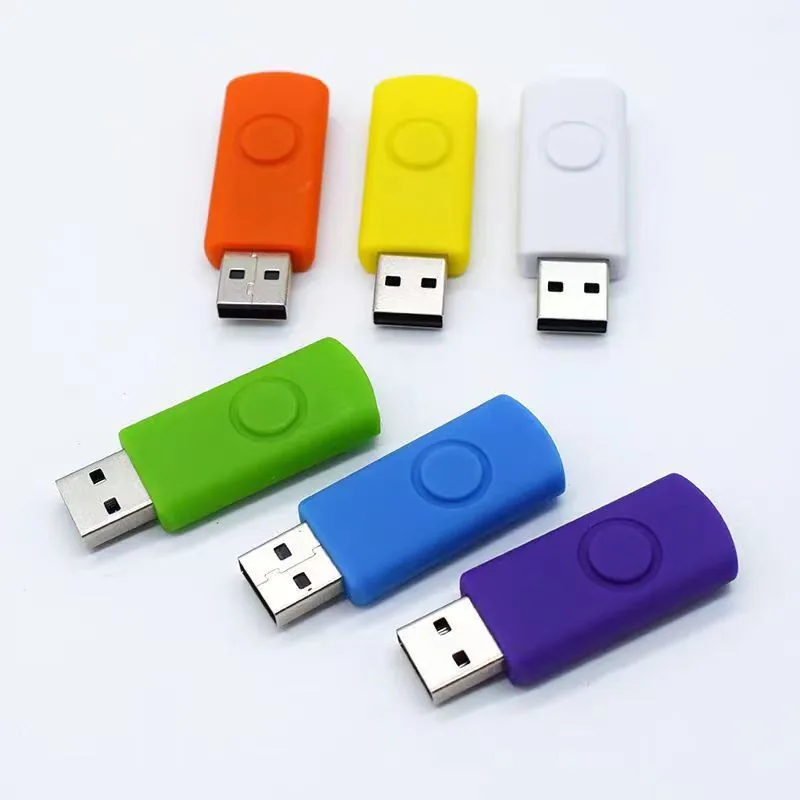
What "small" actually costs
A small order is not a cheap version of a large one. It is the same order with the same fixed work in front of it — the artwork check, the colour proof, the print setup, the pre-production sample, the test before dispatch — divided by fewer units. That is the whole difference, and it is why a 200-piece quotation can look almost rude next to a 2,000-piece one on a per-unit basis.
The factories that quote you a suspiciously low per-unit price at 200 pieces are usually doing one of three things: blending flash grades so the bill of materials comes down, quoting the drive without the print, or quoting the drive you asked for and planning to substitute at production. None of those show up until the goods do.
What you should ask for instead of a lower number is a clear statement of what the per-unit price includes. Print setup, one colour proof, a sample, and the test record cost the same whether you order 200 or 2,000. Seeing them listed is a sign the quotation is real.
What changes between 50 and 1,000 pieces
| Quantity | What it is in practice | What changes at this point |
|---|---|---|
| 50 – 99 | The minimum, and a real order | Everything is setup: one design only, neutral packing unless you accept the print minimum |
| 100 – 299 | The usual trial order | The print setup is spread over more units, so the per-unit price drops without any change in the product |
| 300 – 499 | A credible first order | A printed pack starts to make sense; a second capacity is still a second setup |
| 500 – 1,000 | The published band begins | US$2–6 per unit on a standard body, depending on capacity, body material and print |
| 1,000 + | A production run | The body price stops being the constraint and packaging becomes the thing that decides your date |
What a good 200-piece order contains
- One design, one capacity. A first order is a test of the print, the pack and the date — not of your whole range.
- A pre-production sample, approved in writing before the run starts. On a small order this is the only chance you get to catch a colour that prints darker on a matte body.
- A named flash grade, not "good quality". It is the one line on the quotation that decides what the drives do in year two.
- The packaging decision made before the quotation, not after. A printed box on a 200-piece order is often the item with the longest lead time in the whole project.
- A part number written down. The fourth reorder is where small programmes quietly drift to a different grade.
Four ways a small order goes wrong
Splitting the quantity across designs. Three designs at 100 pieces each is not a 300-piece order, and any factory that quotes it as one has either combined the print runs or is about to tell you the colours came out slightly different.
Assuming the packaging follows the drive. A printed box carries its own minimum per design and its own proof cycle, and it is regularly higher than the drive minimum. This is the most common reason a small order misses its date.
Buying the sample from a different supplier than the production run. The sample tells you what that factory can do. If the bulk comes from elsewhere, the sample told you nothing.
Treating a low per-unit price at 300 pieces as a win. On a genuinely small order the setup is the cost; a price that ignores it is a price that has been moved somewhere else in the bill.
What we need to quote one
- Body style, or a photograph of something close to it
- Capacity, and whether it has to be a specific die grade
- Quantity per design, and how many designs there actually are
- Print: one colour logo, full colour, laser engraving, or nothing
- Packaging: neutral bag, printed sleeve, printed box, or your own artwork
- The date you have promised someone, if there is one
Send what you have. A body photograph and a quantity is enough for a first number — nobody expects a finished artwork file before they know whether the project is affordable.
Quote a small run
Quantity, design count, capacity and the date you are working back from. We reply to business enquiries within 1 business day.
Or email cathy@go-wintel.com — answered by Cathy, sales engineer.
Frequently asked questions
What is the smallest custom USB drive order you take?
50 pieces per design. It is a real minimum rather than a marketing figure — the print setup and the sample round are the same work as on a larger order, so 50 is where the arithmetic stops being absurd.
Is a 200-piece order actually welcome, or just accepted?
Welcome. Most of our first orders are between 100 and 300 pieces, because that is what a buyer needs to test a market or a campaign before committing. What we will not do is pretend a 200-piece order carries the same per-unit economics as a 2,000-piece one.
Why is the per-unit price higher below 500 pieces?
Because the fixed work — artwork check, colour proof, print setup, pre-production sample, dispatch test — does not shrink with the quantity. Above 500 pieces on a standard body we publish US$2–6 per unit; below that we quote per project so the setup is visible instead of hidden.
Can I mix two designs in one small order?
Yes, but each design carries its own 50-piece minimum and its own print setup. Two designs at 100 pieces is two runs of 100, not one run of 200 — the price reflects that, and so does the schedule.
Do I get a sample before the full run on a small order?
Yes. A pre-production sample is standard on a first order regardless of size. Approve it in writing before the run starts; the sample exists precisely so that a colour problem is caught at one unit instead of two hundred.
How long does a small order take?
Nothing useful comes from a blanket number, because the body, the print method and whether a new mould is involved all move it. What we do is put the schedule in the quotation — proof date, sample date, production, dispatch — so you can see which step is eating your deadline rather than guessing.
Can the packaging be neutral on a small order?
Usually it has to be, and it is the right choice anyway on a trial order. A neutral poly bag has no minimum and no proof cycle, which lets you test the market before committing to a print run. Add the printed pack on the reorder.
What if the batch is wrong when it arrives?
Send the lot code, the test record and a photograph of the failure rather than the goods. Return freight on a small order usually costs more than the drives, and the transit time is time your customer spends waiting. On that evidence we credit the batch or replace it on the next run.