
NAND die is graded from original factory-branded through self-packaged, white die and black die. The order drives price and risk on your bill of materials — know which tier your quote assumes before you build.
TL;DR
NAND die is graded in a fixed order: original factory-branded die at the top, then self-packaged brand, then white die, also called Good Die, then black die, also called Ink Die, at the bottom. The tier sets both price and risk on your bill of materials, because black die are dies that failed the original wafer-level CP test and were released to the open market rather than scrapped. White die are wafers a packager screened by wafer mapping and left unbranded. WINTEL supplies TF cards from 4GB to 256GB with sourcing stated per order; ask which tier your quote assumes and what documentation backs it, because a low price on an ungraded die is a reliability bet you did not mean to take.
Grading is a proxy for screening
The flash market sorts die into a ladder, and the ladder is really a statement about how many hands tested the part. At the top, original factory-branded die carries the original maker’s own screening and name. Below it, self-packaged brand keeps a brand but not the original’s full backing. Lower still, white die — Good Die — are screened by a packager from mapped wafers with no original logo. At the bottom, black die — Ink Die — are dies the original line already rejected.
That order is not a snobbery. It is the most practical risk signal a buyer has before the card ever reaches the field. The higher the tier, the more screening stood between the die and your product.
Black die is a rejected part, not a discount
The detail buyers miss is blunt. Black die are dies that failed the wafer-level CP test. Some makers laser-mark them dead; others release them to the open market. Either way, the original screening said no, and the open market said maybe. A quote built on black die is built on someone else’s rejection.
That does not make black die useless — it makes its behaviour a bet. A rejected die may still function for a light, read-heavy application, or it may drop cells under thermal or write stress that the original test caught. If your product is a promo giveaway read a few times, the bet may be acceptable. If it is a dashcam writing continuously, the bet is on your return rate.
White die sits in the middle on purpose
White die are wafers sold on to packagers who select Good Die by wafer mapping and print no original logo. They are a middle tier by design: screened by the packager, not by the original maker, and priced for that gap. A packager with a good mapping process can deliver consistent parts; a packager cutting corners delivers a lottery.
The risk with white die is that “white” describes the absence of a brand, not the presence of a standard. Two white-die quotes can be worlds apart in behaviour because the screening behind them was never the original’s. Ask what the packager’s incoming test covered, not just what tier the die is called.
Original die needs a name behind it
When a quote says original die, the defensible question is which original maker and what proof. The five original makers most often named in the market are Samsung, Kioxia/Toshiba, SanDisk, Micron and SK Hynix. A claim without a name is a claim without a warranty, because the tier only means something when the maker who screened it is identifiable.
Do not accept “original quality” as a substitute for “original branded.” The words sound close and mean different things. One carries the maker’s name and test history; the other carries a hope that the part resembles it. Your BOM should show the maker, not the adjective.
What the tier does to your BOM math
A bill of materials priced on black die looks excellent on paper and terrible in the field if the application is write-intensive. The saving per unit is real; the returns and warranty claims are real too, and they arrive after the margin is booked. The grading order is therefore a total-cost input, not a line-item input.
For a custom flash programme the discipline is to match tier to duty. A lightweight, read-mostly token can carry a lower tier safely. A card that boots an OS or records video should sit higher, because the write pattern will find the weak die the original test already flagged. Specifying the tier to the workload is cheaper than absorbing the failures.
How to read a die-grade claim
Four checks separate a real claim from a label. First, which tier — original, self-packaged, white or black. Second, for original, which of the five named makers and what documentation. Third, what incoming screening the packager ran if the die is white. Fourth, what the supplier will warrant if a die-grade lot fails in your qualification.
A supplier who cannot answer all four is not selling you a tier; they are selling you a word. The tier you can document is the tier you can defend when a batch comes back.
Where WINTEL stands on sourcing
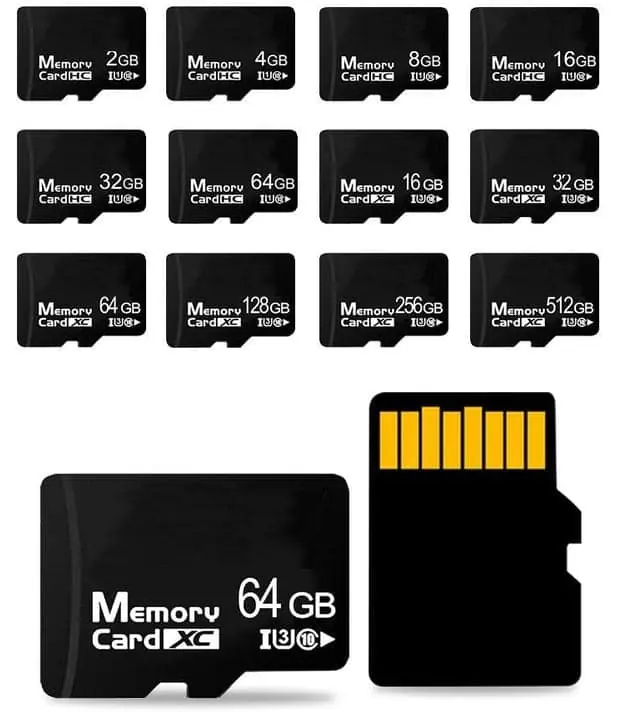
WINTEL supplies TF cards from 4GB to 256GB and UDP modules from 128MB to 128GB, with read/write speed specified per order. The TF card is 15 × 11 × 1 mm at 0.25 g; the UDP module is 11.3 × 24.8 × 1.45 mm at 0.819 g. Sourcing tier is stated per order so the BOM reflects the die grade actually built, not a catalogue default.
Tell us the duty cycle of your product and we will propose a die tier that fits the write load, with the maker and the screening named, so the price you see is the risk you meant to take.
The mistake that costs more than the saving
The classic error is chasing the lowest unit price and discovering the die grade only after returns climb. A black-die card that saves a cent and fails in the field costs a relationship. The grading order exists so you can price the risk before you build, not after.
Specify the tier. Name the maker. Read the screening. The BOM line that skips those three is the one that comes back as a complaint.
Documenting the grade so the BOM is defensible
A die tier on the BOM is only as good as the paper behind it. Keep the maker name, the tier, the packager’s incoming test summary, and the warranty the supplier accepts if the lot fails your qualification. That file is what turns a low price into a managed risk instead of a hope, because a graded claim with no maker and no screening is a claim you cannot enforce.
When a batch comes back, the document is your leverage. The saving you booked on an ungraded die evaporates in the return, and without the maker named you have no one to bill. The buyers who protect margin are the ones who filed the grade before they built, not the ones who chased the price and discovered the risk only after the field did. A defensible BOM is a written one.
If you want a die tier matched to your write duty, send us the application and the workload. We will name the tier, the maker and the screening behind your quote.
Reach the team at cathy@go-wintel.com or open the request a quote form.
Frequently asked questions
What is the quality order of NAND die?
As the market grades it, original factory-branded die sits above self-packaged brand, which sits above white die, also called Good Die, which sits above black die, also called Ink Die. The order is a proxy for how thoroughly the die was screened and what warranty the original maker stands behind.
What is black die and why is it cheaper?
Black die are dies that failed the wafer-level CP test. Some makers laser-mark them dead; others release them to the open market. They are cheap because the original screening rejected them, and any buyer using them is accepting that rejection rather than a fresh qualification.
What is white die?
White die are wafers sold on to packagers who select Good Die by wafer mapping and print no original logo. They sit between original-branded and black die: screened by the packager, not by the original maker, and priced for that middle ground.
Which original makers are most often named?
The five original makers most often named in the market are Samsung, Kioxia/Toshiba, SanDisk, Micron and SK Hynix. When a quote says original die, the defensible follow-up is which of these it traces to and what documentation supports the claim.