
Which certificates custom USB drives actually need for EU, US and global markets — what each one means, who issues it, and what is just a piece of paper.
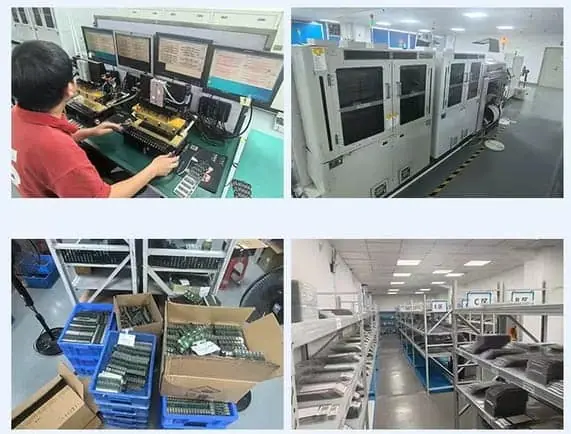
Custom USB drives for export typically need CE (EU), FCC (US) and RoHS (both). CE is a self-issued Declaration of Conformity (DoC) where the manufacturer declares the product meets EU safety and EMC standards. FCC also uses a Supplier Declaration of Conformity for most consumer electronics. RoHS restricts hazardous substances (lead, cadmium, mercury etc.) and is tested on the components. REACH applies to chemicals of very high concern and is component-level. Real testing is expensive — most factories carry component-level certificates and issue a DoC for the finished product. WINTEL supplies this from its own plant in Shenzhen, China.
The short answer: most orders need CE + RoHS for Europe, FCC for the US, and both are issued by the manufacturer as a Declaration of Conformity.
Compliance paperwork is the part buyers hate and factories love to fake. After a few shipments through customs, you learn which certificates actually get checked and which are just PDFs.
People sometimes think “certified” means an independent lab tested every batch. It almost never means that. What it means varies a lot depending on which certificate you are talking about.
This page covers the five most common compliance marks for USB drives and memory cards — what they actually mean, who is responsible, and what is real versus what is just a logo on a website.
The five most common marks, side by side
| Mark | Region | What it covers | Who issues it |
|---|---|---|---|
| CE | European Union | Safety + EMC + health (multiple directives) | Manufacturer self-declares via DoC |
| RoHS | EU + many others | Restriction of hazardous substances | Tested at component level |
| FCC / SDoC | United States | Electromagnetic compatibility | Supplier self-declares |
| REACH | EU | Chemicals of very high concern (SVHCs) | Component-level declaration |
| DoC | Any | A document, not a mark — declares compliance | The manufacturer |
A few of these overlap. RoHS is referenced inside CE compliance. REACH is separate but often requested alongside CE. FCC is the US equivalent of the EMC part of CE.
Let us go through each one properly.
CE — the one everyone asks for first
CE marking means the product conforms to all relevant EU directives. For USB flash drives, the relevant directives are:
- EMC Directive (2014/30/EU) — electromagnetic compatibility
- RoHS Directive (2011/65/EU) — restriction of hazardous substances
- LVD (2014/35/EU) — low voltage directive (applies to 5V USB products, but only marginally)
The manufacturer issues a Declaration of Conformity (DoC), which is a signed document that says: “This product meets these standards, and here are the test reports we based it on.”
It is not:
- A certificate issued by a third-party lab
- Proof that your specific batch was tested
- Government approval of any kind
It is the manufacturer putting their name on the line. That is how the system works — it is self-certification backed by test data.
RoHS — about the chemicals, not the performance
RoHS restricts ten hazardous substances in electrical and electronic equipment. The big ones are lead, cadmium, mercury, hexavalent chromium, and four types of flame retardants.
For USB drives, the relevant components are:
- The solder on the PCB (lead-free solder is RoHS-compliant)
- The plastic housing (no restricted flame retardants)
- The cable or connector materials
RoHS compliance is tested at the component level — each chip, each resistor, each plastic part comes with its own RoHS test report. The finished product inherits that compliance.
Important: RoHS 3 is the current version (2021). It is stricter than RoHS 2 and adds four new phthalates to the list. Always check which version the certificate is for.
FCC — the US version of EMC
For consumer electronics sold in the US, the FCC requires compliance with Part 15 rules (unintentional radiators).
Since 2017, most consumer digital devices use the Supplier Declaration of Conformity (SDoC) system — which is the US version of self-declaration. The supplier declares the product meets the limits, and keeps the test data on file.
The old “FCC verified by a lab” system still exists for some product categories, but not for USB drives and memory cards. SDoC is the standard.
REACH — the one that sounds scarier than it is
REACH is the EU chemical regulation. It is about Substances of Very High Concern (SVHCs) — currently about 240 substances that are carcinogenic, mutagenic, toxic to reproduction, or accumulate in the body.
For flash drives, the question is whether any SVHC is present above 0.1% by weight in any article.
In practice:
- Modern RoHS-compliant electronics almost never contain SVHCs above the threshold
- The main risk in older products was lead in solder — but RoHS-compliant solder is lead-free
- Most suppliers can provide a REACH SVHC declaration letter
REACH sounds complicated, but for standard USB drives it is usually a non-issue. The tricky products are the ones with PVC cables, certain paints, or specialised coatings.
What is real and what is wallpaper
This is the part you need to be careful about. Every factory website has a row of certification badges at the bottom. Most of them mean nothing.
| Badge you see on the website | What it actually means |
|---|---|
| “CE certified” with no DoC available | Could mean anything — ask for the actual document |
| RoHS logo next to product photos | Usually true for component-level, but ask for the test report |
| FCC logo on a Chinese factory site | Often just means “we think it would pass” |
| ISO 9001 certificate | About quality management systems, not about the product itself |
| Actual DoC with our company name, dated, signed | This is the real one |
Always ask for the actual document, not just the logo. And check that the DoC is from the company you are buying from, not from a chip supplier three levels up the chain.
What we provide with your order
For every WINTEL order we can supply:
- CE Declaration of Conformity — issued by us, based on component-level test reports
- RoHS compliance declaration — with component-level RoHS data
- FCC SDoC — for orders destined for the US
- REACH SVHC declaration — on request
- Batch-specific documents — with your order number and date, if required
We do not charge extra for standard compliance documents. If you need specific national certifications (KC, BIS, PSE etc.), let us know the destination and we will check what is required.
Send us your destination and any specific requirements and I will tell you exactly which documents we can provide, and which ones you will need to arrange separately. No fine print, no surprises.
If a supplier cannot show the original certificate with a valid issuer, it is not a certificate — it is a picture. I would rather hand you the real file than a logo on a Word doc.
Frequently asked questions
Do custom USB drives need CE certification to sell in Europe?
Yes, for anything electrical. The standard document is a Declaration of Conformity (DoC) issued by the manufacturer, stating that the product meets the relevant EU directives (EMC, RoHS, LVD).
What is the difference between CE and RoHS?
CE is a broader conformity mark covering safety, electromagnetic compatibility (EMC) and other directives. RoHS is specifically about restricting hazardous substances (lead, mercury, cadmium, etc.) in electrical and electronic equipment.
Do you provide a DoC for our order?
Yes. We can issue a Declaration of Conformity for your specific order, listing the product, the standards it conforms to, and the test reports it is based on.
What about FCC for the United States?
Consumer electronics like USB drives fall under FCC Part 15 and use a Supplier Declaration of Conformity (SDoC). The supplier self-declares that the product meets the EMC limits, supported by test data.
Are the certificates you provide valid for customs?
Our DoCs are based on component-level test reports from accredited labs. Customs in most countries accept them. For specific market requirements (eg KC for Korea, BIS for India), tell us the destination and we will confirm what is needed.