
A procurement guide to flash brand and controller pairing — what the brand decides, what the controller decides, why the two only work together once the firmware is tuned, and how to specify both so the unit you test is the unit you get.
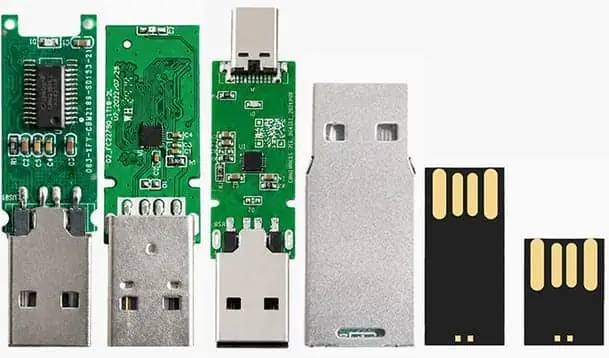
A flash brand and a controller solution are two separate choices that only work together once the firmware is tuned to that specific NAND. The brand (SanDisk, Toshiba, Micron, SK Hynix, Intel or Samsung in our sourcing records) decides which silicon is inside. The controller solution (Alcor, ITE, Xinbang, and Micov) decides behaviour: how writes are spread across blocks, how bad sectors are mapped out, what protocol the drive speaks to the host, and how much spare capacity stays reserved. A quotation that names the brand and stops there has not told you how the unit behaves under load.
TL;DR
A flash quotation usually carries two lines. One names the memory brand. The other names nothing at all.
The brand — SanDisk, Toshiba, Micron, SK Hynix, Intel or Samsung in our sourcing records — tells you where the silicon came from. The controller solution tells you how the drive behaves: how writes get spread across blocks, how failing blocks get retired, which protocol the unit speaks to your host, how much capacity is held back from you as reserve.
Those are two independent decisions. On our card they settle separately, and a quotation has to state both. If it states only the brand, you have not been told what you are buying.
What the quote actually says
Open a typical flash quotation and the storage usually arrives as two lines. One says the memory brand. The other says a capacity.
What is missing is the controller.
A quotation that reads “Samsung flash, 32GB” has told you the silicon and nothing about the behaviour. The same 32GB built on a different controller solution can spread writes differently, hold a different amount of reserve capacity, and behave very differently when the card is 95% full. None of that leaks into a brand name.
On our sourcing card the two decisions record separately, because they are:
| Decision | What you are choosing | Recorded options |
|---|---|---|
| Memory brand | Where the NAND die came from | SanDisk, Toshiba, Micron, SK Hynix, Intel, Samsung |
| Controller solution | How the drive behaves | Alcor, ITE, Xinbang, and Micov |
| Controller package | How the controller physically arrives | QFN, 24-pin, 48-pin, COB |
| Capacity band | What the format can carry | 4GB–256GB on a TF card; 128MB–128GB on a UDP module or a semi-finished board |
Four rows, and most quotations only fill the first and the fourth.
The brand is the easier half
A memory brand is a supply question. It answers where the die was made, and it is the line item most buyers know how to compare.
Where buyers get caught is assuming the brand transfers behaviour. It does not. Two cards carrying the same name can pair with different controller solutions, sit in a different controller package, and run different firmware revisions. The visible body is identical — a TF card is 15 × 11 × 1 mm and 0.25 g whatever is inside it. You cannot tell them apart by looking, or by weighing them.
That matters most at the point where behaviour starts to matter: sustained writes, a card that fills up, a unit powered down mid-write. Those are firmware situations, not silicon situations.
What the controller decides
Strip a flash drive down and the controller is the part doing the work. The NAND holds ones and zeroes and nothing else. Everything a buyer actually experiences is controller behaviour.
- Wear levelling. Writes get spread across the block pool so no single block takes the write load first. A drive that maps writes badly will not fail on capacity; it will fail early on one hot block.
- Bad block handling. NAND ships with defects and acquires more as it wears. The controller scans, retires failed blocks and keeps a pool of spares in reserve. The reserve is held back from you, which is why a 32GB card does not hand you 32GB of writable space.
- Host protocol. How the drive presents itself to your device — the handshake, the command set, how it reports capacity and health. A driver tuned to one protocol behaves badly against another.
- Power-loss behaviour. What happens when the unit is cut mid-write. Write buffering and how it is flushed decide whether the damage is one file or a corrupted index.
- Firmware revision. The same chip, the same solution, different firmware — and different behaviour.
None of these appear on a quotation line. All of them appear in your field returns.
Why the pairing is not plug-and-play
A controller is tuned against the characteristics of the NAND it ships with. Block size, erase behaviour, how many Program/Erase cycles a die tolerates, the bad block pattern at delivery — the firmware is calibrated against that particular silicon, not against a generic idea of it.
Swap the memory brand and keep the firmware, and you are running a control loop that was never calibrated for this die. It usually still works, which is the trap: the first thousand units pass, and the failure mode shows up in a specific environmental condition, in a specific capacity band, or after a specific number of writes. For the pairing this creates, the firmware is matched to the brand. If you need a brand we do not currently pair with, we will tell you before the quotation rather than after the first articles.
The mechanism is worth understanding even if you never change supplier. It is why “same brand, different production batch” is not a no-op, and why a second-source qualification is a firmware exercise as much as a purchasing one.
What we record, and how it maps to what we build
Our sourcing card lists the memory brands, controller solutions, controller packages and package formats we hold records for. That is the honest scope of what we can source consistently:
- Memory sources: SanDisk, Toshiba, Micron, SK Hynix, Intel, Samsung
- Controller solutions: Alcor, ITE, Xinbang, plus Micov
- Controller packages: QFN, 24-pin, 48-pin, COB
- Package formats: TSOP, BGA, LGA, COB and eMMC
- Capacity bands: TF card 4GB–256GB at 15 × 11 × 1 mm and 0.25 g; UDP (USB Disk in Package) module 128MB–128GB at 11.3 × 24.8 × 1.45 mm and 0.819 g; semi-finished board 128MB–128GB at 12 × 44 × 4.5 mm and 3.2 g
Read the capacity row carefully against the format row. A TF card reaches 256GB in the same 1 mm body as a 4GB card; a UDP module stops at 128GB in a body 1.45 mm thick. Band and envelope are both fixed by the format, and the pairing question sits behind both of them.
Read and write speed is set per order. It is not a number attached to a part number. Tell us the profile you need and it goes on the order.
How to specify it so you get what you tested
Five lines on a quotation request remove most of the ambiguity:
- Brand, capacity band and format — the part of the decision most RFQs already cover.
- Controller solution, by name. If you have a driver stack, name the one it is written against.
- Controller package, if your layout has an opinion (QFN, 24-pin, 48-pin or COB).
- The performance profile you will test against, since speed is agreed per order rather than inherited from a model number.
- Acceptance criteria for a full or nearly full card — sustained write behaviour, what happens at 90% capacity, what a power cut mid-write costs.
The fifth line is the one most buyers leave out, and it is the one that decides whether your qualification means anything.
When you should not buy this from us
We would rather say this before the samples than after them.
If your procurement requires a third-party test report or a certification scan as a purchase condition, we cannot supply one today. Our published evidence does not include independent test reports or certification scans, and we are not going to invent document numbers to win an order. Buyers who need those files as a gate should look elsewhere first.
If your design depends on a controller solution outside the ones we record — Alcor, ITE and Xinbang on the card, plus Micov — we will say so instead of quoting a part we cannot source consistently.
If you need a specific memory brand paired with a specific controller solution that is not one we currently run, that is our limit, not yours. Ask, and we will tell you plainly.
If your product depends on a NAND we do not source, or on a firmware behaviour that depends on a controller solution we cannot supply, do not treat a quotation as agreement. Confirm the pairing in writing before the first purchase order.
Two more honest limits: our factory footprint is 5,000 m² and our legal entity was registered on 2015-05-12. That is what we can evidence today. If your due-diligence checklist asks for more, raise it before the first PO rather than after it.
What to send us next
Send the brand, the capacity band, the controller solution if you already have one, and the five acceptance criteria above. With those, we can tell you whether the pairing exists before you commit to a test plan.
Reach the team at cathy@go-wintel.com or open the request a quote form.
Frequently asked questions
Is a Samsung card better than a SanDisk card?
At the same capacity and the same controller solution, both can be good parts. The brand tells you where the silicon came from, not how the drive behaves. Two cards holding the same brand can differ in controller solution, controller package and firmware revision, and those differences show up in sustained write behaviour and in how the drive handles a full or nearly full card. Compare brand plus controller plus firmware revision, not brand alone.
Which controller solution should I ask for?
The one your firmware and host driver are already written against. On our records the solutions we run are Alcor, ITE and Xinbang, plus Micov. If your product has an existing driver stack, compatibility with it outweighs any benchmark comparison you can read. If it does not, decide by the behaviour you need: sustained write handling, how the drive behaves when it fills, and the test plan you intend to write.
Does the controller package matter, or only the solution?
They are two different things. The solution is the firmware family; the package (QFN, 24-pin, 48-pin or COB on our records) is the physical form the controller arrives in and what your layout has to accommodate. A quotation can fix one and leave the other open. Ask for both, because the package affects your board and the solution affects the behaviour.
Can I mix memory brands across the units in one order?
You can, and for some programmes it is the only way to hold a capacity band in stock across two production runs. Ask for it explicitly and ask which brands are planned per batch. A batch that silently swaps brands after you have qualified the first one is the risk. We state the memory source on the quotation for that batch.
Is the read and write speed fixed for a given model number?
No. Read and write speed is set per order on the units we build. The capacity band is fixed by the format — 4GB to 256GB on a TF card, 128MB to 128GB on a UDP (USB Disk in Package) module or a semi-finished board — but the performance profile is a specification you agree at quotation, not a number that comes with the part number.
What does a controller actually do?
It runs the drive. It negotiates with the host, maps logical addresses to physical blocks, spreads writes so no single block wears out early, retires blocks that have failed, and keeps reserve capacity out of the space the host is allowed to use. Choose the NAND without choosing that behaviour and you inherit whatever the previous design was tuned for.