
A drive that is written once and then sits in a drawer is running a different test than a drive that is rewritten daily. Flash holds a charge, and that charge leaks. The retention period is set by the cell type, the write count already consumed, the temperature history and the quality of the die — not by a single number on a datasheet. Here is what governs it, what to ask, and how to design an archive product that assumes leakage rather than hoping it will not happen.
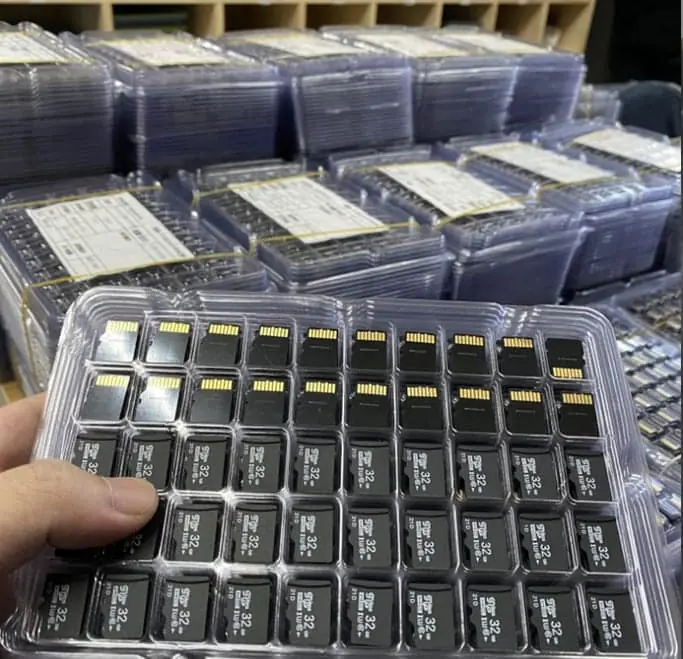
Flash memory stores data as charge held in a cell. That charge leaks slowly, and leakage accelerates with temperature and with the number of write and erase cycles the cell has already been through. Retention is therefore not one number: a fresh card stored cool holds its data far longer than a heavily used card stored warm. Published retention figures are measured under defined conditions — a stated temperature and a stated amount of prior wear — and they do not transfer to a device that has been rewritten thousands of times and then left in a hot room. For any product where data must survive long unpowered storage, the design answer is to assume leakage and add redundancy rather than to rely on a headline figure.
The question behind the question
A buyer developing a product that delivers data — a drive shipped with a film, a card that holds a student’s archive, a device that records once and is read years later — eventually asks how long the data will last if nobody plugs it in.
It is a reasonable question, and the reason it is hard to answer is that the honest answer has conditions attached. Almost every disappointing conversation about retention comes from a supplier giving an unconditional number to a buyer who then designed on it.
Here is what actually governs the number.
Flash stores charge, and charge leaks
Flash memory keeps its state by trapping electrons on a floating gate or in a charge-trap layer. A programmed cell holds charge; an erased cell does not. Reading the cell measures how much charge is present.
Nothing maintains that charge while the device is unpowered. It leaks, slowly, through the insulating layer and along paths that are never perfect. Over enough time and at enough temperature, a programmed cell drifts toward the boundary that separates it from its neighbours and eventually reads as a different value.
That drift is not a defect. It is the mechanism. Every retention figure in every datasheet is a statement about how long the drift takes to become a problem, under stated conditions.
The four things that set the clock
Cell type. A cell storing one bit per cell distinguishes two charge states, with a wide gap between them. A cell storing three bits per cell distinguishes eight states, with much less room between each. The same amount of leakage reaches a wrong reading sooner when the states are closer together. Higher density buys capacity at the cost of retention margin.
Prior wear. Writing and erasing repeatedly stresses the insulating layer and creates leakage paths. A cell that has been cycled many times leaks faster than a cell that has been written once. This is the variable buyers most often overlook: retention measured on a fresh device is not retention on a device that has been in service.
Storage temperature. Leakage is thermally activated, so the rate rises with temperature. The rule of thumb used across the industry is that each additional ten degrees Celsius of storage temperature shortens the safe retention window substantially. A device stored at a stable moderate temperature and the same device stored in a vehicle through summer are two different products.
Die grade and manufacturing quality. Dies that failed a screening criterion and were downgraded can still function while carrying less margin. They may pass a capacity test on the day of production and drift out of specification sooner. Cheap memory concentrates in exactly this category.
| Variable | Better retention | Worse retention |
|---|---|---|
| Bits per cell | Fewer | More |
| Write history | Written once | Heavily cycled |
| Storage temperature | Cool and stable | Hot, or cycling hot and cold |
| Die grade | Fully screened | Downgraded or unscreened |
| Device state at storage | Recently written and verified | Written long ago, never refreshed |
Why the datasheet number does not travel
Published retention specifications are measured under defined conditions, and the definition matters more than the number.
A specification that says a device retains data for a stated period typically also states the ambient temperature of the test and the endurance state of the sample. Those conditions exist because the result is meaningless without them. Change either one and the answer changes.
So when a retention figure is quoted in a sales conversation with no conditions attached, the useful response is not to disbelieve it. It is to ask what it was measured against. A number with conditions can be designed around. A number without them cannot.
What this means for a product that must survive unpowered storage
If data must survive years on a shelf, the design has to assume leakage rather than hope against it. Four techniques do most of the work.
Redundancy. Store the same data in two locations on the device. When one copy drifts, the other is read. This costs capacity and is the simplest effective measure for small payloads.
Refresh. A host routine that periodically reads the data and rewrites it resets the clock. This requires the device to be powered occasionally, so it works for products that are used but not for products that are archived untouched.
Verification on access. Store checksums alongside the data and check them before trusting the content. This does not prevent degradation, but it converts a silent corruption into a detected error, which is the difference between a support problem and a lost customer.
A stated storage condition. Tell the end user how to keep the product. “Store below a stated temperature, out of direct sunlight, and power the device once a year” is a real engineering instruction, and products that carry it fail less often than products that promise permanence.
The one approach that does not work is quoting a retention figure for a fresh device and shipping a product that will be used heavily first.
What to put in a specification
If retention is a real requirement of your application, the specification should carry the condition, not just the number.
| Element | Why it is in the specification |
|---|---|
| Required retention period | The design target, stated as a period |
| Storage temperature assumed | Without it the period is undefined |
| Endurance state at start of storage | New, or after a stated number of cycles |
| Cell type | Sets the margin available |
| Verification method | How you will check the claim |
| Remedy if a unit fails on read-back | What happens when it does |
That last row is the one that turns a promise into a commitment. A supplier willing to state a remedy for a unit that fails a read-back test after storage is telling you they believe the number. A supplier who will not is telling you something too.
The honest summary
Flash retention is real, measurable and finite. It is not a decade of guaranteed permanence for any device under any condition, and it is not a few months either — both of those are exaggerations in opposite directions.
The variable that most affects the outcome is not the brand on the card. It is the combination of how hard the device was used, how warm it is kept, and how much margin the memory inside had to begin with.
For a buyer, that produces one practical instruction: if long unpowered storage is part of your product’s promise, design for it explicitly — redundancy, verification, a stated condition — and ask the supplier which cell type and die grade is being offered, with the retention test conditions attached. The rest is arithmetic.
Frequently asked questions
How long will a flash card hold data if I never use it?
Longer than a used one, and there is no single answer that covers every card. JEDEC publishes retention specifications with defined test conditions that specify both the ambient temperature and the amount of endurance already consumed, precisely because those two variables dominate the result. A lightly used card stored in a cool, dry place holds its data for years. The same card stored in a car dashboard through several summers is a different situation. If extended unpowered retention is a requirement of your application, treat it as an engineering problem with a stated condition, not a purchasing question with a headline number.
Why does temperature matter so much?
Charge leakage is thermally activated, so the rate rises as temperature rises. The consequence is that retention time falls as storage temperature climbs. A guide used across the industry treats every roughly ten degrees Celsius of higher storage temperature as cutting the safe retention window substantially — which is why the storage conditions of an archival product matter as much as the memory inside it. A cool, stable place is doing real work; a hot shelf is undoing it.
Does using a card make it lose data faster when I stop using it?
Yes, in a specific way. Writing and erasing wears the oxide that holds charge in place, and a worn cell leaks faster than a fresh one. So two cards of the same type will have different retention after one has been through many write cycles and the other has not. This is why a retention figure quoted for a new device is optimistic for a device with a working history, and why reused memory carries more retention risk than virgin memory.
What is the practical difference between cell types for retention?
The number of bits stored per cell affects the margin between states. A cell storing one bit distinguishes two charge levels; a cell storing three distinguishes eight, with less space between them, so the same leakage reaches an unreadable state sooner. The practical implication is that high-density, multi-level cells trade retention margin for capacity and cost. For an application where data must survive years of unpowered storage, that trade needs to be made deliberately.
Can I make an archival product with flash memory?
Yes, if the design assumes retention limits rather than ignoring them. The standard techniques are redundancy (store the same data in two places on the device), refresh (a host routine that reads and rewrites data before it degrades), verification on access (check checksums before trusting content), and a stated storage condition supplied with the product. Any one of those helps. A product that relies on none of them and promises a decade of unpowered retention on commodity flash is making a promise the silicon cannot keep.
What should I ask a supplier about retention?
Ask four things: what test condition the retention figure was measured under, whether it applies to new or worn devices, which cell type and die grade is being offered, and what happens if a unit fails a read-back test after storage. A supplier who answers only the first has given you a marketing number. A supplier who answers all four has given you something you can design against.